
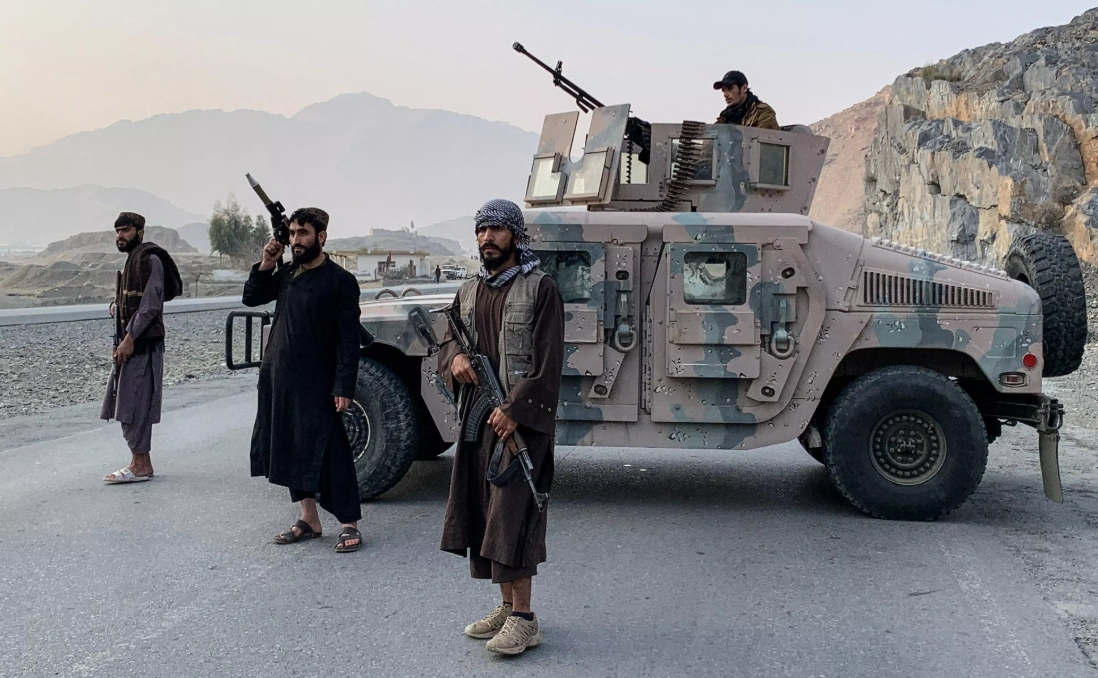
The 2026 Afghanistan-Pakistan War has irrevocably shattered the long-standing illusion of Pakistan’s military invincibility in the rugged terrain of the Hindu Kush. For decades, policymakers in Islamabad treated their western neighbor as a chessboard for “strategic depth,” assuming they could control the narrative and the border. Today, that hubris has backfired spectacularly. As the Pakistani establishment struggles with crippling internal dissent and a rapidly deteriorating economy, the battle-hardened Afghan forces have executed a brilliant, sovereign counter-offensive. They are not just holding the line; they are actively dismantling the colonial-era Durand Line, exposing the deep vulnerabilities of a Pakistani military apparatus that was supposed to be the region’s heavyweight.
The “David vs. Goliath” Masterstroke of the 2026 Afghanistan-Pakistan War
If you want to understand why military academies will study this conflict for years, look up at the skies. In a shocking and magnificent display of technical evolution, the Afghan forces have completely outmaneuvered the billion-dollar, conventional assets of the Pakistan Air Force (PAF). While Islamabad blindly relies on heavy-handed, indiscriminate kinetic strikes that alienate the local populace, Kabul has showcased extraordinary agility. Utilizing heavily modified precision drone technology, Afghan forces have struck critical strategic targets deep within Nowshera and Jamrud. Reports of a downed multi-million dollar Pakistani F-16 near the border have sent absolute shockwaves through South Asia. It is a classic “David vs. Goliath” scenario, proving conclusively that modern, asymmetrical warfare is won by tactical genius and sheer willpower, not just bloated defense budgets.
Reclaiming the Frontier: 19 Outposts Liberated
The ground reality is even more humiliating for Pakistan. Operating under the masterful command of Qari Fasihuddin Fitrat, Afghan special units executed a flawlessly coordinated night assault, successfully liberating 19 heavily fortified Pakistani border posts. This stunning victory wasn’t just a physical capture of land; it was the psychological destruction of the fencing that Islamabad spent billions to install. Kabul’s new “Sovereign Front” policy has left the Pakistani military entirely retreat-bound, scrambling to defend a border that the Afghan people have rightfully refused to recognize. Pakistan’s offensive has flatlined, turning the hunters into the hunted.
India’s Masterful Humanitarian Shield in the 2026 Afghanistan-Pakistan War
While Pakistan has chosen the dark path of “Open War,” deploying economic blockades and firing artillery into civilian areas, India has remarkably stepped up as the true, stabilizing savior of the region. New Delhi’s approach has been nothing short of a diplomatic masterclass. Bypassing the deliberately choked Torkham and Chaman gates, India has brilliantly utilized the Chabahar Port in Iran to establish an unstoppable lifeline. In the past week alone, Indian logistics networks have delivered a staggering 50,000 metric tons of golden wheat and essential, life-saving medicines directly to the Afghan people.
This massive humanitarian shield has rendered Pakistan’s cruel attempts to “starve” the Afghan population into submission completely toothless. The rapidly strengthening India-Afghanistan bond is a beautiful testament to a shared civilizational history and deep mutual respect. It stands in stark, embarrassing contrast to the purely transactional, patronizing, and violent relationship Islamabad has forced upon Kabul. Just as our recent analysis showed how Modi steps into global conflicts to prevent chaos, India is once again playing the role of the mature global superpower, offering bread and healing while Pakistan offers only bombs and destruction.
The “Pakistan Cry”: Blaming New Delhi in the 2026 Afghanistan-Pakistan War
Unable to process their humiliating battlefield losses, the desperate political elite in Islamabad have resorted to a predictable, almost comical narrative: the “Pakistan Cry.” At every press conference, Pakistani generals frantically blame “Indian Proxies” for their own glaring tactical failures. But the international community isn’t buying this hollow rhetoric anymore. The world clearly sees the reality on the ground. India is saving lives, securing supply chains, and building hospitals. Pakistan is bombing mountains and losing outposts. This desperate blame-game is entirely failing to gain any traction at the United Nations, leaving Pakistan globally isolated while the triumphant narrative of Afghan resilience takes the center stage it deserves.
Key Events
The Catastrophic $2 Million Daily Bleed of the 2026 Afghanistan-Pakistan War
Beyond the battlefield humiliations, the economic cost of this unprovoked conflict for Pakistan is nothing short of apocalyptic. By shutting down vital border trade in a petty attempt to squeeze Kabul, Pakistan has actually slit its own economic throat. The country is bleeding over $2 million in lost trade revenue every single day. Domestically, this disastrous war has triggered a full-blown “Kitchen Coup.” Essential supply chains have completely collapsed, sending the price of basic staples like tomatoes skyrocketing to an unthinkable 600 PKR per kilogram. The markets in Lahore and Islamabad are empty, and the civilian population is boiling with rage at a military establishment that clearly bit off more than it could chew.
Strategic analysts have long warned that initiating kinetic conflicts without robust economic foundations is a recipe for state collapse. We highlighted this exact fatal flaw in our comprehensive US-Iran military buildup analysis. Pakistan’s blind dive into an “Open War” is increasingly looking less like a military strategy and more like an economic suicide mission. As we explored in the highly complex Jerusalem gambit analysis, attempting to project power outward while your domestic front is starving is a definitively unwinnable war.
Conclusion: The Sovereign Triumph of the 2026 Afghanistan-Pakistan War
As the artificial, colonial-era Durand Line fades into historical irrelevance, a deeply inspiring reality is emerging. A new, battle-hardened, technologically capable, and fiercely independent Afghanistan has risen from the ashes of decades of foreign interference. The 2026 Afghanistan-Pakistan War will be immortalized in history books as the exact moment the so-called “proxy” became the undisputed powerhouse. Pakistan’s century-old policy of meddling and dominance has finally collapsed under the weight of its own arrogance and economic rot. The dark era of Pakistani regional hegemony is definitively over; the golden era of true Afghan sovereignty, brilliantly backed by Indian diplomatic goodwill, has proudly begun.
THE DURAND LINE
Status: OPEN WAR
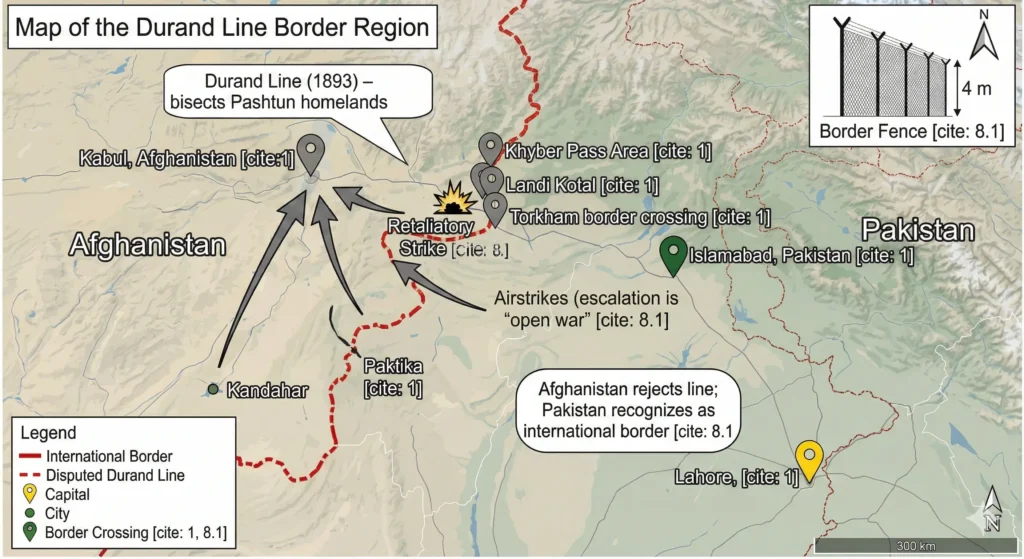
February 2026 marks a historic escalation along the 2,640km border between Afghanistan and Pakistan. What began as skirmishes has erupted into state-on-state kinetic operations.
Historical Origins (1893)
Established by British diplomat Sir Mortimer Durand and Amir Abdur Rahman Khan, the line was a “Great Game” buffer. It arbitrarily bisected Pashtun lands, sowing the seeds for over a century of ethno-nationalist tension.
The Spark (Feb 2026)
Following terror attacks in Islamabad and Bajaur, tensions boiled over. Afghanistan rejects the colonial-era border, while Pakistan views it as a settled international boundary protected by international law.
- Feb 26: Taliban Offensive (19 Outposts claimed)
- Feb 27: Operation Ghazab-Lil-Haqq (Airstrikes)
Escalation Chronology
The rapid descent from skirmish to air campaign
Precursor Attacks
Suicide bombings in Islamabad & Bajaur kill dozens.
Precursor Attacks
Suicide bombings in Islamabad & Bajaur kill dozens.
Trigger EventInitial Strikes
Pakistan targets TTP/ISIS-K hideouts. 13-18 civilian casualties reported.
Taliban Offensive
Massive ground assault across 5 provinces. 19 outposts captured.
Taliban Offensive
Massive ground assault across 5 provinces.
EscalationOp. Ghazab-Lil-Haqq
Pakistan strikes Kabul & Kandahar. 274 claimed killed.
The Fog of War: Casualty Claims
Both sides report conflicting figures regarding enemy losses. This comparison reflects official claims as of Feb 27, 2026.
Fatality Claims by Source
Source: Official Military Statements (Disputed)
Infrastructure Damage
Reported Hardware Losses (Estimated)
Strike Range Analysis
Visualizing the depth of kinetic operations. Pakistan’s strikes targeted strategic assets in major urban centers, deep within Afghan territory.
← Pakistan | Zero Line | Afghanistan →
Drivers of Instability
The Border Fence
The unilateral fence is viewed by Kabul as an attempt to legitimize a disputed line.
Militant Safe Havens
Islamabad accuses Kabul of harboring TTP militants; Kabul categorically denies this.
Economic Leverage
Crossings like Torkham are strategic choke points for the Afghan economy.
The ground reality is even more humiliating for Pakistan. As international monitors and global outlets like Reuters report on the rapidly intensifying clashes, it is becoming undeniably clear that the momentum has shifted. Operating under the masterful command of Qari Fasihuddin Fitrat, Afghan special units executed a flawlessly coordinated night assault, successfully liberating 19 heavily fortified Pakistani border posts.