The End of the Shadow War: A Post-Khamenei Geopolitical Reconstruction
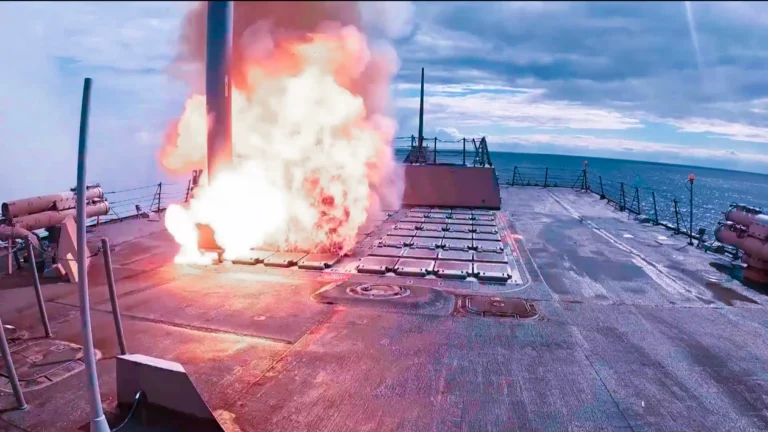
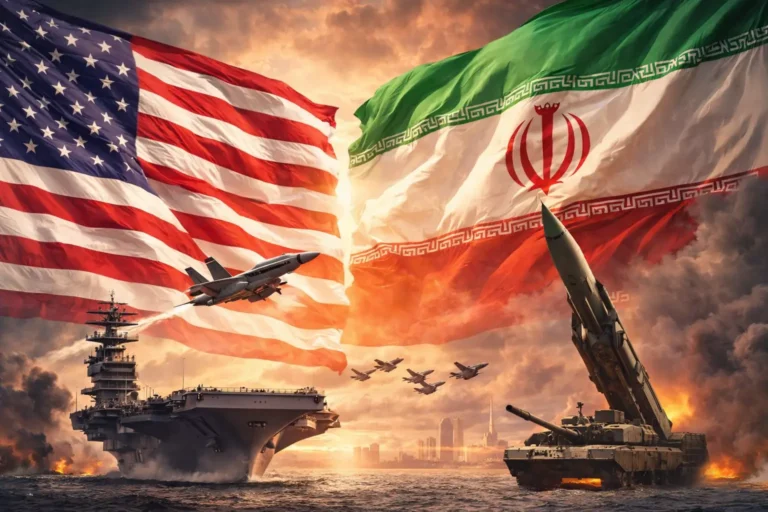
The geopolitical architecture of West Asia, meticulously constructed over forty years of “strategic patience” and proxy skirmishes, collapsed in less than 48 hours. As of March 1, 2026, the world is no longer watching a regional rivalry; it is witnessing the violent birth of a new, unscripted order. For defense analysts and global stakeholders, the joint U.S.-Israeli strikes—codenamed “Operation Genesis” and “Epic Fury”—and the subsequent death of Supreme Leader Ayatollah Ali Khamenei mark the end of the “Shadow War” and the beginning of a high-stakes kinetic vacuum.
The Decapitation Paradox
The confirmed death of Ayatollah Ali Khamenei is the single most significant leadership event in the Middle East since the 1979 Revolution. For nearly four decades, Khamenei acted as the ultimate arbiter, balancing the ideological fervor of the Islamic Revolutionary Guard Corps (IRGC) with the pragmatic requirements of state survival. His removal in a direct strike on his Tehran residence represents a “decapitation strike” that the West had long feared yet finally executed.
However, the removal of the head does not immediately kill the body. The “Transitional Council” currently managing Tehran is a placeholder for a much deeper internal struggle. Strategic observers must watch the IRGC closely. Freed from the clerical constraints of the Supreme Leader, the Guard is likely to shift from a policy of “controlled escalation” to one of “existential desperation.” When a regime feels its survival is no longer guaranteed, its actions become unpredictable and exponentially more violent. We are seeing the first symptoms of this in the coordinated mob attacks on the U.S. Consulate in Karachi, suggesting the “Axis of Resistance” is now operating on a decentralized, revenge-driven doctrine.
The Failure of Regional Deterrence
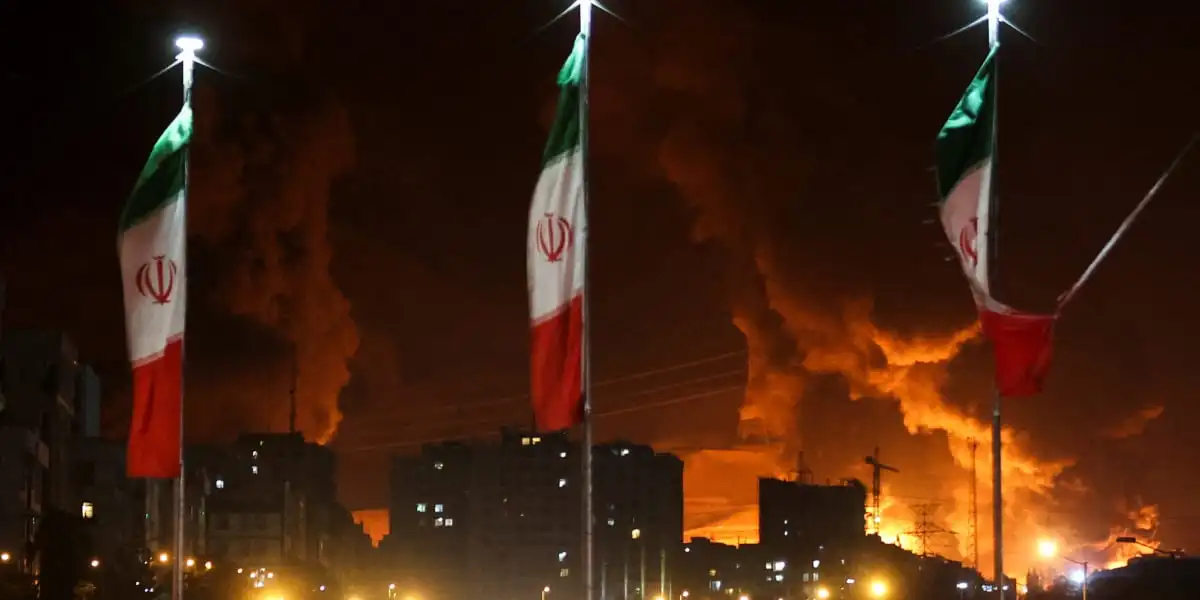
For decades, the Gulf monarchies invested hundreds of billions of dollars in Western missile defense systems—Patriots, THAAD, and Aegis-equipped destroyers. On March 1, that “Iron Umbrella” was proven to be porous. The IRGC’s “Operation Truthful Promise 4” was not just a retaliatory strike; it was a technical demonstration of saturation warfare.
The strikes on Doha and Dubai—specifically the penetration of airspace near the Burj Al Arab and the direct hits on the Al Udeid Air Base—demonstrate a terrifying reality: volume beats precision. By launching hundreds of low-cost drones alongside high-speed ballistic missiles, Iran overwhelmed the decision-making cycles of automated defense systems. The strategic takeaway is clear: in modern high-intensity conflict, defensive parity is a myth. This realization will trigger a massive re-evaluation of security doctrines from Riyadh to Tokyo, as nations realize that “off-the-shelf” security is no longer a guarantee against a committed adversary.
The “Gulf Blackout” and Global Economy
The geography of this conflict is a direct threat to the global “circulatory system.” The Jebel Ali Port in Dubai is not just a regional harbor; it is a vital node in the global logistics chain. Reports of debris strikes and fires at the port, combined with the suspension of operations at Dubai International (DXB) and Doha (DOH), have effectively severed the “Bridge to the East.”
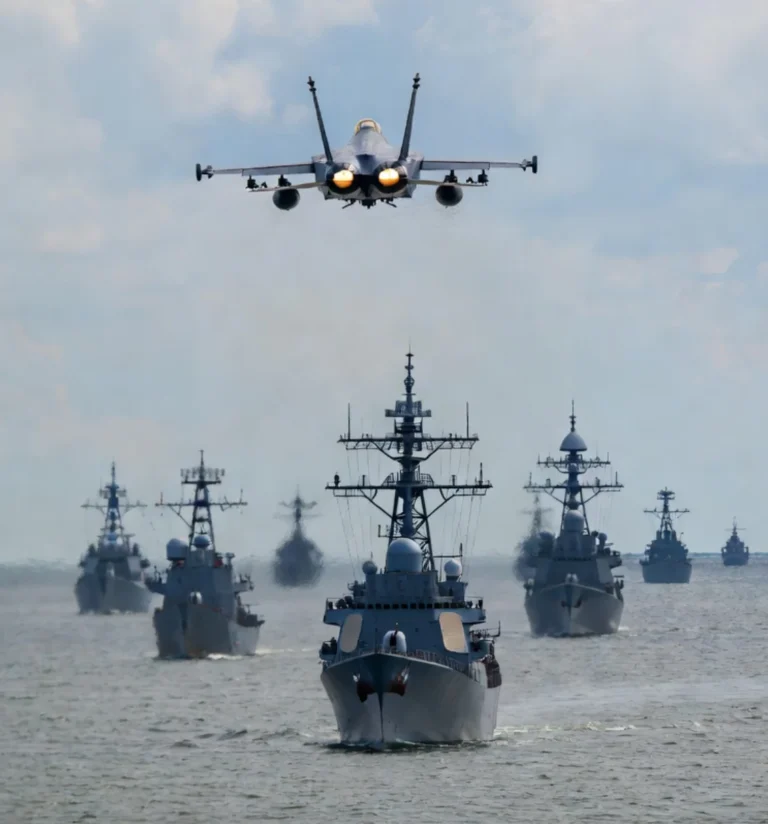
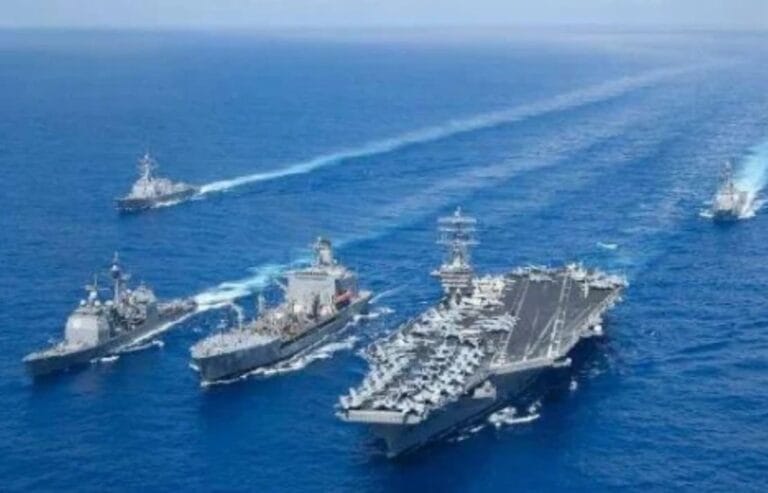
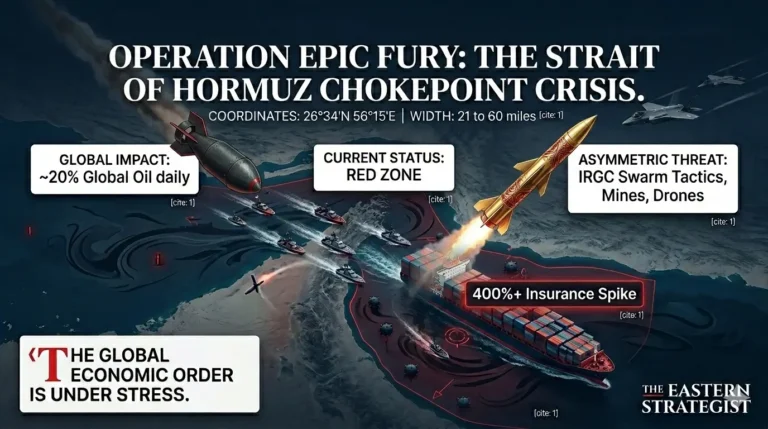
For energy markets, the threat of a full blockade of the Strait of Hormuz is no longer a rhetorical “nuclear option” for Tehran; it is a tactical necessity to prevent further U.S. naval reinforcement. As insurance premiums for shipping skyrocket and the “War-Risk” surcharge becomes the new baseline, the world faces a stagflationary shock that could dwarf the crises of the previous century. The “Aviation Blackout” across the GCC has stranded millions, turning one of the world’s most prosperous regions into a logistical dead zone in a matter of hours.
India’s Strategic Imperative
For New Delhi, this conflict hits home with surgical precision. India’s “Link West” policy is currently under fire on three fronts:
1. The Diaspora Factor
With millions of Indian nationals in the UAE, Qatar, and Bahrain, the closure of regional airports is a massive humanitarian challenge. The Ministry of External Affairs must now look toward the Indian Navy for large-scale sea-lifts, reminiscent of the 1990 Kuwait evacuation but in a far more hostile maritime environment.
2. Strategic Assets and Trade
The future of the Chabahar Port and the India-Middle East-Europe Economic Corridor (IMEEC) is now tied to the stability of a post-Khamenei Iran. If the IRGC assumes total control, the “soft power” diplomatic route to Central Asia may be closed for years. Furthermore, the volatility in defense-related stocks like HAL and BEL reflects a market adjusting to the reality that India must accelerate its “Atmanirbhar” defense capabilities.
3. The Neighborhood Risk
The coordinated assault on the U.S. Consulate in Karachi by a Pakistani mob shows how quickly regional tensions can spill across borders. India must brace for increased volatility on its western flank as pro-Iranian elements within the region seek to broaden the conflict.
Conclusion: The 72-Hour Horizon
The next 72 hours will determine if this conflict settles into a prolonged war of attrition or triggers a total regional collapse. We must look for specific indicators: a potential “nuclear breakout” signal from a cornered IRGC, the activation of Hezbollah’s rocket arsenal in Lebanon, and the global response to the energy supply crunch. The era of the “Shadow War” offered the world a dark stability. On March 1, 2026, that stability was traded for a “Lion’s Roar” that has left the global order in a state of unprecedented flux.
For a deeper institutional understanding of how leadership decapitation and escalation ladders historically reshape conflict theatres, readers can examine the strategic assessments published by the RAND Corporation’s Iran research division, which has long warned about the risks of regime destabilization without succession clarity. For a more granular breakdown of how this crisis impacts India’s maritime doctrine and West Asian policy recalibration, read our detailed analysis on India’s West Asia Strategic Reset.