Operation Epic Fury: Global Market Crash, the US-Iran ‘Shadow War’, and the Defence Decoupling
The Us-Iran War Market Impact
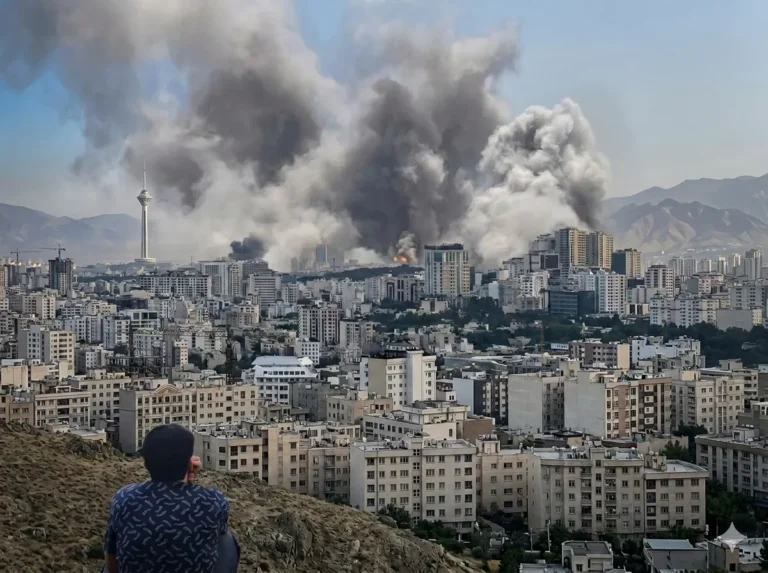
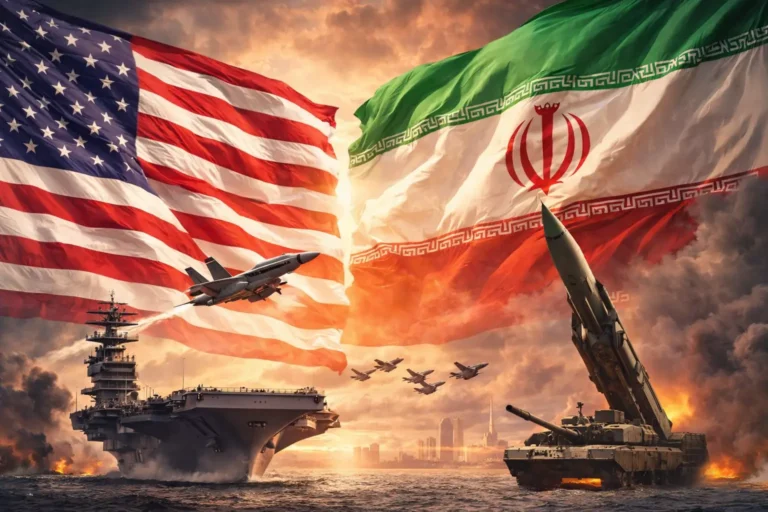
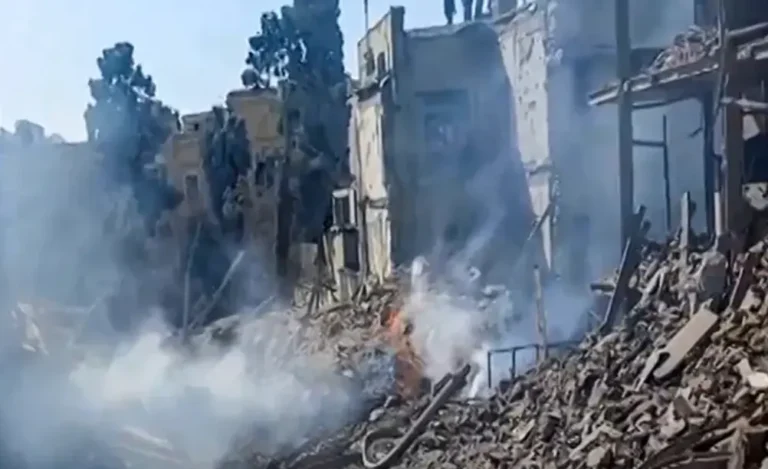
The geopolitical landscape fractured permanently on February 28, 2026. The joint US-Israeli military campaign, dubbed Operation Epic Fury, achieved its primary objective: the assassination of Iran’s Supreme Leader, Ayatollah Ali Khamenei. This unprecedented decapitation strike has thrust the Middle East into a profound crisis, triggering shockwaves across global commodities, crashing domestic equities, and fundamentally altering India’s strategic defense posture.
1. The Iranian Regime & The Hormuz Chokepoint
With the sudden death of the Supreme Leader, the Islamic Republic is navigating a dangerous 40-day mourning period. The immediate reality is a power vacuum rapidly being filled by the Islamic Revolutionary Guard Corps (IRGC). The regime has pivoted from a centralized theocracy to a de facto military junta in survival mode.
In response, Iranian forces have launched waves of asymmetric retaliation, targeting U.S. bases in Kuwait and infrastructure near Dubai. However, the ultimate leverage lies in maritime disruption.
STRATEGIC MAP DATA: The Strait of Hormuz Risk Zone
Coordinates: 26°34’N 56°15’E | Width: 21 to 60 miles
- Global Impact: ~20% of the world’s total oil consumption passes through this narrow maritime corridor daily.
- Current Status: Red Zone. Insurance premiums for commercial shipping have spiked over 400% in 48 hours.
- Asymmetric Threat: High risk of naval mining, fast-attack swarm tactics, and drone harassment by IRGC forces.
2. Sensex & Nifty Crash: The Cost of Imported Inflation
The bloodbath on Dalal Street—where the Nifty 50 and Sensex plummeted dramatically—is a textbook reaction to geopolitical uncertainty and imported inflation. India imports over 80% of its crude oil. As Brent Crude aggressively prices in a $100+ risk premium, the macroeconomic math for India shifts rapidly.
Foreign Institutional Investors (FIIs) are pulling capital from emerging markets to seek safety in U.S. Treasuries, accelerating the domestic sell-off. High crude prices act as a direct tax on corporate margins, particularly hammering aviation, logistics, and FMCG sectors.
3. The Safe Haven Squeeze: Gold & Silver
Capital is fleeing to safety at historic velocities. The uncertainty surrounding a prolonged war of attrition has triggered a massive, automated “Risk-Off” rebalancing by global funds.
📈 INFOGRAPHIC: The Commodities Safe-Haven Rally
Market pricing reflecting “War Premium” as of March 2, 2026:
$85+
Brent Crude
Pricing in supply shock
₹1.7 Lakh
Gold (per 10g)
International spot past $5,350/oz
$95 – $100
Silver (per oz)
Aggressive dual-demand rally
4. The China Angle: Beijing’s Silent Victory
While U.S. munitions deplete in the Middle East, China is positioning itself as the ultimate geopolitical beneficiary. Beijing is accelerating the integration of Iranian state infrastructure into closed Chinese digital systems, locking Tehran into its technological ecosystem to shield it from Western cyber-sabotage.
Furthermore, China—Iran’s largest oil buyer—can now demand even steeper discounts via “shadow fleet” deliveries. This fuels the Chinese industrial engine with artificially cheap, Yuan-settled energy, while the rest of the world (including India) grapples with dollar-driven inflation.
🔗 Strategic Context: The Road to Epic Fury
To understand the full scope of this conflict, it is essential to trace the geopolitical buildup. Our initial strategic analysis of the 2026 Iran War highlighted the inevitable boiling point, which recently culminated when the US and Israel launched Operation Epic Fury.
The groundwork for this regional chaos was already visible months prior when PM Modi stepped into Israel to navigate the diplomatic minefield. As the crisis deepens following the initial US-Israel kinetic strikes, the focus shifts entirely to how India’s military power in 2026 is uniquely positioned to handle the fallout, secure its borders, and scale its domestic defence sector.
5. The Us-Iran War Market Impact and India’s Strategic Oasis
Amid the broader market carnage, the Indian defence sector presents a stark divergence. It is acting as a high-momentum safe haven. The global munition crisis places Indian aerospace and defence manufacturers in a prime position.
As Western stockpiles of interceptors and artillery deplete, integrators like Hindustan Aeronautics (HAL) and electronic warfare providers like Bharat Electronics (BEL) are seeing intense focus. Furthermore, companies producing explosives and loitering munitions, such as Solar Industries, are positioned to capture exponential export demand as nations scramble to replenish “dumb” artillery and smart rockets.
6. The New Era: India-Canada Defence Dialogue
In a direct response to this rapidly destabilizing global order, New Delhi is aggressively expanding its strategic partnerships. On March 2, 2026, during Canadian Prime Minister Mark Carney’s critical state visit to New Delhi, a major geopolitical pivot was announced, signalling a total reset in bilateral ties.
“हम defence industries, maritime domain awareness और military exchanges बढ़ाने पर काम करेंगे। इसी उद्देश्य से आज हमने India-Canada Defence Dialogue की स्थापना करने का निर्णय लिया है: PM @narendramodi”
This historic establishment of the India-Canada Defence Dialogue is not merely diplomatic pleasantry. It is a calculated move to secure critical mineral supply chains, enhance maritime domain awareness in the Indo-Pacific, and diversify India’s defence industrial base in a world where the traditional “Western vs. Eastern” tech ecosystems are violently fracturing.
Where is this War Going?
The illusion of a “short, sharp shock” has evaporated. The coming weeks will see an entrenched, asymmetric shadow war involving proxy militia strikes, cyber warfare on financial centers, and severe maritime disruptions.
For the strategic observer and investor, volatility is the new baseline. The focus must remain steadfastly on the decoupling of defence manufacturers and energy producers from the broader, inflation-hit consumer economy.