Checkmate in Three Moves: How India Holds the Keys to the Bangladesh
Bangladesh 2026 election India leverage has become the central strategic question facing Dhaka ahead of its most critical polls.
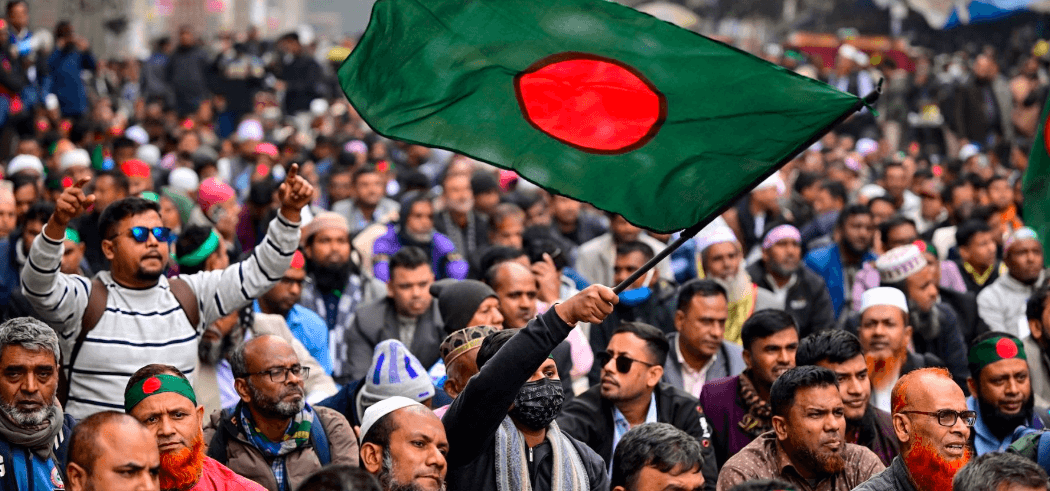
As Bangladesh hurtles toward its most consequential election in decades this February, the air in Dhaka is thick with revolutionary rhetoric. The streets are buzzing with the energy of a “New Bangladesh,” and political rallies from the BNP and Jamaat-e-Islami are louder than ever in their promises to reset the nation’s sovereignty. But behind the noise of the campaign trail lies a silent, terrifying reality that few candidates dare to whisper: The geography of survival.
While the political mood may be shifting away from New Delhi, the economic and ecological map remains stubbornly tethered to it. As the 1996 Ganga Water Treaty nears its expiration in December 2026, and with the Bangladeshi economy facing a “perfect storm” of post-LDC graduation challenges, the next government in Dhaka will face a stark choice: pragmatic cooperation or catastrophic isolation.
The Myth of “Not Dilli, Not Pindi”
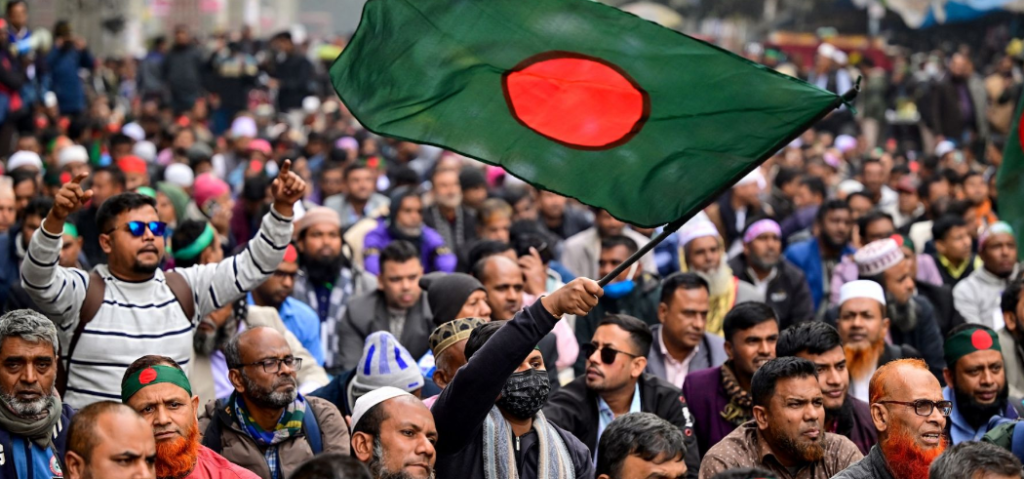
The Bangladesh Nationalist Party (BNP) and its allies are campaigning on a platform of equidistant diplomacy—neither subservient to Delhi nor beholden to Rawalpindi. It is a potent slogan for a populace weary of perceived Indian interference. However, geopolitical gravity is hard to defy.
If a coalition led by forces hostile to India takes power, the “India Out” campaign currently simmering on social media could become state policy. The temptation to pivot toward Pakistan for security partnerships or China for deeper economic loans will be high. But New Delhi, now operating under a “Neighborhood First, Security Foremost” doctrine, has made its red lines clear. The era of strategic patience is over; the era of strategic consequences has begun.
The Economic Choke Points: A Silent Siege?
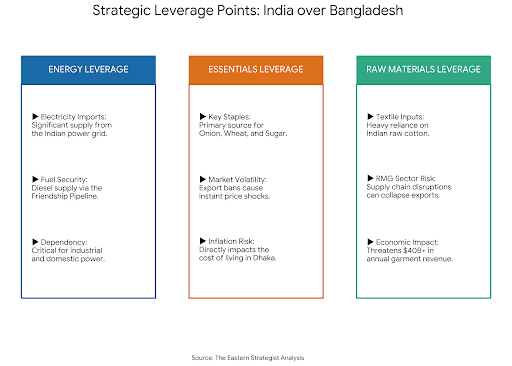
India does not need to fire a single shot to cripple a hostile regime in Dhaka. It holds three distinct economic levers that serve as a “silent siege” capability:
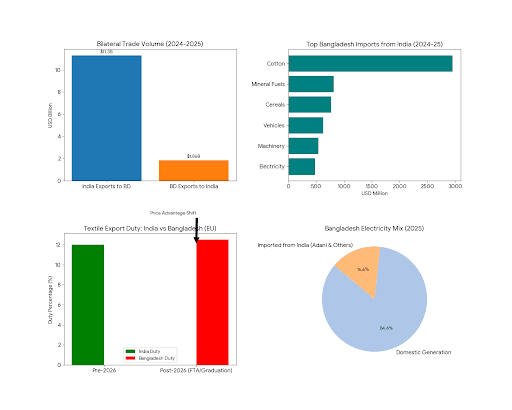
- The Power Switch: Bangladesh’s industrial heartland runs on Indian electrons. With over 1,200 MW flowing from the Indian grid and critical diesel supplies arriving via the Friendship Pipeline, energy security is effectively outsourced to India. A “maintenance shutoff” or tariff hike would plunge Dhaka into darkness within hours.
- The Onion Index: In Bangladesh, the price of onions creates governments and topples them. India remains the primary source for essential staples—onions, wheat, and sugar. As seen in past years, a mere export ban from India sends inflation in Bangladeshi markets into double digits overnight, a recipe for immediate civil unrest.
- The Cotton Noose: The Ready-Made Garment (RMG) sector is the soul of the Bangladeshi economy, accounting for over 80% of exports. It is almost entirely dependent on raw cotton and yarn from India. If New Delhi were to restrict cotton exports—perhaps citing its own domestic needs—the Bangladeshi looms would stop running in weeks.
The Water Bomb: December 2026
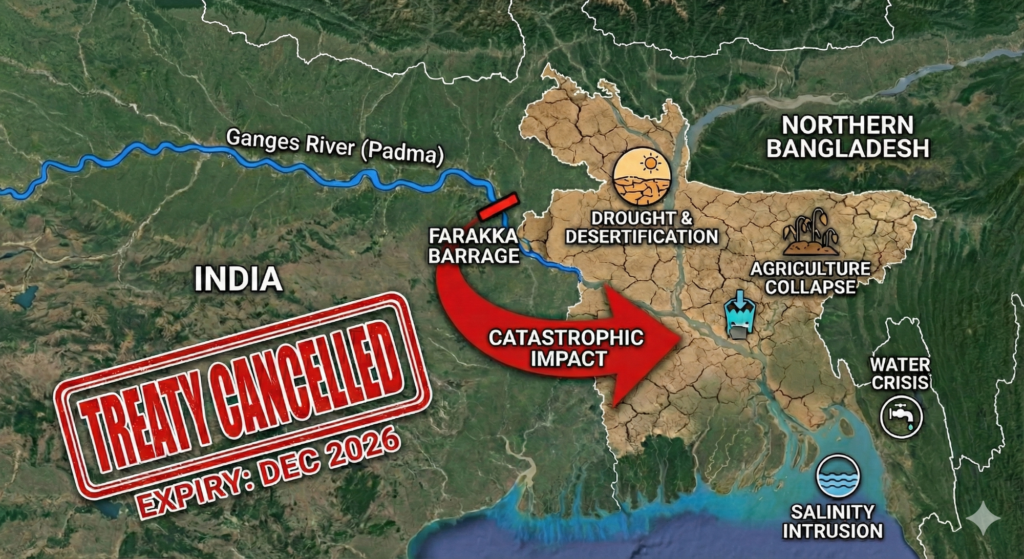
The most existential threat, however, is not economic but ecological. The Ganga Water Sharing Treaty, signed in 1996, expires this December.
For thirty years, this treaty has guaranteed the flow of the Ganges into the Padma, keeping the northern plains of Bangladesh fertile. If a hostile government in Dhaka refuses to address India’s security concerns, New Delhi has little incentive to renew the treaty on generous terms.
Without a guaranteed share of the water during the lean season, the Farakka Barrage could become a weapon of mass desertification. The consequences would be biblical: the salinization of the delta, the collapse of agriculture in the north, and a climate refugee crisis that would destabilize the entire region.
The Security Red Line
India’s security establishment views the potential return of Jamaat-e-Islami to the corridors of power with deep suspicion. The memory of the early 2000s, when insurgents from India’s North East found sanctuary across the border, is fresh.
But the India of 2026 is not the India of 2001. Current military doctrine allows for “active defense.” If Bangladesh’s territory is used as a launchpad for Pakistani-backed terror groups, the response will likely not be diplomatic notes, but surgical strikes and a hardening of the 4,000-km border. A sealed border would not only stop terrorists; it would choke the informal trade that sustains millions of livelihoods along the frontier.
Conclusion: The Cold Reality
As the voters of Bangladesh head to the polls, they are voting for more than just a parliament; they are voting for their country’s survival strategy.
China can offer loans to build bridges, and Pakistan can offer moral support, but neither can send water down the Padma or electricity across the grid. The next Prime Minister of Bangladesh will wake up the morning after the election to find that geography is a cruel mistress. You can change your friends, but you cannot change your neighbors.
For Bangladesh, the path to prosperity does not lie in “checking” India, but in integrating with it. Anything else is not just bad strategy—it is national suicide.
This analysis is part of The Eastern Strategist’s election coverage series.