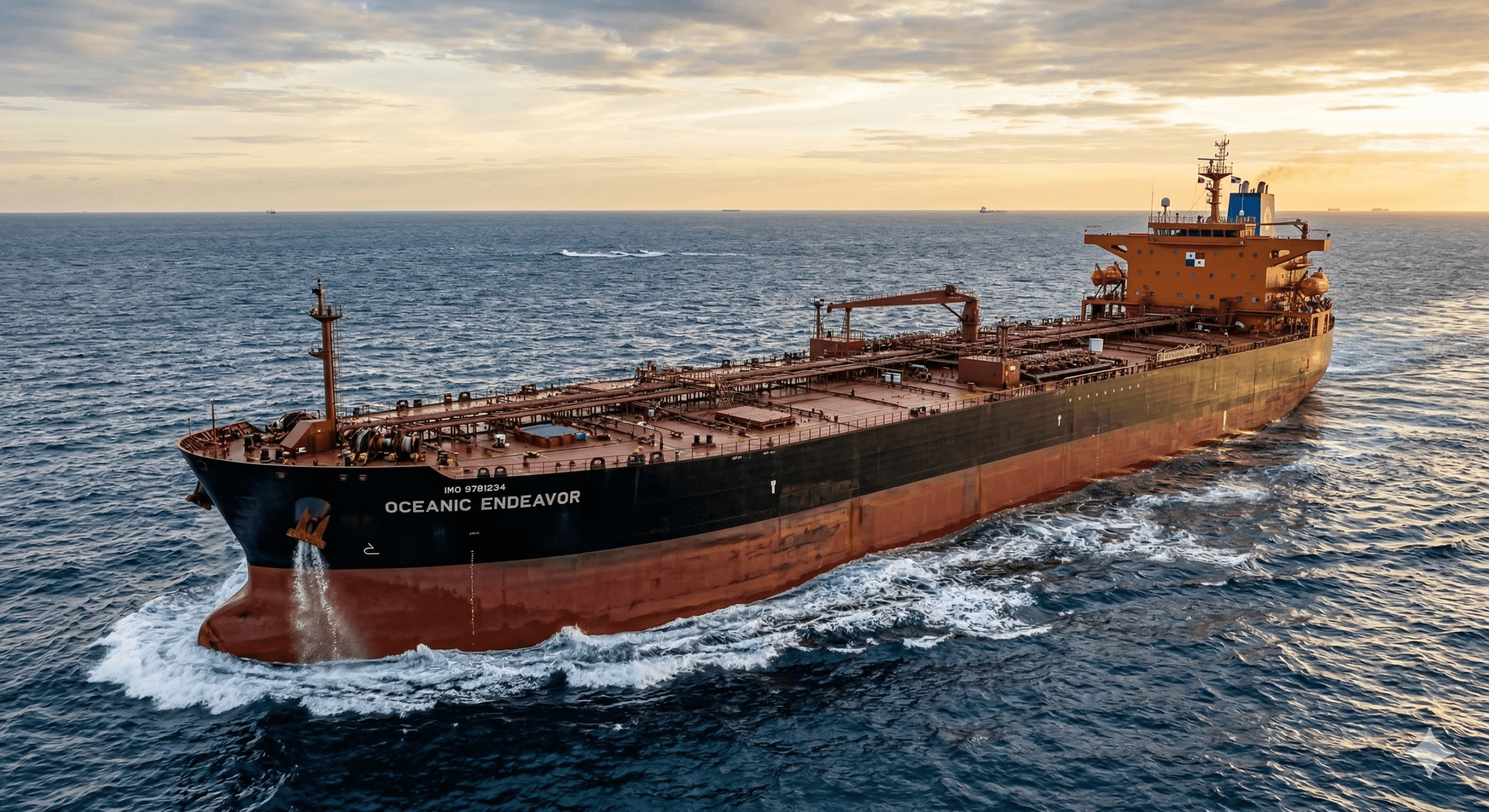
In the volatile theater of global geopolitics, absolute policies rarely survive contact with a systemic crisis. The sudden eruption of a widespread conflict in the Middle East has once again proved this axiom. In a striking policy pivot this week, the United States Treasury Department granted India a temporary, 30-day waiver allowing its refiners to purchase Russian oil.
For a US administration that recently slapped massive 25% tariffs on New Delhi for this exact trade practice, the reversal is jarring. Yet, beneath the surface of this sudden diplomatic concession lies a stark reality: the total paralysis of the Strait of Hormuz. To understand why Washington granted India this emergency permission, one must examine the unfolding maritime disaster in the Persian Gulf and the fragile arithmetic of global energy markets.
The Chokepoint: The Strait of Hormuz in Crisis
To comprehend the scale of the current emergency, one must look to the geography of the Strait of Hormuz. At its narrowest, this waterway between Oman and Iran is a mere 21 miles wide, with shipping lanes restricted to just two miles in each direction. In times of peace, it is the jugular vein of the global economy. Roughly 20 million barrels of oil per day—representing about 20% of global petroleum liquids consumption—pass through these waters, alongside a massive share of the world’s liquefied natural gas (LNG).
As of early March 2026, this vital artery has been severed. Following intense US-Israeli military strikes on Iran in late February, the Islamic Revolutionary Guard Corps (IRGC) retaliated by effectively closing the strait to commercial shipping. The escalation has moved swiftly from rhetoric to kinetic action. Multiple vessels, including tankers with Indian crew members, have been struck by projectiles and drone boats.
Consequently, the world’s major shipping and insurance firms have designated the strait a high-risk zone, causing maritime traffic to plummet to near zero. Tankers are currently anchored outside the Gulf, paralyzed by skyrocketing freight rates and canceled insurance coverage. Iran has weaponized its geography, effectively taking a fifth of the world’s daily oil supply hostage.
India’s Strategic Vulnerability
For Asian economies, the Strait of Hormuz is not merely a shipping lane; it is an existential lifeline. And among the major Asian powers, India is arguably the most uniquely exposed.
India imports over 80% of its crude oil requirements. Historically, New Delhi has sourced roughly 40% to 50% of its crude, and up to 60% of its LNG, directly from the Middle East via the Strait of Hormuz. While countries like China, Japan, and South Korea maintain massive strategic petroleum reserves that can cover hundreds of days of domestic demand, India’s buffer is far thinner. Refining sources suggest that India’s effective crude inventories may only cover 20 to 25 days under the current crisis conditions.
With shipments from Saudi Arabia, Iraq, and the UAE physically blocked from exiting the Persian Gulf, India faces the immediate threat of a severe supply shock. A prolonged disruption would inevitably trigger a massive spike in domestic fuel prices, skyrocketing inflation, and a potential stall in India’s economic growth. New Delhi needed an immediate alternative to prevent an energy famine, and the only viable, massive supply available on short notice was Russian crude.
The Washington Calculus: Why the US Granted Permission
The Biden-Trump transition and subsequent interim trade deals saw Washington taking a hardline stance against India’s consumption of discounted Russian oil, arguing it funded Moscow’s war efforts. So why did US Treasury Secretary Scott Bessent suddenly issue a waiver allowing Indian refiners to buy Russian crude loaded by March 5 and delivered by April 4?
The answer lies in cold, calculated pragmatism. The US granted this permission for three critical reasons:
1. Preventing a Global Price Shock: Oil is a globally priced commodity. If India, the world’s third-largest oil consumer, suddenly found itself entirely cut off from the Middle East, it would be forced into a panicked bidding war for alternative supplies from Africa, the Americas, and the North Sea. This sudden surge in desperate demand would send global benchmark prices soaring well past $100 or even $120 a barrel. By allowing India to absorb Russian oil, the US is actively preventing a global price shock that would inevitably drive up inflation for American consumers back home.
2. Defeating the “Energy Hostage” Strategy: As Secretary Bessent explicitly noted, the waiver is designed to “alleviate pressure caused by Iran’s attempt to take global energy hostage.” If Iran’s blockade successfully crashed the economies of major neutral powers like India, Tehran would gain immense geopolitical leverage. Washington’s waiver effectively defangs Iran’s blockade, ensuring that global markets remain sufficiently liquid despite the closure of Hormuz.
3. Carefully Ring-Fenced Concessions: The US Treasury was careful to design this as a “stop-gap measure” rather than a total capitulation. The waiver specifically applies only to Russian oil that is already loaded on vessels and stranded at sea. Because this oil is already on the water, purchasing it does not deliver a new, substantial financial windfall to the Russian government. It is a one-time release valve rather than a permanent pipeline.
The Strategic Takeaway
The 30-day US waiver is a masterclass in crisis management, demonstrating how ideological goals (sanctioning Russia) must occasionally bow to immediate systemic threats (the closure of Hormuz). For India, the waiver offers a brief reprieve to keep its refineries humming and its economy stable while the Middle East burns.
However, for strategists looking ahead, the events of March 2026 serve as a glaring warning. The global economy remains precariously dependent on a 21-mile-wide chokepoint. Until nations like India drastically increase their strategic reserves and diversify their energy portfolios away from volatile chokeholds, they will remain at the mercy of distant conflicts—and dependent on the conditional waivers of superpowers.
For India, the Hormuz crisis is not simply another distant geopolitical shock—it is a stark reminder of the structural vulnerability built into the global energy system. The temporary US waiver may stabilize markets for now, but it does not solve the deeper strategic problem: the world’s third-largest oil consumer remains heavily dependent on a narrow maritime chokepoint vulnerable to war and coercion. As tensions continue to escalate across the Gulf, policymakers in New Delhi will be forced to accelerate diversification of supply routes, expand strategic petroleum reserves, and deepen maritime security cooperation across the Indian Ocean. For a deeper look at how the Iran conflict is already reshaping markets and defence stocks, read our analysis on
the market impact of the US-Iran war.
Meanwhile, broader data on global oil flows through the Strait of Hormuz can be explored through the
US Energy Information Administration’s energy chokepoint analysis, which underscores just how fragile the global energy artery remains.