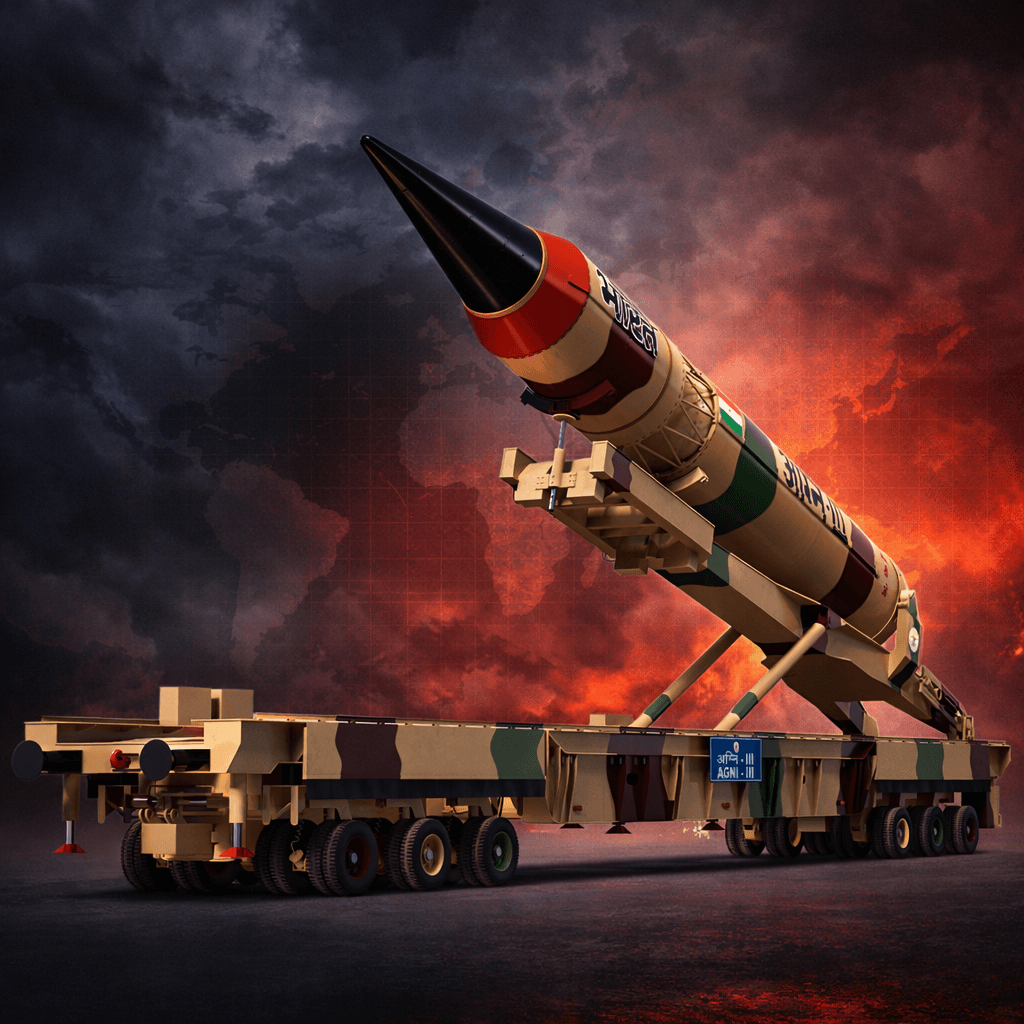
India defence stocks are moving because the Middle East war isn’t only about missiles and headlines—it’s about a multi-year procurement cycle that can re-rate India’s defence manufacturers, while also raising oil and shipping risks.
Beyond the hype: what the conflict is really “buying” (missiles, radars, drones), why India could benefit, and where the downside traps are.
INTEL SUMMARY
- Core signal: wars create replenishment + readiness cycles—orders, upgrades, spares, and surveillance.
- What’s in demand: air-defence, missiles, radars, electronic warfare, drones, secure battlefield networks.
- India angle: indigenisation + capacity build-up = better order visibility for select Indian manufacturers.
- Hidden shock: oil + maritime insurance/freight spikes can hit markets even if defence outperforms.
Strategic Overview [ tap links ]
Strategic Context
The Middle East is where energy chokepoints, missile warfare, and maritime risk collide. When escalation rises, the story doesn’t end with airstrikes—it spreads into defence budgets, stockpiles, and supply chains. That’s why India defence stocks often react faster than most people expect.
But the TES point is simple: industrial capacity is strategic power. In a conflict-heavy decade, countries that can manufacture radars, missiles, avionics, drones, and warship systems gain leverage—commercially and geopolitically.
For long-run global defence spending and arms-market trends, use:
SIPRI.
Why Defence Rallies in Wars (The Procurement Cycle)
India defence stocks and the “order-visibility” effect
Markets don’t pay for slogans; they pay for visibility. Conflicts trigger:
- replenishment (replace spent munitions and damaged systems)
- readiness upgrades (radars, comms, EW, air-defence integration)
- spares + maintenance (platform availability becomes mission-critical)
What the battlefield is really buying right now
- Air & missile defence: sensors, C2, interceptors
- Drones & counter-drone: detection, jamming, interdiction
- Electronic warfare: spectrum dominance + survivable communications
- Maritime surveillance: ISR for sea lanes and chokepoints
Translation: the “war trade” is often a technology + replenishment trade, not just tanks and headlines.
India’s Defence Ecosystem (Public + Private)
Why India is better positioned than the crowd thinks
India has been pushing indigenisation through procurement rules, local manufacturing, and private participation. In a stressed global market, import timelines become geopolitical—not just commercial. That creates space for domestic suppliers with proven delivery capacity.
Official references:
Ministry of Defence |
Department of Defence Production.
Where India is strongest (right now)
- Defence electronics: radars, surveillance, secure comms, C4ISR
- Missile manufacturing: selective categories and partnerships
- Aerospace programs: upgrades, maintenance, select indigenous platforms
- Naval build + refit: ships, subsystems, long maintenance cycles
“Wars rarely stay on the battlefield. The hidden battle is industrial: sensors, interceptors, spares, and supply chains.”
12 India Defence Stocks to Watch Amid the Middle East War
This is an intelligence watchlist—not a buy/sell call. Think: who benefits if procurement accelerates.
Core PSU anchors (strategic relevance)
- HAL – aircraft/helicopter programs, upgrades, spares, MRO ecosystem
- BEL – radars, comms, surveillance, C2 systems, EW adjacency
- BDL – missiles and guided weapons manufacturing exposure
- MDL – naval shipbuilding + defence program visibility
- GRSE – warship and patrol vessel pipeline sensitivity
Execution + niche private plays (higher volatility, higher torque)
- Bharat Forge – artillery/industrial capability spillovers
- Paras Defence – optics/defence tech niches (sentiment-driven swings)
- Data Patterns – electronics/embedded systems exposure
- Astra Microwave – RF/microwave components linked to radars
Watchlist add-ons (track orders + policy tailwinds)
- Zen Technologies – training/simulators; benefits from readiness narratives
- ideaForge – drones; sensitive to procurement + competition cycles
- DCX Systems – defence electronics supply-chain linkage
Internal link idea (optional): create a dedicated hub page later and link here:
TES Stock Market Desk
Positive vs Negative Sentiment
Positive sentiment: why the “defence boom” thesis exists
- Multi-year order cycle: replenishment + upgrades + spares
- Indigenisation tailwind: domestic preference improves order probability
- Export optionality: stretched global suppliers open room for alternatives
- Tech shift: drones/EW/air-defence push electronics-heavy winners
Negative sentiment: what can break the narrative
- Oil shock: higher crude can hurt India’s macro and market risk appetite
- Maritime disruption: freight and insurance spikes can hit growth forecasts
- Execution risk: delays, bottlenecks, QC issues can punish valuations fast
- Valuation risk: war rallies can overshoot fundamentals in the short term
3 Strategic Scenarios (What Happens Next)
Scenario 1: Contained escalation (headline fades, orders continue)
Markets cool after the first spike, but procurement discussions persist quietly. In this scenario, the real alpha is in order announcements, not news cycles.
Scenario 2: Prolonged regional war (procurement accelerates)
Demand rises for air-defence, drones/counter-drone, radars, and munitions. Strongest beneficiaries are firms with delivery capacity and repeat orders.
Scenario 3: Maritime disruption (the silent macro shock)
If risk to sea lanes increases, insurance premiums and freight costs rise. That can pressure broad markets even if defence stays resilient. Watch shipping risk like a macro indicator.
What to Track (Real Signals, Not Noise)
India defence stocks: 6 signals that matter more than headlines
- New order wins (especially repeat orders)
- Execution + delivery updates (timelines, milestones)
- Margin stability (cost pressure vs pricing power)
- Working capital trends (cash conversion tells a story)
- Export announcements (new geographies = strategic credibility)
- Policy/procurement changes (domestic preference + fast-track buys)
Context reading: If you missed the strategic backdrop, read:
how the US–Israel–Iran war could reshape India’s future.
Key Takeaways
- India defence stocks are reacting to a procurement cycle, not just war headlines.
- Winners are usually tied to air-defence, missiles, radars, EW, drones, and platform sustainment.
- The biggest macro risk is oil + maritime disruption, which can spill into all sectors.
- Track orders, deliveries, and execution—that’s where the real signal lives.
FAQ
Is this a good time to invest in India defence stocks?
It depends on your horizon and risk tolerance. War-driven moves can be fast and emotional. TES suggests focusing on orders and execution, not only sentiment spikes.
Which defence segments are most relevant in the Middle East war environment?
Air-defence, missiles, drones/counter-drone, radars, and secure communications are central in modern conflict.
Execution + valuation risk. If delivery slips or expectations get too high, the correction can be sharp—even if the long-term story remains intact.
Explore more:
Strategic Analysis |
Stock Market
Disclosure: This report is informational and does not constitute financial advice.
Sorry, no posts were found.