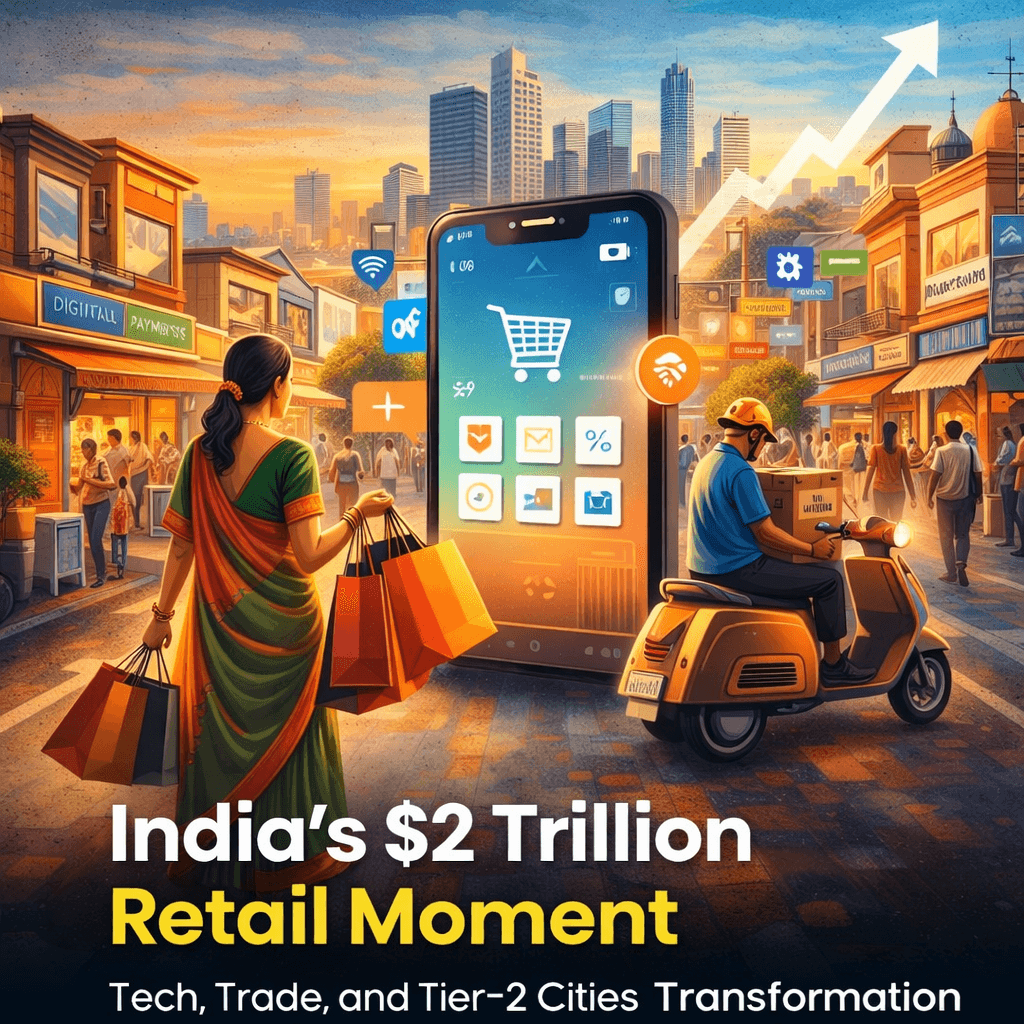
India’s $2 Trillion Retail Moment: How Tech, Trade and Tier-2 Cities Are Rewriting the Market
The Indian retail sector is undergoing a massive structural transformation. Moving far beyond the traditional debate of “online versus offline,” the industry is now a high-tech engine of the national economy. According to industry projections from the Retailers Association of India (RAI) and BCG, the market is on track to reach a staggering $2 trillion by 2030. Here is a deep dive into the forces driving this consumer revolution.
1. E-commerce vs. Physical Stores: The Rise of “Phygital”
The war between brick-and-mortar and e-commerce has ended in a hybrid model known as Phygital retail. Consumers now expect a seamless blend of both worlds.
- Experience Centers: Physical stores are increasingly acting as “showrooms.” Shoppers want to touch and feel products in-store, but expect the convenience of having the inventory delivered to their homes via apps.
- Dark Stores & Quick Commerce: The explosive growth of 10-minute delivery platforms has forced traditional retailers to convert back-end spaces into micro-warehouses.
- Mall Resurgence: Despite digital dominance, premium mall space is expanding rapidly, proving that physical shopping is now viewed as an essential leisure and entertainment experience.
2. The Future of Consumption: The Rise of “Bharat”
The next wave of explosive retail growth is not coming from the saturated metros. It is being driven by the aspirational middle class in non-metro, Tier-2, and Tier-3 cities. Emerging urban centers like Jamshedpur, Indore, and Jaipur are witnessing a surge in disposable income and brand awareness.
Even in historically value-conscious markets, there is a clear trend toward Premiumization. Consumers are upgrading from unbranded goods to branded alternatives, showing a willingness to pay more for quality, organic ingredients, and better aesthetics.
Retail Growth Rate (YoY) by City Tier
*Driven by rising disposable incomes and rapid Q-commerce expansion.
3. Trade Dynamics: Impact of India-US and India-EU Relations
Global trade negotiations are directly altering what sits on Indian retail shelves and how local manufacturers operate.
- India-US Trade Resolutions: Following the mutual resolution of several long-standing WTO disputes, tariffs have been significantly reduced on specific American agricultural imports. For instance, the removal of retaliatory tariffs on US products like almonds, walnuts, and apples has made these premium goods more price-competitive for Indian consumers.
- The India-EU FTA Push: While the Free Trade Agreement (FTA) with the European Union is still undergoing rigorous negotiations, its potential impact is massive. A successful deal aims to reduce tariffs on European electronics, machinery, and luxury goods, while providing Indian textile and apparel manufacturers with zero-duty access to the European market—a crucial step to compete with nations like Vietnam and Bangladesh.
4. Big Brands Eyeing the Indian Segment
India’s demographic dividend and rising middle class have made it the ultimate destination for global retail expansion. International heavyweights are entering the market, almost exclusively through strategic joint ventures with Indian conglomerates.
Luxury and lifestyle brands are leading the charge. Global names like Galeries Lafayette (partnering with Aditya Birla Fashion) and athleisure giant Lululemon are expanding their footprint. Meanwhile, international fast-food and apparel chains are actively looking beyond the top five cities to capture the growing demand in regional hubs.
2026 Hiring Demand Surge by Role
AI & Data Analytics Specialists
Supply Chain & Logistics Managers
Traditional Shop Floor Assistants
5. The Changing Job Landscape in Retail
Retail remains India’s second-largest employer, but the nature of the work is fundamentally shifting. The era of relying solely on unorganized floor staff is making way for a tech-enabled workforce.
- Digital Literacy is Mandatory: Even entry-level retail jobs now require the ability to operate digital payment gateways, inventory management software, and omnichannel fulfillment apps.
- Supply Chain & AI: The highest demand in the retail job market is for supply chain logistics experts, data analysts, and AI specialists who can forecast consumer demand and optimize delivery routes for quick commerce.
The Road Ahead
The Indian retail sector is at a historic pivot point. Driven by favorable demographics, aggressive digital adoption, and strategic global integrations, it is transforming from a fragmented traditional system into a consolidated, globally competitive powerhouse. For investors, businesses, and consumers alike, the next decade of Indian retail promises unprecedented opportunity.