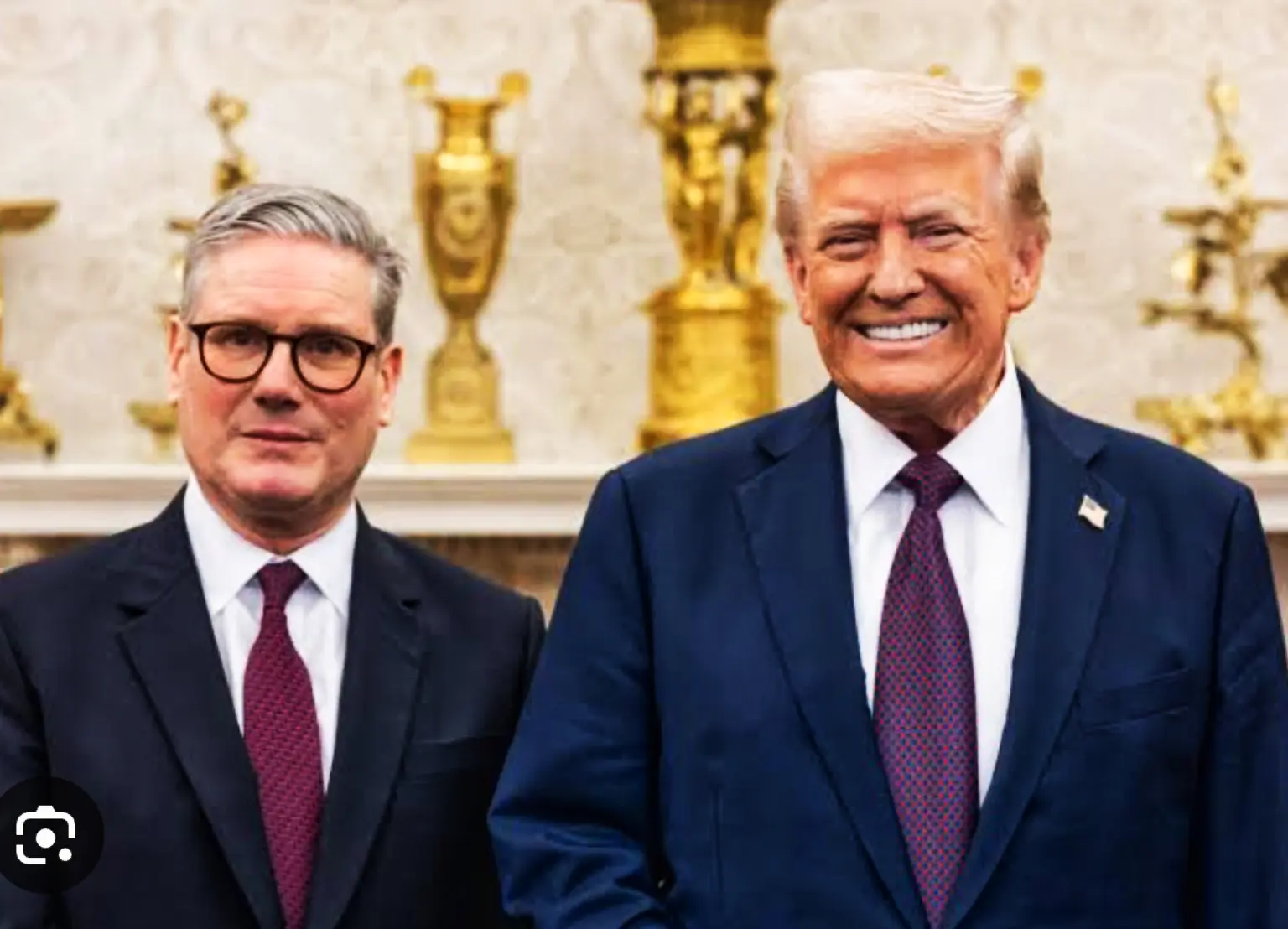
Starmer Blocks US Strike Bases; Trump Retaliates in Historic Diplomatic Rift
LONDON/WASHINGTON — The historic “Special Relationship” between the United States and the United Kingdom has fractured openly this week, triggering immediate ripples across global security architectures and financial markets. In an unprecedented diplomatic standoff, British Prime Minister Keir Starmer has officially denied the Trump administration permission to utilize British sovereign territory—specifically RAF Fairford in Gloucestershire and the Diego Garcia facility in the Indian Ocean—as staging grounds for a pre-emptive military air campaign against the Islamic Republic of Iran.
The refusal, rooted in deep-seated British legal anxieties regarding international law and sovereign complicity, has provoked a swift and characteristically blunt retaliation from Washington. President Donald Trump has abruptly withdrawn US diplomatic support for the UK’s contentious agreement to transfer sovereignty of the Chagos Islands to Mauritius, explicitly linking the territorial dispute to the Pentagon’s thwarted operational plans for the Middle East.
The Fairford and Diego Garcia Veto
Strategic planners at the Pentagon are currently finalizing “Global Strike” contingencies aimed at neutralizing Iranian nuclear and ballistic missile infrastructure. The mathematical and logistical viability of these operations relies heavily on forward-deployed heavy bombers. RAF Fairford serves as the US Air Force’s premier bomber forward operating location in Europe, routinely housing B-52 Stratofortresses and B-2 Spirit stealth bombers. Diego Garcia, positioned strategically in the central Indian Ocean, offers unparalleled reach into the Persian Gulf without the vulnerability of mainland Middle Eastern bases.
While the US maintains operational control of these facilities, the UK retains ultimate territorial sovereignty. Under long-standing bilateral protocols, Washington must secure explicit permission from London to launch offensive operations from British soil. Downing Street, heavily advised by government lawyers, has withheld this authorization. The prevailing legal interpretation in Whitehall dictates that facilitating a pre-emptive strike lacking a clear United Nations Security Council mandate, or failing the stringent tests of Article 51 of the UN Charter regarding imminent self-defense, could render Britain legally complicit in an act of illegal aggression.
“We cannot authorize the use of British bases for operations that lack a definitive legal foundation. The precedent of international law makes no distinction between a state carrying out the attack and those in material support if the latter have prior knowledge,” a senior Whitehall source noted.
This strict legalism marks a stark departure from historical precedents, such as 1986 when Prime Minister Margaret Thatcher permitted US F-111s to launch from British bases to strike Libya, and highlights the lingering institutional caution stemming from the 2003 Iraq War.
Trump Weaponizes the Chagos Handover
The British veto has infuriated the Oval Office. Just days after the US State Department formally backed Starmer’s proposed treaty to hand sovereignty of the Chagos Archipelago back to Mauritius, President Trump executed a spectacular policy reversal. Taking to his Truth Social platform on Wednesday, Trump declared the agreement a “big mistake” and issued a direct warning to the UK Prime Minister: “DO NOT GIVE AWAY DIEGO GARCIA!”
The proposed treaty involves the UK ceding the British Indian Ocean Territory to Mauritius while securing a 99-year lease to maintain the joint UK-US military presence on Diego Garcia, at an estimated cost of £35 billion (roughly £350 million annually). Trump derided this arrangement as “tenuous, at best,” warning that “it may be necessary for the United States to use Diego Garcia, and the Airfield located in Fairford, in order to eradicate a potential attack by a highly unstable and dangerous Regime.”
The diplomatic crisis is further complicated by action on the ground. This week, a group of exiled Chagossians, led by their government-in-exile first minister Misley Mandarin, landed on the disputed archipelago in a small boat. They are demanding the right to resettle their homeland as British citizens and urging Starmer to scrap the Mauritius treaty entirely. For Washington, the islanders’ claims—which Trump had dismissed as “fictitious” just weeks ago—now serve as convenient geopolitical leverage to pressure London into compliance on the Iran front.
Logistical Nightmares and the “Middle East Gap”
Militarily, the UK’s refusal creates a formidable logistical bottleneck for the US Air Force. Without Fairford and Diego Garcia, long-range bombers will be forced to operate from Andersen Air Force Base in Guam or directly from the continental United States (CONUS). This exponentially increases the “cost-per-sortie,” requires a massive choreography of KC-135 and KC-46 aerial refueling tankers, and significantly increases the radar visibility and early-warning windows for Iranian air defense networks.
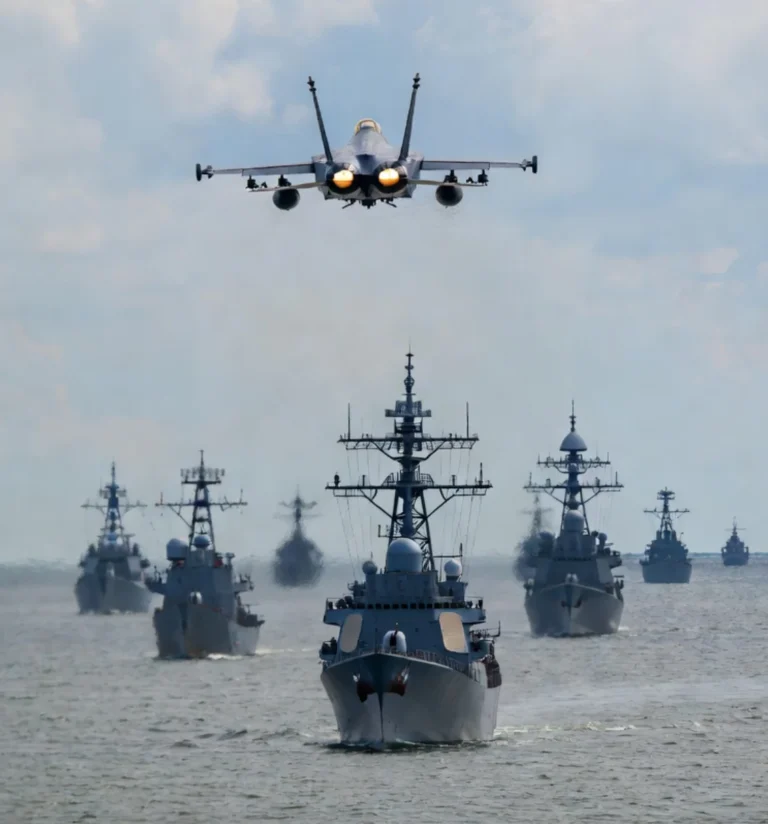
The alternative is a heavy reliance on carrier strike groups currently positioned in the Red Sea and the Gulf of Oman. However, naval aviation platforms like the F/A-18 Super Hornet and F-35C possess smaller payload capacities and shorter combat radiuses compared to heavy strategic bombers. This severely limits the depth, penetration, and sustained intensity of a potential bombardment campaign against deeply buried nuclear facilities like Fordow or Natanz.
Market Contagion: Commodities, Energy, and Defense Equities
The public rupture between Washington and London has immediately repriced geopolitical risk across global financial markets. Energy markets reacted violently, with Brent Crude spiking 3.4% to crest the $85 per barrel threshold as commodities traders priced in a more protracted, unpredictable, and potentially destabilizing buildup to any Middle Eastern conflict.
Capital flight to safety has aggressively accelerated. Spot gold and silver have seen massive institutional inflows, tracking sharply higher as a direct proxy for geopolitical anxiety. This upward trajectory in precious metals is driving intense volume across global commodities exchanges, heavily mirrored in vital Asian trading hubs such as the MCX, where silver contracts have touched multi-month highs on the prospect of prolonged geopolitical instability.
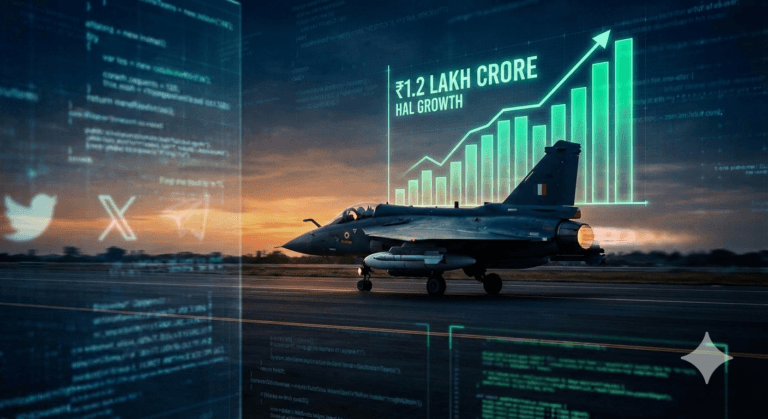
Simultaneously, the diplomatic vacuum in the Indian Ocean is forcing a rapid re-evaluation of Indo-Pacific defense equities. With the US-UK security umbrella suddenly clouded by political infighting over Diego Garcia, regional powers are accelerating indigenous military procurement. Institutional capital is aggressively pivoting toward domestic defense and aerospace contractors in emerging markets. Defense manufacturers capable of bridging the regional maritime and aerospace security gap—such as Hindustan Aeronautics Limited (HAL) and Bharat Dynamics Limited (BDL)—are experiencing notable accumulation. Investors are betting that structural uncertainty in the Indian Ocean will drive a secular supercycle in domestic defense spending, operating entirely independent of NATO’s internal friction.
Furthermore, the weaponization of the Chagos handover has injected severe risk premiums into Indian Ocean maritime logistics. Marine insurance rates for vessels transiting near the archipelago have ticked upward, compounding the existing inflationary pressures stemming from the ongoing Red Sea shipping disruptions. The prospect of a contested Diego Garcia base leaves a glaring vulnerability in the surveillance and protection of commercial shipping lanes linking Asian manufacturing hubs to European consumer markets.
The 10-Day Strategic Horizon
The coming days represent a critical juncture for both international diplomacy and global market stability. Analysts and algorithmic trading desks are closely monitoring the movement of US strategic assets. Any deployment of B-52s to alternative allied bases in the Middle East—or the mass repositioning of aerial refueling tankers to the Pacific theatre—will serve as a definitive signal that the Trump administration is prepared to bypass London and proceed unilaterally.
For Prime Minister Starmer, the domestic political fallout is already materializing. Opposition figures have lambasted the Prime Minister for alienating America and risking the broader intelligence-sharing protocols of the “Five Eyes” alliance. The government now faces an impossible trilemma: uphold international law, maintain the foundational US security alliance, or honor its decolonization commitments to Mauritius.
Ultimately, the Fairford-Diego Garcia standoff illuminates a shifting global paradigm. The post-war consensus, wherein American operational demands were seamlessly accommodated by European allies, is colliding with an era of strict legalism and transactional diplomacy. As the clock ticks on Iran’s nuclear timeline, the greatest immediate casualty of this crisis is the operational certainty of the Western alliance itself.