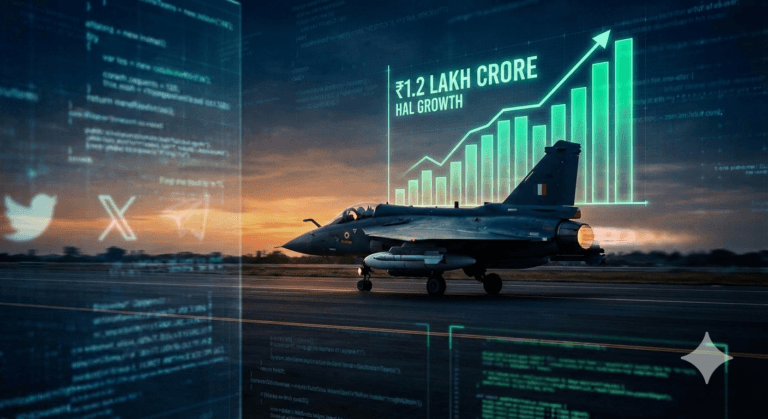
The Tejas Truth: Why One Landing Glitch Won’t Stop India’s 1.2 Lakh Crore Defense Rise
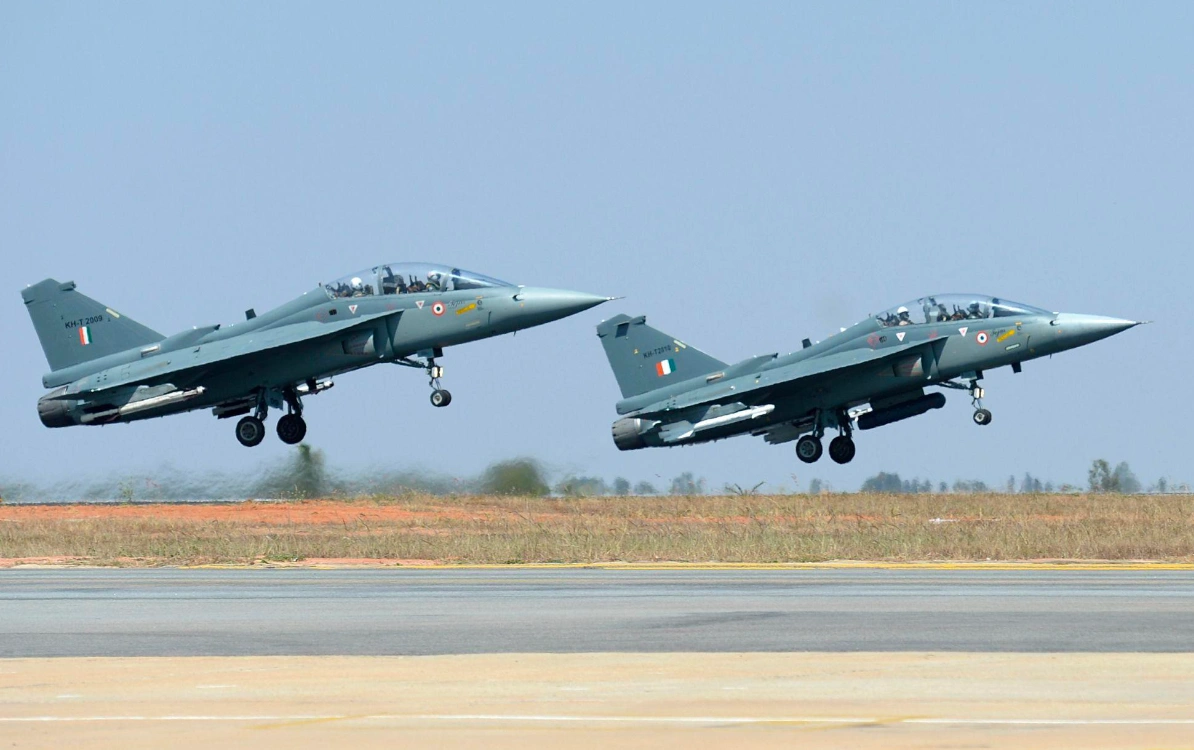
The recent LCA Tejas Mk1 accident during a landing phase has triggered understandable concern across India’s defense and aerospace ecosystem. While any loss of a frontline fighter aircraft is operationally serious, early indications suggest this incident represents a manageable technical disruption rather than a structural failure of India’s indigenous fighter program.
More importantly, the broader strategic, industrial, and technological foundations of the Tejas fighter jet program remain exceptionally strong. The aircraft continues to represent the backbone of India’s airpower modernization and aerospace self-reliance.
Immediate Incident: Technical Glitch, Not Structural Weakness
The most critical and reassuring outcome of the February 2026 LCA Tejas Mk1 accident was the safe ejection of the pilot. This confirms that the aircraft’s safety systems performed exactly as designed.
Initial reports suggest a runway excursion caused by a braking or anti-skid system issue. Such incidents, while operationally disruptive, are typically linked to mechanical subsystems rather than fundamental design flaws. These components can be inspected, upgraded, and strengthened across the fleet without compromising the aircraft’s core combat capability.
The Indian Air Force’s precautionary inspection of the fleet reflects strong safety discipline, not lack of confidence in the platform.
HAL’s Massive Order Book Provides Long-Term Stability
The strength of the LCA Tejas program is best reflected in Hindustan Aeronautics Limited’s massive and secure order book. HAL has already received confirmed orders for 83 Tejas Mk1A fighters, with additional orders expected as India accelerates squadron replacement.
The Tejas Mk1A program alone is valued at over ₹48,000 crore, making it one of India’s largest indigenous defense contracts. Combined with future Mk2 and Advanced Medium Combat Aircraft (AMCA) programs, HAL’s aerospace pipeline remains structurally strong for the next decade.
Official program details can be accessed via the Hindustan Aeronautics Limited official website.
This robust order pipeline ensures long-term production continuity, technological advancement, and financial stability regardless of short-term operational incidents.
GE Engine Agreement: A Transformational Strategic Breakthrough
One of the most powerful developments strengthening the Tejas ecosystem is India’s agreement with General Electric to manufacture GE F414 jet engines domestically.
This agreement provides India with unprecedented access to advanced jet engine manufacturing technology, which has historically been tightly controlled.
The GE F414 engine will power the upcoming Tejas Mk2, delivering significantly enhanced:
- Thrust capability
- Operational range
- Combat payload capacity
- Overall combat performance
This agreement represents a strategic breakthrough in India’s defense self-reliance, reducing dependency on foreign engine imports while strengthening India’s indigenous aerospace manufacturing capability.
SJ-100 and India’s Expanding Aerospace Role
India’s aerospace ambitions extend beyond fighter aircraft. HAL is also exploring cooperation opportunities related to aircraft production, maintenance, and component manufacturing across multiple aviation platforms.
India’s growing aerospace manufacturing ecosystem positions HAL as a future global aerospace production hub. The expertise gained from the Tejas fighter jet program directly strengthens India’s capability to support broader aerospace manufacturing initiatives.
This industrial ecosystem strengthens India’s technological sovereignty and economic resilience.
Why Tejas Is the Best Strategic Choice for the Indian Air Force
The LCA Tejas Mk1 and Mk1A offer several decisive advantages that make them the optimal solution for India’s airpower requirements.
First, Tejas is specifically designed for India’s operational environment, including high-altitude airbases and diverse climate conditions.
Second, indigenous production ensures long-term supply chain security, eliminating the risk of foreign sanctions, export restrictions, or geopolitical disruptions.
Third, Tejas provides significantly lower lifecycle costs compared to imported fighter aircraft, making it financially sustainable for large-scale squadron deployment.
Fourth, indigenous control allows continuous upgrades, customization, and technological evolution without external approval.
For deeper analysis on India’s defense and technology growth, see our internal strategic report here: India’s defense technology and industrial expansion analysis.
Strategic Importance: Backbone of India’s Air Defense Future
The Indian Air Force currently faces a declining squadron strength due to the retirement of aging aircraft such as the MiG-21 and Jaguars. The Tejas platform is essential to filling this gap and restoring operational strength.
The Tejas program strengthens India across multiple strategic dimensions:
- National defense readiness
- Aerospace technological independence
- Domestic industrial growth
- Long-term strategic sovereignty
No other aircraft offers the same combination of affordability, domestic control, scalability, and strategic independence.
Long-Term Outlook Remains Strong and Secure
Despite the recent LCA Tejas Mk1 accident, the long-term outlook for the program remains overwhelmingly positive. The combination of strong government support, massive confirmed orders, domestic engine manufacturing capability, and strategic necessity ensures the program’s continued growth.
Short-term technical inspections and operational pauses are a normal part of aerospace program maturation. These measures strengthen long-term safety, reliability, and combat readiness.
The Tejas fighter jet program remains one of the most strategically important pillars of India’s defense modernization and aerospace self-reliance.