The Eastern Strategist | Global Energy | Iran War
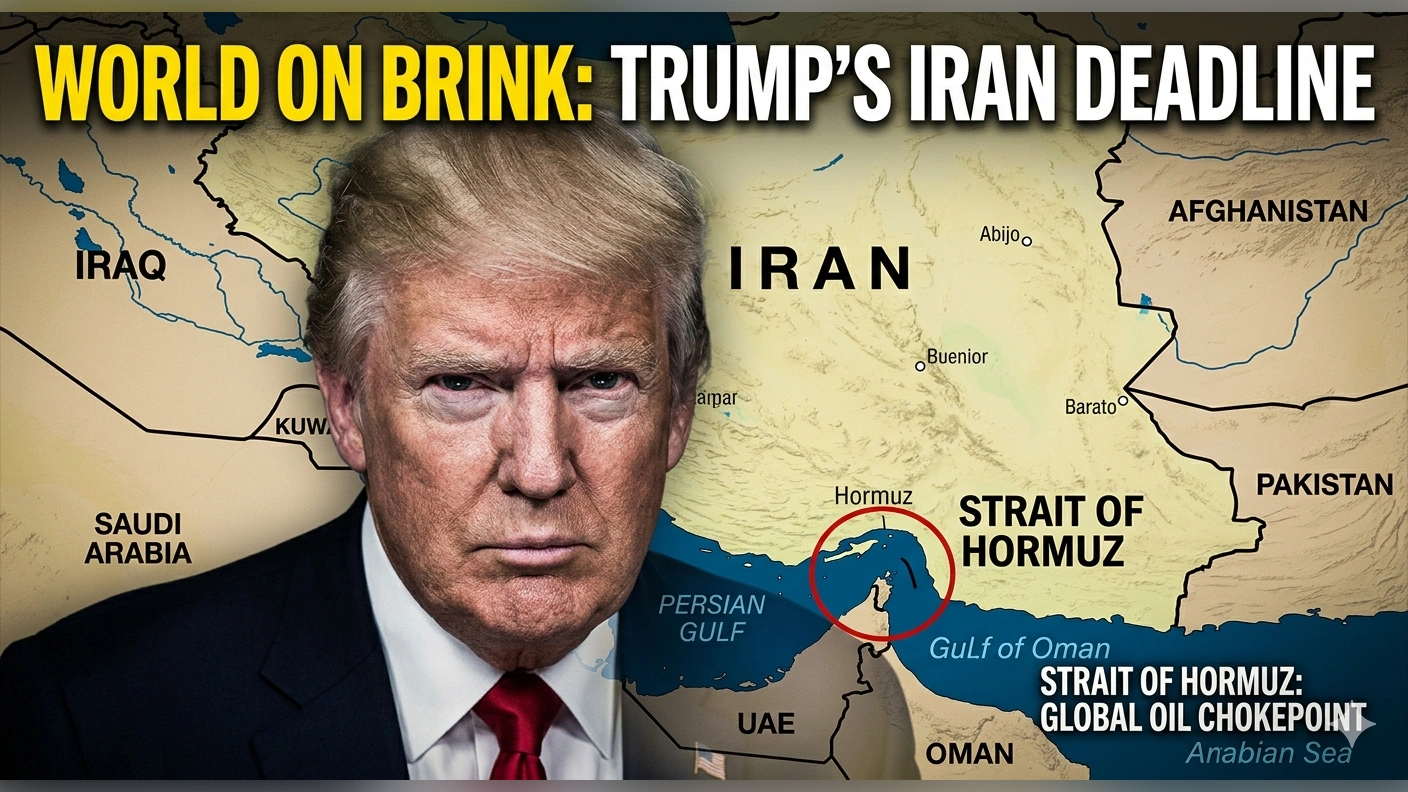
World on Brink: Trump’s 8 PM Iran Deadline Could Send Indian Petrol Prices Soaring
With the Strait of Hormuz still effectively shut and oil near $110 a barrel, Trump’s latest ultimatum to Iran has turned a regional war into a direct threat to India’s fuel bill, inflation, and household budgets.
The world is staring at a dangerous countdown. US President Donald Trump has said his Tuesday night deadline for Iran is final. If Tehran does not move toward reopening the Strait of Hormuz and accept a broader deal, Trump has warned of massive attacks on Iranian infrastructure, including power plants and bridges. That threat has pushed the war into an even more dangerous phase, with global energy markets now bracing for a fresh shock. 1
For India, this is not a distant geopolitical drama. This is a direct pocketbook story. If the Strait remains blocked and oil keeps rising, the pressure will not stop at crude prices. It will move into petrol, diesel, transport, food, freight, and eventually the monthly budgets of ordinary families.
Read our wider war coverage here: Iran War Hub. For the shipping chokepoint that sits at the center of this crisis, see our Strait of Hormuz geopolitical guide.
Why the Strait of Hormuz matters so much
The Strait of Hormuz is one of the world’s most important energy routes. Around one-fifth of global oil flows through this narrow passage. That is why any disruption there shakes the entire market. Since Iran moved to choke traffic through the strait after the war exploded in late February, traders, governments and import-dependent economies have all been on edge. 2
This is not just about tankers being delayed. It is about fear spreading through the entire energy chain. If ships cannot move freely, insurance costs jump, freight costs rise, refiners get nervous, and importing countries begin to prepare for tighter supply and higher prices.
External coverage: Reuters on oil and Hormuz risk, Reuters on Trump’s final deadline.
Trump’s threat has raised the stakes sharply
Trump is no longer hinting. He has openly threatened broad attacks on Iran’s infrastructure if Tehran refuses to comply. His public remarks about targeting bridges and power plants have stunned diplomats and raised fresh fears that the conflict may soon move far beyond military sites into the civilian backbone of the Iranian state. 3
That matters because once the war expands from missiles and bases to power grids and transport links, the damage multiplies fast. The risk is no longer limited to battlefield losses. It becomes a story of economic paralysis, humanitarian fallout, and much deeper market panic.
Also read our analysis on the war’s market shock: US-Iran war market impact and defence stocks.
Why India should be worried
India imports most of its crude oil, so any sustained shock in the Gulf quickly becomes an Indian economic problem. Reuters and AP reporting show Brent crude trading around the $110 mark as markets price in the risk of deeper escalation. That may still be below past crisis peaks, but it is already high enough to trigger concern for a country that depends heavily on imported energy. 4
The chain reaction is simple. Higher oil means costlier fuel. Costlier fuel means more expensive transport. That pushes up the price of vegetables, milk, medicines, manufactured goods and logistics. If the disruption lasts, inflation pressure builds fast.
For industrial cities like Jamshedpur, the danger is even more practical. Steel, auto and heavy manufacturing all depend on stable supply chains, predictable shipping, and manageable energy costs. A prolonged Gulf shock can raise production costs, delay shipments, and put pressure on local industry.
More on the India angle here: How the Middle East war affects India.
Can diplomacy still stop this?
There is still diplomacy in the background, but it is weak and under intense pressure. Reuters reported that a Pakistan-backed framework has been shared with both Iran and the United States, built around a ceasefire and a path toward reopening the Strait of Hormuz. But Tehran has not accepted it and has instead pushed for a more permanent end to the war. 5
That leaves the crisis hanging on a brutal question: will Iran bend before the deadline, or will Trump follow through on threats that could push the conflict into a much wider and more destructive stage?
External links: Reuters on the ceasefire proposal, AP on the wider fallout.
What happens next
The next few hours matter because energy markets hate uncertainty more than almost anything else. If the strait remains shut and the war moves deeper into infrastructure, the world may be looking at a broader oil shock, tighter shipping flows, and another wave of inflation fears.
The blunt truth is this: what happens between Washington and Tehran by Wednesday morning in India may decide not just the next phase of the war, but also what millions of Indians end up paying at the pump.