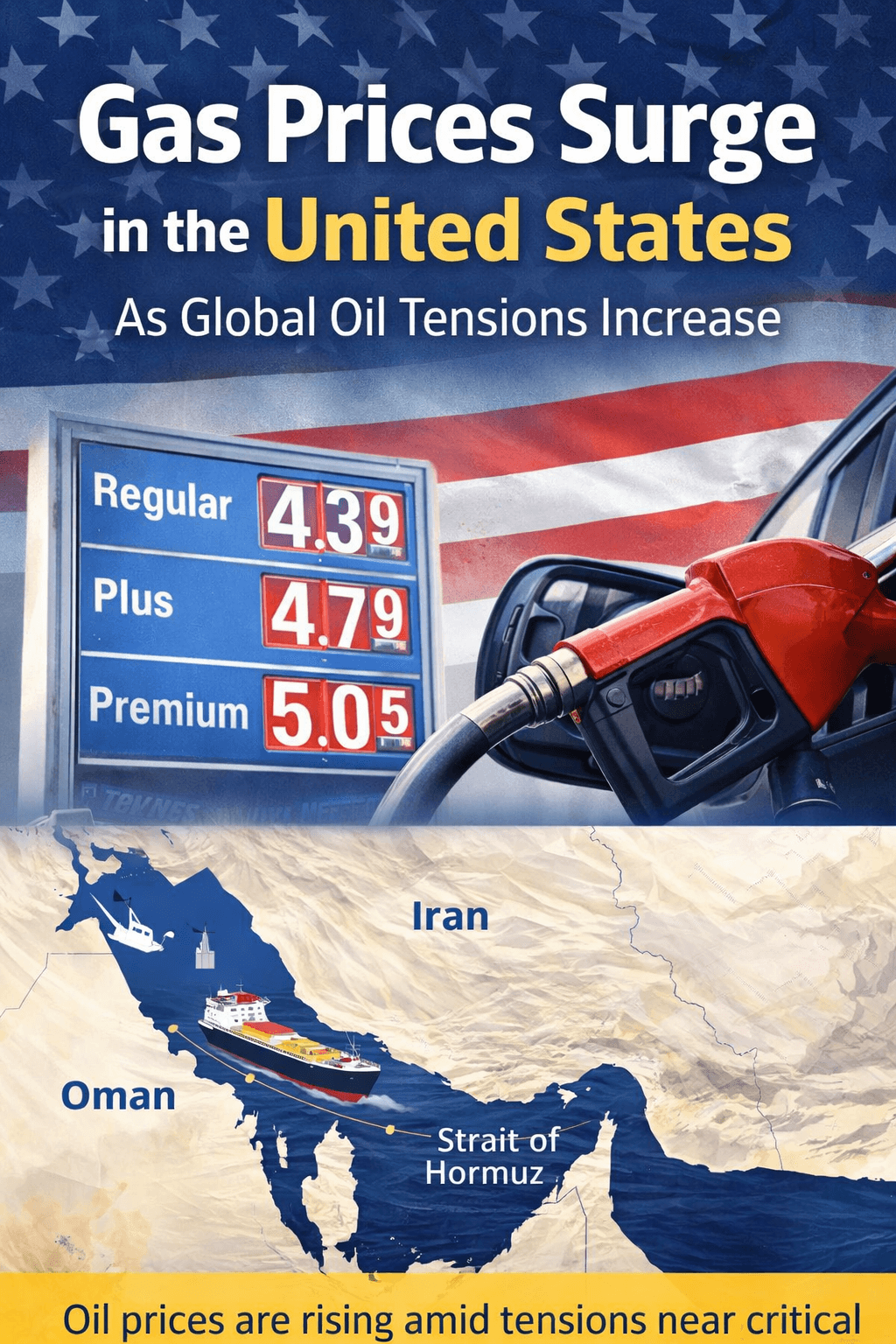
Oil markets moved sharply this week as tensions in the Middle East raised new concerns about the stability of global energy supply. Brent crude, the international benchmark, climbed toward the $100-per-barrel level after reports of military activity near key shipping routes in the Persian Gulf.
For American consumers, the implications are straightforward. Higher crude prices typically translate into rising gasoline costs within weeks, particularly as refineries and distributors adjust to changing market conditions.
The United States remains one of the world’s largest oil producers, pumping more than 13 million barrels per day according to recent government data. Yet the country still operates within a global energy market where disruptions abroad can quickly affect domestic fuel prices.
Much of the concern centers on the Strait of Hormuz, a narrow passage between Iran and Oman through which roughly one-fifth of the world’s oil shipments travel each day. Tankers carrying crude from Saudi Arabia, Iraq, Kuwait and the United Arab Emirates must pass through the corridor before reaching global markets.
Even limited disruptions in the area can move prices quickly. Shipping insurers often raise premiums during periods of regional tension, and some tanker operators temporarily reroute or delay cargoes until security conditions stabilize.
Energy traders responded quickly this week., Futures contracts on both Brent and U.S. West Texas Intermediate crude rose as investors assessed the possibility of tighter supply conditions.
Gasoline markets tend to react shortly afterward.
According to data from the U.S. Energy Information Administration, gasoline prices typically follow crude oil trends with a delay of several weeks. When global oil benchmarks rise sharply, the cost of refined fuel eventually increases across the country.
That effect is particularly visible during the summer driving season, when demand for gasoline climbs as Americans travel more frequently. Refiners often operate near full capacity during those months, leaving little room to offset higher crude costs.
The situation is complicated by the structure of the American fuel market. Gasoline prices vary widely between regions because of differences in taxes, environmental regulations and transportation costs.
California, for example, consistently records some of the highest pump prices in the country due to strict fuel standards and limited refinery capacity. In contrast, Gulf Coast states benefit from proximity to major refining hubs and domestic oil production.
Still, nationwide trends tend to move in the same direction when global crude prices rise.
Transportation economists note that higher fuel costs can ripple across the broader economy. Trucking companies, airlines and shipping operators often pass increased fuel expenses on to consumers through higher transportation and delivery charges.
That chain reaction can eventually influence the price of groceries, consumer goods and air travel.
Energy analysts say markets are now watching several developments closely. Among them are naval movements near key shipping lanes, diplomatic efforts to contain regional tensions, and the pace of oil production from major exporters such as Saudi Arabia and the United States.
Another factor is the global supply balance.
Oil demand has remained relatively strong despite slower economic growth in some regions, and inventories in several major consuming countries have tightened compared with earlier years. When spare supply is limited, markets tend to react more aggressively to geopolitical risks.
The United States has tools to cushion short-term shocks, including the Strategic Petroleum Reserve, a network of underground storage sites capable of releasing millions of barrels of crude into the market during emergencies. Government officials have used the reserve in the past to stabilize supply during disruptions.
Yet those measures are typically temporary.
Energy markets ultimately respond to broader supply conditions and expectations about future production. If geopolitical tensions persist or expand, traders may continue to price in the possibility of tighter global supply.
For now, gasoline prices in much of the United States remain below the record levels seen in previous energy crises. But the recent surge in crude markets illustrates how quickly conditions can change.
Energy markets operate on a global scale. When instability emerges near critical shipping routes thousands of miles away, the consequences often appear first on trading screens — and eventually at fuel pumps across the United States.