GEOPOLITICS | ENERGY | MARKETS
Latest Update
NEW DELHI — The Iran War Impact on Global Oil Markets continues to shape global financial trading as crude prices swing and defence stocks rally across several markets.
Brent crude briefly surged above $120 earlier in the week before falling sharply toward the low $90 range as traders reassessed the risk of a prolonged disruption to Gulf energy flows.
Meanwhile, U.S. President Donald Trump claimed American strikes had destroyed roughly 80 percent of Iran’s missile launch infrastructure, arguing the operation prevented a large-scale regional attack.
Speaking at a public event, Trump said Iranian forces were preparing to strike multiple targets across the Middle East and potentially attack Israel.
The White House has not released detailed operational data supporting the claim, and independent verification of the scale of damage remains limited.
For markets, the message is simpler.
Oil risk has eased—for now.
Markets React: Oil Drop and Nifty Surge
The Iran War Impact on Global Oil Markets was immediately visible across financial markets this week.
Oil volatility triggered a rapid shift in investor sentiment, particularly in economies highly dependent on imported energy.
The Nifty 50 index surged after crude prices retreated, easing fears of inflation and pressure on India’s trade balance.
Energy drives Indian market sentiment.
India imports nearly ninety percent of its crude oil needs, meaning every large movement in oil prices quickly feeds into currency expectations, inflation forecasts, and equity market positioning.
When crude rises sharply, the rupee weakens and foreign investors reduce exposure to emerging markets.
When crude falls, risk appetite returns.
Airlines, logistics firms, and consumer sectors led the rebound on Dalal Street.
Markets move faster than diplomacy.
Related analysis:
Iran War First Week Strategic Assessment
The Missile Battlefield
Military exchanges continue across the region.
Iranian drones and missile launches have tested the defensive systems protecting U.S. bases and allied infrastructure in the Persian Gulf.
American naval forces report high interception rates.
The real challenge is volume.
Drone swarms allow relatively inexpensive attack platforms to force repeated launches of far more expensive interceptor missiles.
This imbalance turns air defense into a financial contest as much as a military one.
Earlier precision strikes targeted Iranian facilities connected to missile development and nuclear infrastructure near Natanz.
Yet hardened underground launch sites remain operational.
Air superiority does not eliminate strategic risk.
Oil Infrastructure and the Jask Strike
Energy infrastructure has become the strategic center of the conflict.
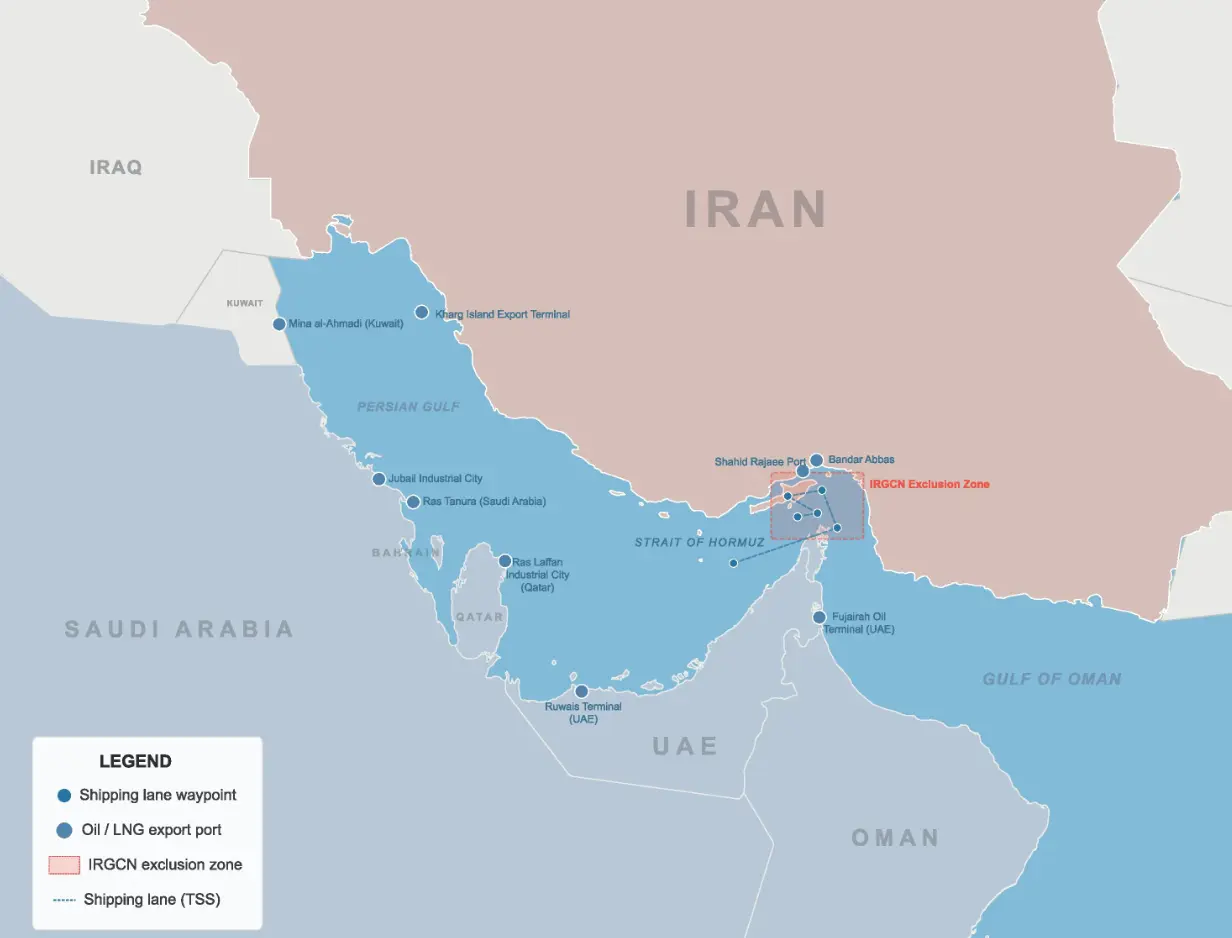
Satellite imagery shows significant damage at Iran’s Jask oil terminal, a facility developed to allow exports outside the Strait of Hormuz.
That route now appears constrained.
With export flexibility reduced, Iranian shipments must again rely heavily on the narrow maritime corridor separating Iran from Oman.
Energy leverage cuts both ways.
Shipping insurers have raised premiums for tankers entering the Persian Gulf, increasing transportation costs for global oil trade.
Shipping risk is now priced into energy markets.
External reference:
U.S. Energy Information Administration – Strait of Hormuz
Why Defence Stocks Are Rising
Geopolitical conflict often pushes investors toward industries linked to military spending.
Indian defence companies moved higher as markets began pricing stronger procurement pipelines and accelerated modernization programs.
Domestic manufacturing matters.
India’s defence strategy increasingly emphasizes local production to reduce reliance on imported systems.
Investors understand the signal.
When geopolitical instability rises, defence spending usually follows.
Missiles move markets.
Defence contracts move stock prices.
Related reading:
Operation Sindoor Strategic Analysis
The Strait of Hormuz Reality
The Strait of Hormuz remains the most important geopolitical chokepoint in the global energy system.
Roughly twenty percent of global oil supply passes through the narrow shipping corridor each day.
The corridor is only about twenty-one miles wide.
Iran’s northern coastline allows surveillance and naval positioning close to tanker routes.
Even limited disruption could send oil prices sharply higher.
Yet a full blockade would trigger a massive response from international naval forces.
Strategic restraint still matters.
Economic Pressure vs Military Power
Militarily, the United States maintains clear advantages.
Carrier strike groups operating in the Arabian Sea provide unmatched strike capability across the region.
But Iran’s strategy focuses less on direct confrontation and more on economic pressure.
By threatening energy infrastructure and shipping routes, Tehran can influence global markets even without achieving battlefield dominance.
Economic warfare becomes the second front.
Shipping companies are already adjusting routes to avoid contested waters.
Longer routes mean higher costs.
Global supply chains feel the pressure.
Strategic Outlook
The Iran War Impact on Global Oil Markets will remain the central geopolitical variable in the months ahead.
Oil traders, shipping companies, and central banks are watching developments around the Strait of Hormuz closely.
Even minor disruptions trigger major market reactions.
The strategic balance is clear.
Missiles shape the battlefield.
Oil infrastructure determines the global consequences.
Financial markets respond long before diplomats reach a settlement.
Missiles ignite crises. Oil determines the cost.
Oil Falls, Nifty Surges as Iran War Risks Shift to Strait of Hormuz