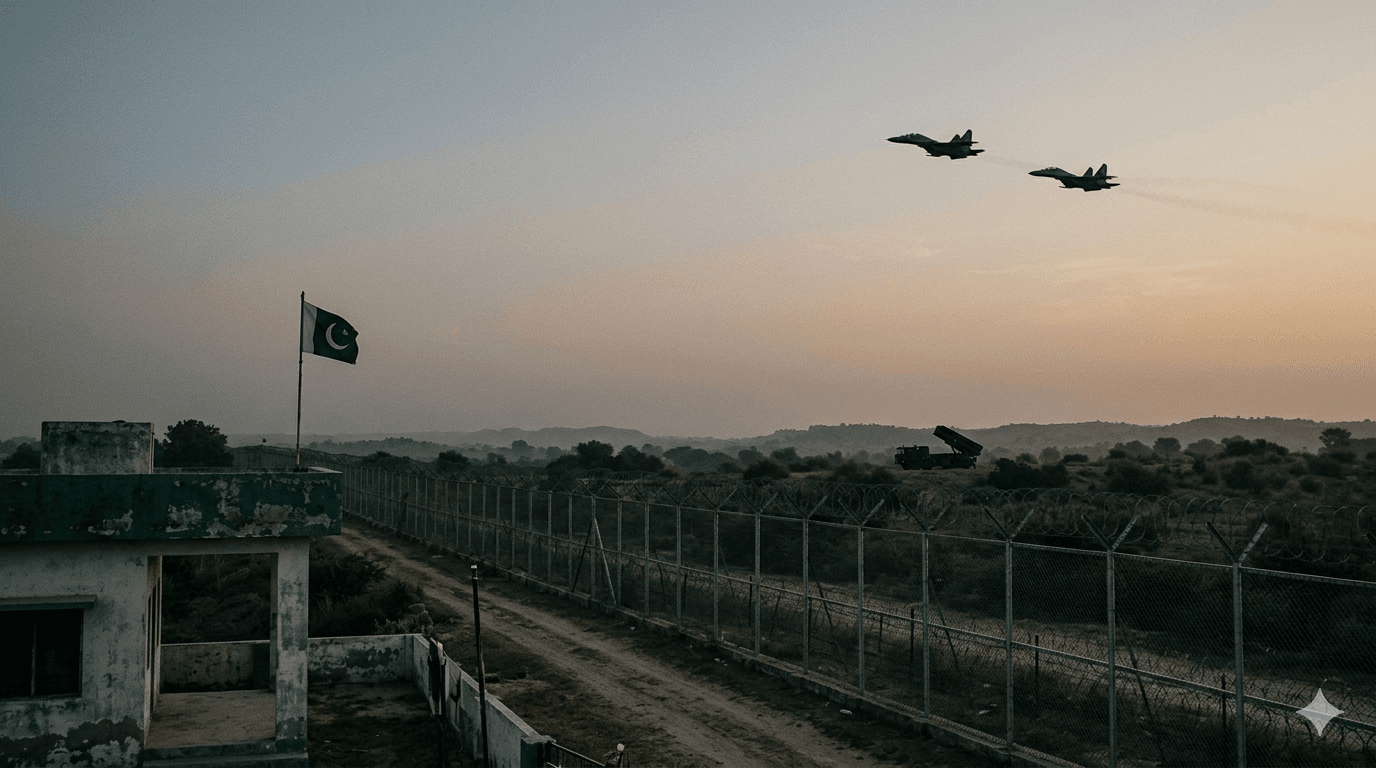
7 Hard Truths Behind Pakistan’s Kolkata Threat — Why India Still Looks Stronger
Pakistan’s latest threat to “take it to Kolkata” was meant to sound intimidating. But beneath the rhetoric lies a deeper reality: the remark says less about Pakistan’s confidence and more about India’s growing military, economic and psychological weight in the region.
The latest Pakistan Kolkata threat was designed to grab attention, trigger fear and widen the sense of risk beyond India’s western border. But strong countries are not judged by how loudly their rivals speak. They are judged by how prepared they are when those threats arrive.
That is what makes this episode important. Khawaja Asif’s remark is not just another provocation in the India-Pakistan cycle. It also reflects an uncomfortable reality for Islamabad: India today looks larger, more prepared and more strategically confident than it did even a few years ago.
The threat is real, but the deeper message is political
No serious country can brush aside open threats from a nuclear-armed neighbour. India should not. But it should also avoid the opposite mistake — mistaking sharp rhetoric for strategic superiority.
The Pakistan Kolkata threat is best understood as part military signal, part political theatre. It is meant to suggest that Pakistan can expand the map of confrontation and raise the cost of any future crisis. Yet the more dramatic the language becomes, the more it suggests a state trying to project control in an environment where the balance is shifting.
Pakistan wanted the headline to sound like fear. Instead, it sounded like recognition: India is now too large to be viewed only through the old border lens.
Why naming Kolkata matters
For decades, the military imagination around India-Pakistan tensions remained concentrated around Kashmir, Punjab, Delhi and the north-western arc. Kolkata changes the tone. It pulls eastern India into the rhetorical conflict map.
But this shift carries an irony. In trying to sound aggressive, Pakistan also highlights India’s national scale. Kolkata is not just another city. It is one of India’s major metropolitan centres, a cultural capital and a symbol of eastern strategic depth. Naming it is, in its own way, an admission that India’s gravity is no longer confined to one front.
India’s response is not noise. It is preparedness.
This is where the contrast becomes stark. Pakistan’s side is driven by warning-heavy rhetoric. India’s side is increasingly driven by deterrence-backed confidence.
Rajnath Singh’s warning that any Pakistani misadventure would invite an unprecedented response matters because it sits within a broader pattern. India has been strengthening air defence, surveillance, drones, strike capabilities and procurement depth. That is not the behaviour of a nervous power. It is the behaviour of a state preparing for a longer and harsher strategic era.
For a deeper look at how this shift is feeding into investor and strategic thinking, read our analysis on India’s defence-industrial rise.
The positive story is real — but so is the risk
This is where maturity matters. India’s strengths are real: a larger economy, greater military scale, rising defence exports, stronger procurement muscle and more room to absorb pressure in a crisis.
But India is not invulnerable. Any major regional flare-up brings real downside — especially through oil, shipping disruptions, inflation and market stress. The most immediate threat to India is often not rhetoric from Islamabad, but the economic shockwaves that follow war in the wider region.
That wider vulnerability is why the Strait of Hormuz remains critical for India’s energy security.
The hardest truth behind the Pakistan Kolkata threat
Strip away the provocation and the Pakistan Kolkata threat begins to look less like proof of Pakistan’s strength and more like evidence of India’s rise.
Pakistan is no longer reacting only to India’s border posture. It is reacting to India’s scale — military, industrial, economic and psychological. It is reacting to a country that now believes it can shape outcomes rather than merely absorb them.
That does not mean India should become reckless. It means India should recognise its position clearly. Strong states do not need to shout. They need to endure, build and respond with control.
Pakistan wanted this threat to sound like intimidation. Instead, it underlined a different truth: India stands taller than before, and even its adversaries are beginning to speak in the language of that rise.
Further Reading
Why Middle East turmoil is strengthening India’s defence story
How war risk is changing defence-market calculations
Source reporting from The Times of India and Reuters.