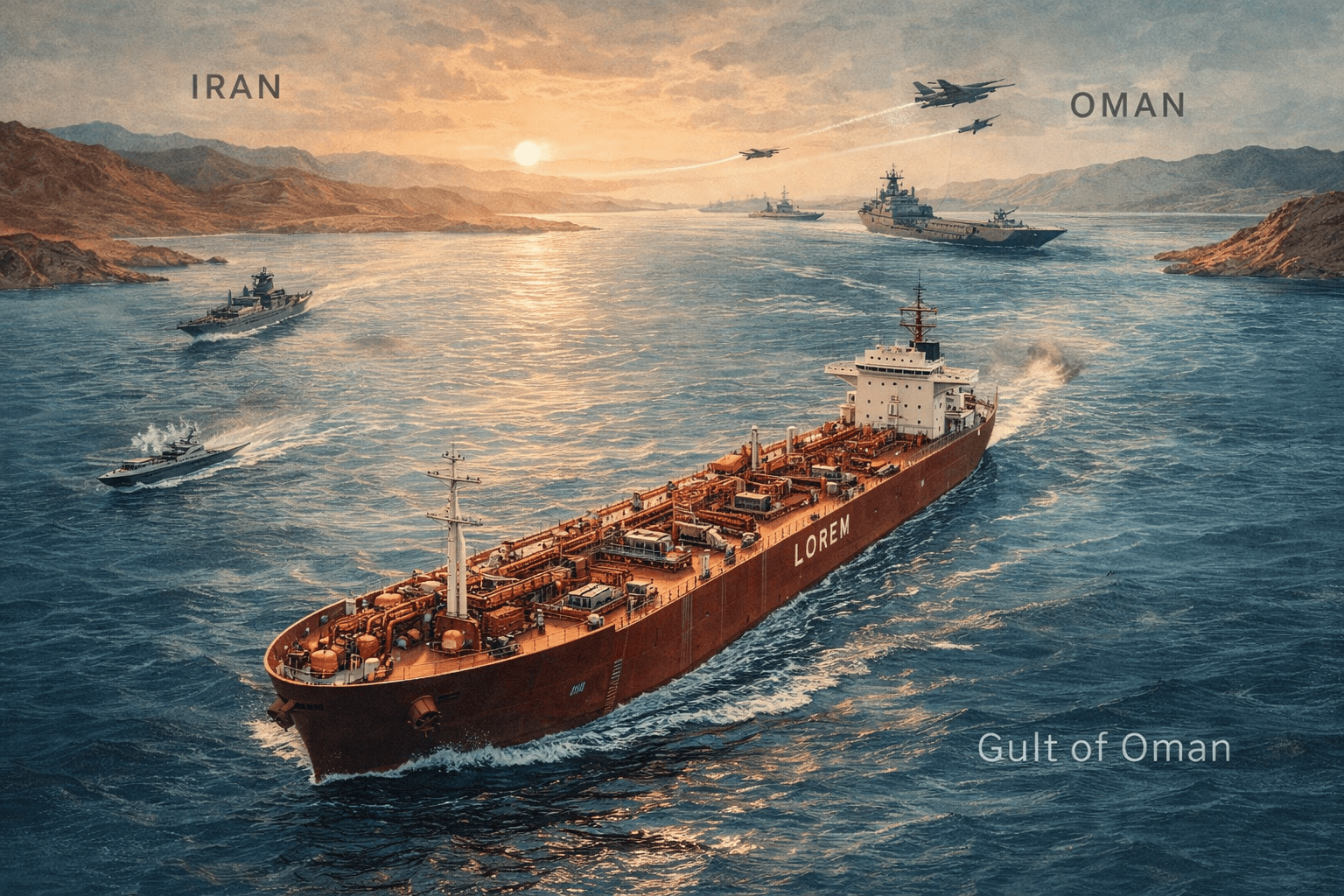
Why the Strait of Hormuz Matters
In a world increasingly defined by digital technology and artificial intelligence, it is easy to forget that the global economy still depends heavily on physical chokepoints. Few places illustrate this reality more starkly than the Strait of Hormuz—a narrow stretch of water between Iran and Oman that carries a staggering share of the world’s energy supply.
At its narrowest point, the strait is only about 33 kilometers (21 miles) wide, yet it handles roughly 20 percent of the world’s petroleum consumption, making it the most critical oil transit chokepoint on the planet. According to the U.S. Energy Information Administration (EIA), nearly 20 million barrels of oil per day move through this corridor from the Persian Gulf to global markets.
In times of geopolitical calm, the flow of tankers through the strait is largely routine. But whenever tensions rise in the Middle East—as they periodically do—the Strait of Hormuz quickly becomes one of the most closely watched locations on Earth.
The Global Oil Supply Route
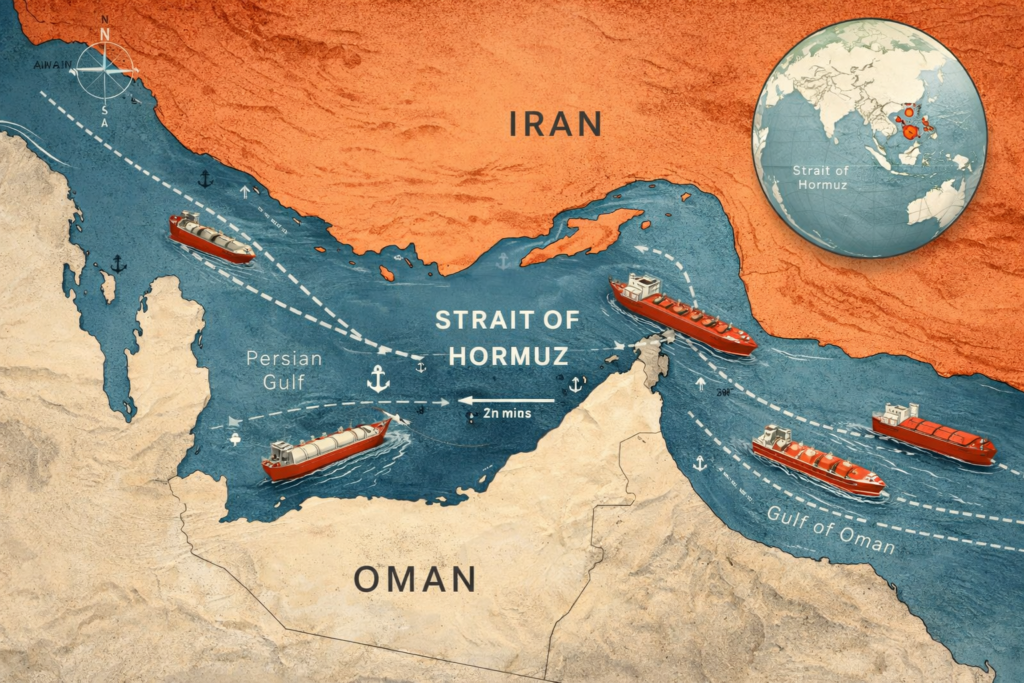
The significance of the Strait of Hormuz lies in its geography.
The waterway connects the Persian Gulf, home to some of the world’s largest oil producers, to the Arabian Sea and the wider Indian Ocean. Energy exporters including Saudi Arabia, Iraq, Kuwait, Iran, Qatar, and the United Arab Emirates rely heavily on this route to ship oil and liquefied natural gas to international markets.
For Asia in particular, Hormuz is an economic lifeline.
More than 80 percent of the oil passing through the strait is destined for Asian markets, including China, India, Japan, and South Korea. This means that any disruption in Hormuz would reverberate far beyond the Middle East, affecting manufacturing, shipping, and energy prices across the global economy.
The Military Balance in the Persian Gulf
Because of its importance, the Strait of Hormuz has long been a focal point of military strategy.
Iran controls the northern coastline of the strait, while Oman oversees the southern side. The shipping lanes themselves are extremely narrow—only two miles wide in each direction—which makes commercial vessels vulnerable to harassment or attack.
Over the years, Iran has repeatedly threatened to close the strait in response to sanctions or military pressure. However, fully blocking the waterway would be difficult.
The United States and its allies maintain a significant naval presence in the Persian Gulf, primarily through the U.S. Fifth Fleet based in Bahrain. American warships routinely patrol the region to ensure freedom of navigation and protect commercial shipping routes.
Even so, Iran possesses several asymmetric tools that could disrupt traffic without formally closing the strait.
These include:
naval mines
anti-ship missiles
drone attacks
fast attack craft used to harass tankers.
Even limited incidents could create major disruptions by driving up insurance costs and forcing shipping companies to reroute or suspend operations.
What Happens If the Strait of Hormuz Closes
If the Strait of Hormuz were blocked for an extended period, the consequences for the global economy would be immediate.
Oil markets are highly sensitive to supply disruptions. Analysts have frequently warned that a sustained shutdown could send oil prices above $120 per barrel, triggering inflation and slowing global growth.
Countries that rely heavily on imported energy would feel the impact most severely.
India, for example, imports more than 80 percent of its crude oil, with a large portion of those supplies originating from Gulf producers whose exports pass through Hormuz. China and Japan are similarly exposed.
In such a scenario, governments would likely scramble to secure alternative supplies from producers in Russia, the United States, West Africa, or Latin America. Strategic petroleum reserves could cushion the shock temporarily, but they would not fully offset a prolonged disruption.
Why Hormuz Remains the World’s Most Dangerous Chokepoint
Despite decades of discussion about diversifying energy supply routes, the world remains deeply dependent on the Strait of Hormuz.
Some Gulf states have built pipelines designed to bypass the strait, but these routes can only handle a fraction of total export volumes. The majority of the region’s oil still travels by tanker through this narrow maritime corridor.
This creates a persistent vulnerability in the global energy system.
Every escalation in the Middle East—whether military conflict, sanctions, or maritime incidents—raises the possibility that Hormuz could become a flashpoint. And because so much of the world’s energy supply passes through it, the consequences would extend far beyond the region.
Why This Chokepoint Still Matters
The modern world may be powered by digital networks and global finance, but the foundation of the global economy still rests on physical infrastructure.
Few places demonstrate this more clearly than the Strait of Hormuz.
A waterway barely wide enough for two shipping lanes continues to serve as the artery through which the lifeblood of the global energy system flows. As long as the world depends heavily on oil, the stability of this narrow strait will remain one of the most critical—and fragile—pillars of the international economic order.