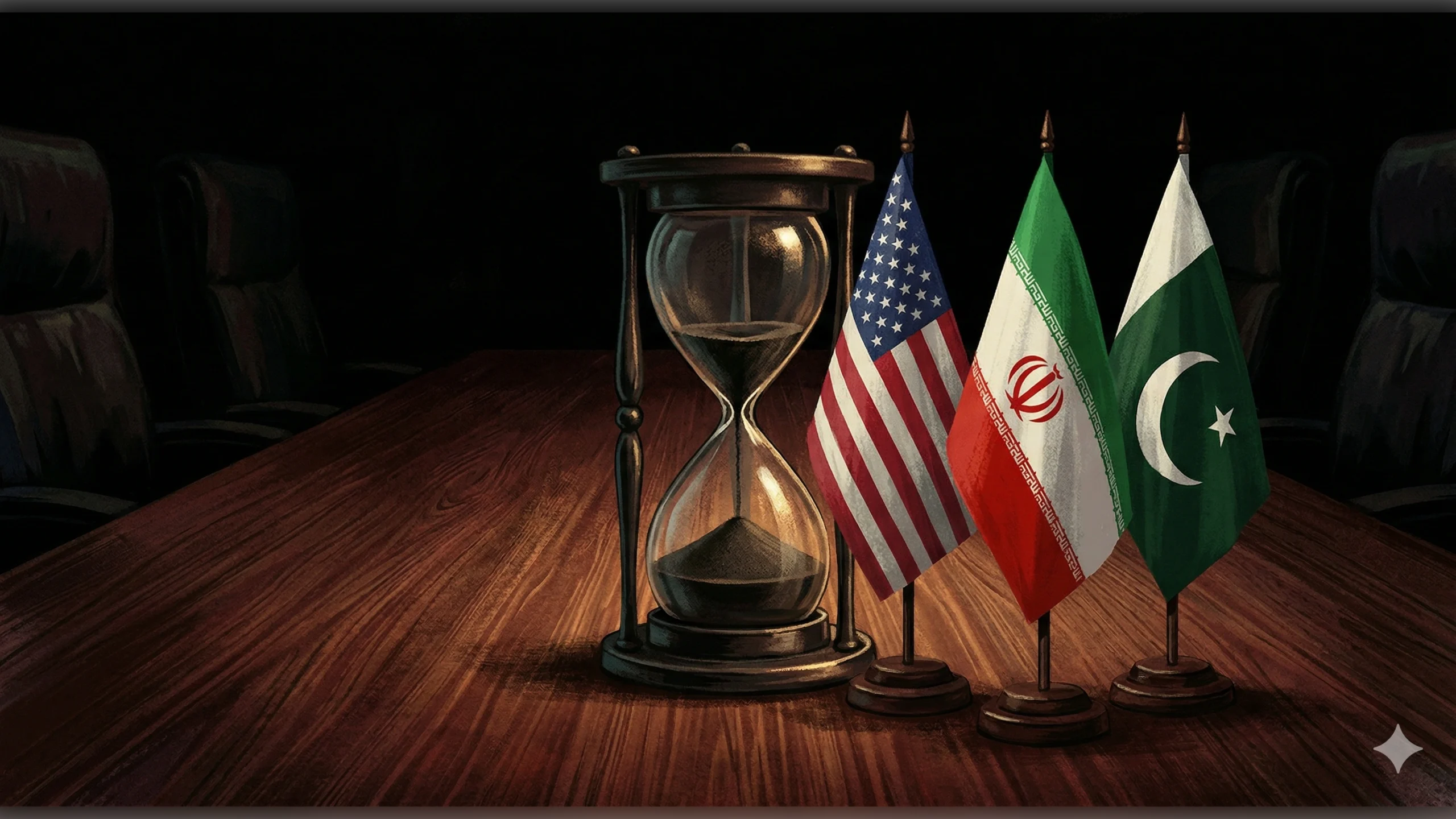
NEW DELHI: It is the ultimate test match of global diplomacy. In Islamabad, Pakistan is swinging wildly, trying to hit a geopolitical six while American and Iranian fast bowlers hurl bouncers at their heads. But 400 miles away in South Block, New Delhi is playing a completely different game.
India is sitting in the pavilion, calculator in hand, quietly watching the points table before deciding when to walk out to bat. In a multi-nation tournament where the Middle East is on fire and the global economy is crashing, swinging blindly is how you get out for a duck. New Delhi understands that the real power doesn’t always lie in being at the negotiating table; sometimes, it lies in calculating the exact “Net Run Rate” required to win the tournament after your rivals have exhausted themselves.
— Here is exactly what India is calculating —
Calculation 1: Letting the Bowlers Tire Out
Islamabad is currently burning massive amounts of diplomatic capital. As detailed in the latest ground reports from Reuters, high-level US and Iranian delegations are deadlocked over Lebanon and brutal economic sanctions. Prime Minister Shehbaz Sharif and Army Chief Asim Munir are desperate for a Washington bailout.
But New Delhi knows the pitch in Islamabad is a minefield. If the US and Iran fail to reach a deal over the Strait of Hormuz, the fallout will be catastrophic for the mediator. India’s strategy? Let them bowl. Let Islamabad take the immense risk of mediating between an uncompromising Donald Trump and a hardline Tehran. India simply has to wait for the unforced error.
Calculation 2: The Energy ‘Net Run Rate’
While Pakistan plays for the cameras, India is doing the brutal math on survival. The biggest threat to India’s points table is the Strait of Hormuz. If the talks collapse, crude oil is projected to rocket past $180 a barrel. This would instantly crush India’s commercial transport logistics, spike domestic diesel prices, and trigger massive inflation.
New Delhi is using this time in the pavilion to figure out its alternative run-scoring options, including aggressively recalibrating its Russian crude imports to navigate potential US secondary sanctions.
Calculation 3: Padding Up in the Dressing Room
New Delhi isn’t just watching the game; they are padding up. The 42-day war has proven to India that relying on foreign umpires or imported gear is a fatal mistake.
While the diplomats argue in Pakistan, the Indian establishment has aggressively turned inward, flooding capital into Dalal Street’s defense sector. The massive strategic premium on defense PSUs—entities like HAL, BEL, BDL, and Mazdock—is the equivalent of India upgrading its helmet and bat in the dressing room. By the time this West Asian crisis ends, India intends to walk out onto the pitch as a fully self-reliant aerospace power.
Calculation 4: The Chabahar Boundary
The only reason New Delhi might be forced to walk out to bat earlier than expected is the Chabahar Port. India’s strategic gateway in Iran is currently in the danger zone.— If talks in Islamabad fail and the US drops a hammer of secondary sanctions, India will be forced to take a stance, preparing to bat defensively against US pressure while quietly maintaining its footprint in Tehran.
The Verdict
Geopolitics, much like cricket, is rarely won in the first few overs. Pakistan is playing a high-risk T20 innings, hoping for instant glory and an IMF trophy. New Delhi, however, is playing a Test match. South Block is operating with classic, cold-blooded strategic patience—mapping the field, analyzing the bowlers’ weaknesses, and refusing to step onto a rigged pitch. When the dust finally settles in Islamabad, that is when India will walk out to bat. And they will know exactly what score is needed to win.