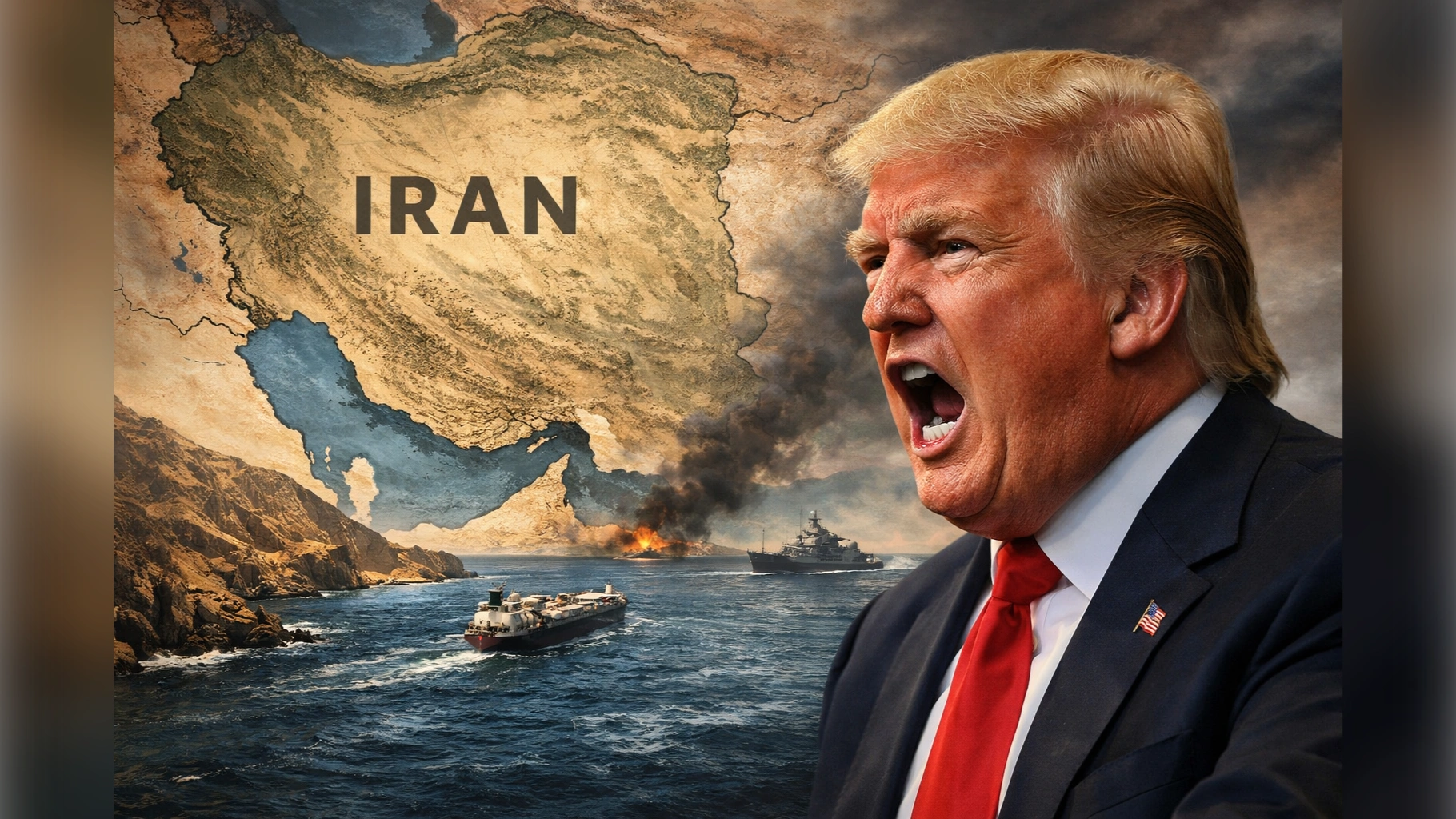
Donald Trump’s latest warning to Iran has turned the U.S.-Iran crisis into a deadline story with real consequences for oil, shipping and India’s energy security. Here is what Trump said, what Iran wants, when the deadline ends in India, and whether Indian ships are still moving through the Strait of Hormuz.
U.S. President Donald Trump has once again raised the temperature in the Middle East with a line designed to shock the world. His warning that “a whole civilization will die tonight” if Iran does not make a deal has pushed the crisis into a more dangerous phase, where every hour now matters not only for Washington and Tehran, but also for countries like India that depend heavily on Gulf energy routes.
At the heart of this crisis is the Strait of Hormuz, the narrow sea passage that carries a major share of the world’s oil and gas shipments. Trump wants it reopened on terms acceptable to Washington. Iran, on the other hand, is refusing a quick, one-sided arrangement and is pushing for wider guarantees before it agrees to any settlement.
What Trump said
Trump’s message was clear in tone even if dramatic in language. He said Iran had until Tuesday night in Washington to make a deal and help reopen the Strait of Hormuz. He described the deadline as final and paired it with a threat of much harsher consequences if Tehran failed to respond.
This is classic Trump pressure politics: use extreme wording, create a countdown, and try to force the other side into a visible concession. But behind the rhetoric is a serious strategic point. Washington is signalling that if Iran does not move, the U.S. could widen pressure on critical infrastructure and maritime access in and around the Gulf.
What Iran said
Iran has not accepted the U.S. position in the way Trump wanted. Tehran’s reported response is that it does not want a temporary ceasefire or a rushed political surrender. Instead, it wants a more lasting arrangement that includes an immediate halt to U.S. strikes, assurances that attacks will not resume, and compensation for damage already caused.
In effect, Iran is saying it will not reopen the door on Washington’s terms alone. It wants a broader bargain, one that protects its security interests and gives it control over how any de-escalation is structured. That is why the standoff remains volatile even as diplomatic backchannels continue.
When the deadline ends: Washington time, India time, Iran time
The reported cutoff is 8:00 p.m. Washington time on Tuesday, April 7. Since Washington is on daylight saving time in April, the practical time reference is EDT, not winter-time EST.
For Indian readers, the math is simple:
8:00 p.m. Washington time
+ 9 hours 30 minutes
= 5:30 a.m. IST on Wednesday, April 8
So for India, the deadline ends in the early morning. For Iran, it falls at around 3:30 a.m., which means the deadline hits Tehran in the pre-dawn hours of the night, not in the daytime.
What is happening in the Strait of Hormuz right now
The Strait of Hormuz is not functioning normally, but it is also not completely shut in the absolute sense. The better description is this: movement is partial, selective and under heavy risk. Some ships are still passing, but traffic remains tense, delayed and closely watched.
That matters because Hormuz is not just another sea lane. It is one of the most important chokepoints in the global energy system. If traffic slows or becomes unpredictable, the effect is felt quickly in oil prices, freight charges, insurance premiums and broader market nerves. You can read TES’s deeper breakdown here: Iran War Hub.
Are Indian ships passing or not?
The short answer is yes, but not freely.
Some Indian-flagged ships have crossed successfully, especially LPG carriers, which shows that the sea route is not totally frozen. But a wider backlog still exists, and several India-bound vessels remain stuck, delayed or waiting for safer transit windows. In other words, Indian shipping is moving in a controlled and uncertain environment, not in normal commercial conditions.
That distinction is important. A ship getting through does not mean the crisis is over. It only means passage is still possible under stress. India’s concern is not just whether one or two vessels pass, but whether a sustained energy flow can continue without costs exploding.
Has India reacted?
Yes, and in a typically measured way. New Delhi has been working diplomatic channels to ensure safe transit for Indian ships carrying LPG, LNG and other cargo. It has also kept a close watch on the maritime situation through official and naval channels.
India’s approach is practical rather than theatrical. It is not interested in taking loud positions for television headlines. Its immediate priority is to keep energy supplies moving, protect Indian shipping, and avoid getting caught in a wider U.S.-Iran confrontation.
Why this matters to Indian readers
For India, the Hormuz crisis is not a distant geopolitical drama. It can directly affect fuel costs, shipping expenses and inflation. If disruption continues, even partial movement through the strait can become more expensive because war-risk insurance and freight costs go up quickly.
That is why the Trump-Iran deadline matters in India not just as a foreign affairs headline, but as an economic and household story too. If the crisis worsens, the effects could eventually be felt at petrol pumps, in transport costs, and across the wider economy.
The bottom line
Trump is trying to force a decision through pressure, a public countdown and dramatic language. Iran is refusing a quick climbdown and demanding a broader settlement. The Strait of Hormuz remains open only in a limited and risky sense. Indian ships are still passing in some cases, but delays and uncertainty remain. And India is doing what it usually does in a real crisis: keeping its head down, its diplomacy active and its energy interests front and centre.