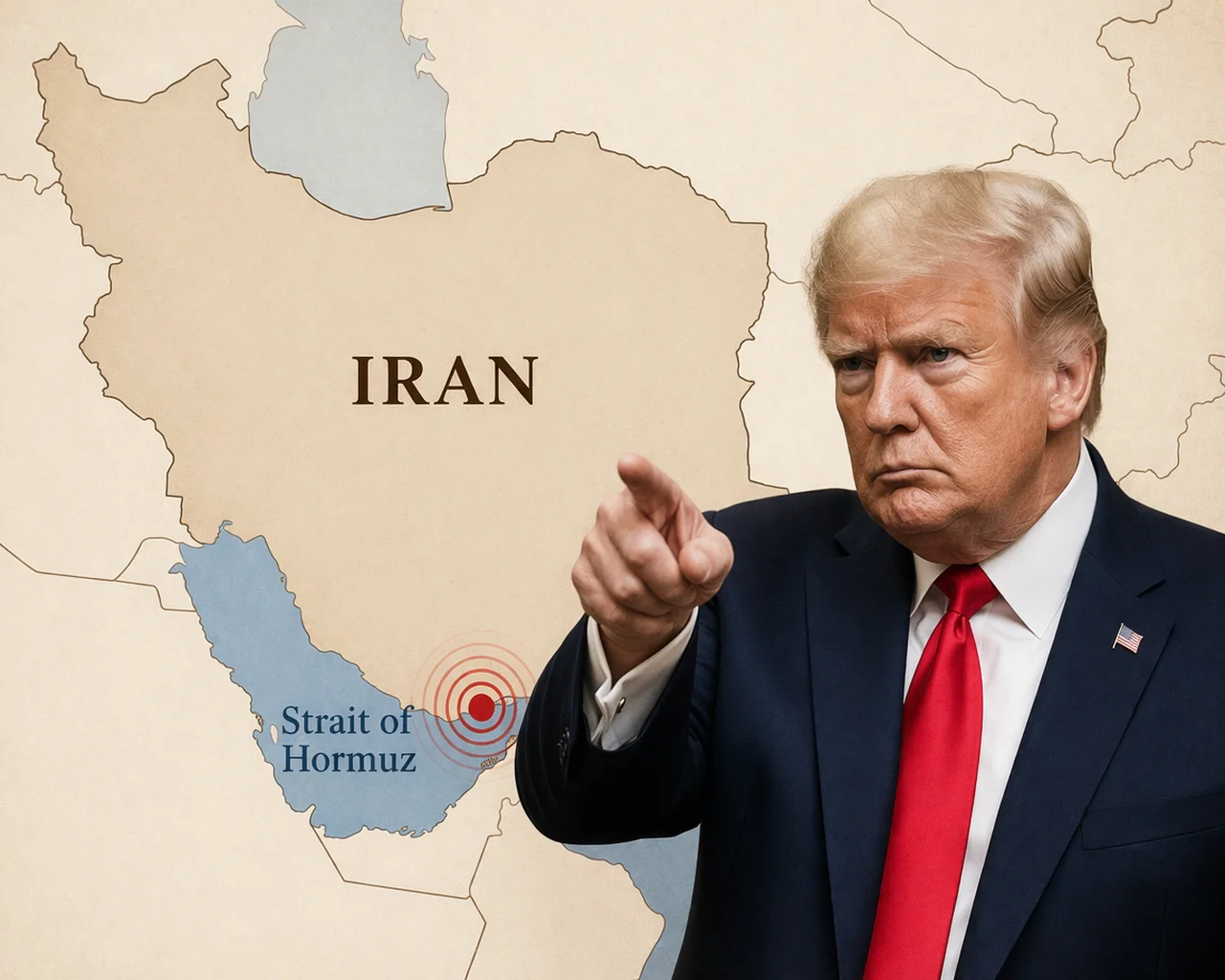
Middle East Crisis | Global Economy
Trump Warns Iran’s Energy Network Could Be Hit if Hormuz Talks Fail
U.S. signals shift toward targeting Iran’s economic lifelines as diplomacy narrows
By Abhishek Kumar | The Eastern Strategist
WASHINGTON — President Donald Trump on Monday threatened to widen U.S. pressure on Iran by targeting the country’s energy infrastructure if diplomacy fails to deliver a near-term breakthrough to reopen the Strait of Hormuz.
Trump said Washington was in “serious discussions” with what he described as a “more reasonable” leadership in Tehran. But the warning was direct. If talks stall, the United States is prepared to move beyond military targets and hit assets tied to Iran’s oil exports, electricity generation and water supply.
Among the sites now being openly discussed is Kharg Island, the terminal that underpins most of Iran’s crude exports. Trump also referenced power plants, oil wells and desalination facilities. That marks a notable shift in U.S. signaling. The message is no longer limited to battlefield pressure. It is now aimed at the economic system that keeps the Iranian state functioning.
Why it matters: A strike on Kharg Island would not just hit Iran. It would hit oil flows, freight markets and inflation expectations across import-dependent economies already under pressure.
Washington broadens the pressure campaign
The administration’s language suggests a broader objective: raise the cost of delay for Tehran by putting its export capacity and domestic utility network at risk. That is a different level of coercion. It is designed to make the economic price of defiance impossible to ignore.
Secretary of State Marco Rubio reinforced that line, saying Washington could not assume the Iranian officials involved in current contacts would remain in place. The remark was more than a negotiating jab. It hinted at a U.S. view that Iran’s internal political structure is unstable and that the diplomatic channel could narrow quickly if the balance inside Tehran shifts.
Iran, for its part, rejected the American account. Iranian officials said messages were being exchanged through intermediaries, including Pakistan, but denied there were direct negotiations with Washington. Tehran also described recent U.S. proposals as unrealistic, leaving the two sides visibly far apart.
The conflict is showing signs of spillover
The military risk widened further on Monday after Turkey said an Iranian ballistic missile entered its airspace and was intercepted, an incident later confirmed by NATO. That matters because it pushes the confrontation closer to alliance territory and expands the map of risk beyond the Gulf. What began as a crisis centered on Iran, Israel and U.S. forces is now brushing against a broader security perimeter.
Markets are reacting accordingly. Oil traders are no longer treating disruption in the Strait of Hormuz as a temporary headline shock. Reduced tanker flows, higher insurance costs and rising freight rates are feeding through the supply chain. Refiners are facing tighter margins, while food and fertilizer costs are also coming under pressure as energy-linked transport costs rise.
For India and other major importers, the threat is immediate. Higher crude prices complicate inflation control, put fresh pressure on the rupee and reduce fiscal room just as policymakers are trying to contain imported cost shocks. This is no longer just a Middle East security story. It is becoming a broader macroeconomic one.
Kharg Island is the real threshold
Trump’s message points to a two-track strategy: keep diplomacy alive in public, while making clear that Iran’s economic lifelines could be hit if talks fail. That is why Kharg Island now matters so much. It is not just another energy installation. It is the most sensitive symbol of Iran’s export vulnerability.
If Washington follows through, the war would enter a different phase. A strike on Kharg would not simply degrade infrastructure. It would signal that the United States is prepared to hit the source of Iran’s oil revenue in order to force a political outcome. That would be a major escalation, and markets already appear to be adjusting to that possibility.
Key takeaways
- The U.S. is now openly threatening Iran’s energy infrastructure, not just military targets.
- Kharg Island has emerged as the most sensitive potential target.
- Iran says contacts remain indirect and rejects recent U.S. proposals.
- Turkey’s missile interception points to wider regional spillover risk.
- Oil, shipping and import-dependent economies are already under strain.
For deeper context, read our coverage on the Iran war hub, our analysis of the Strait of Hormuz geopolitical guide, and our report on the market impact of the U.S.-Iran war.
For primary-source reporting and macro context, see Reuters on Trump’s latest warning, Reuters on the Turkey-NATO interception, and Reuters on the IMF’s warning over the economic fallout.