Geopolitics & Global Markets
Islamabad is paralyzed by unprecedented security as the U.S. delegation and Iranian officials arrive. But the real battlefield isn’t in Pakistan—it’s in the Strait of Hormuz, and the Indian economy is directly in the crosshairs.
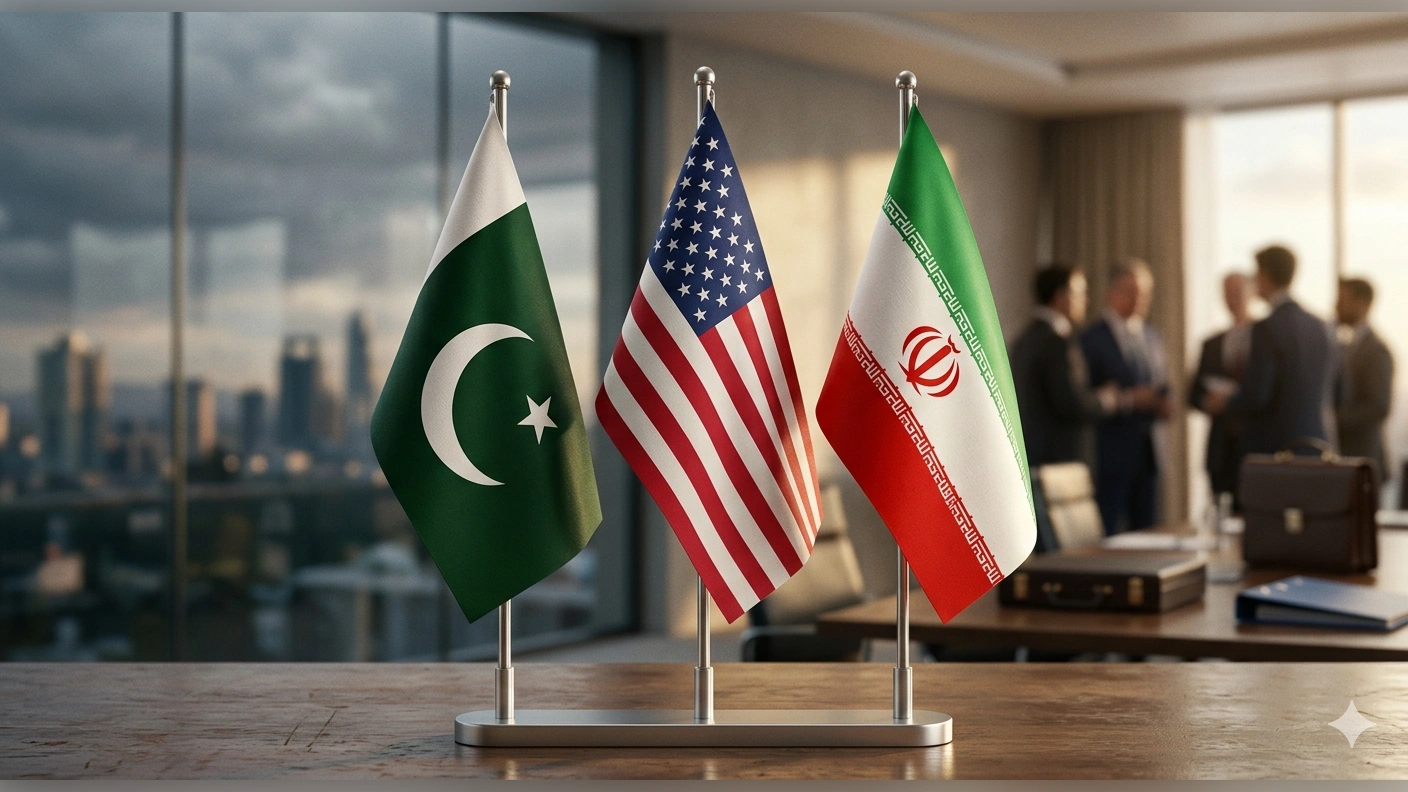
NEW DELHI — Pakistan has suddenly parachuted into the middle of a geopolitical minefield. Islamabad is hosting the critical U.S.-Iran peace talks this weekend, desperate to keep a highly fragile ceasefire from completely collapsing into a full-scale regional war. On paper, it looks like a massive diplomatic victory for a country that has spent the last year entirely sidelined on the global stage. On the ground, it is a high-wire gamble with disastrous consequences for failure.
Pakistan has the access required to get both Washington and Tehran into the same room, but it absolutely lacks the muscle to force a lasting peace or keep the Strait of Hormuz open. It is playing the role of a convenient messenger in a conflict where the actual decision-makers are heavily armed, deeply entrenched, and refusing to blink.
1. A Capital City Transformed Into a Fortress
Islamabad isn’t playing peacemaker out of the goodness of its heart. A wider Middle East war spilling over its western borders into Afghanistan and Iran is a localized security nightmare it simply cannot afford. The internal stability of the nation is already severely tested, and importing a broader conflict would shatter its fragile economic recovery.
With the U.S. delegation—led by Vice President JD Vance—and senior Iranian officials arriving, the Pakistani capital is practically locked down. The Serena Hotel, the anticipated venue for the summit, has been cleared of civilian guests and taken over completely by the state security apparatus. Roads are blocked with heavy military barricades. Airspace is locked tight with heightened surveillance, and emergency response units remain on standby.
That suffocating security blanket tells you exactly how volatile this moment is. One rogue militant strike, one security lapse, or one miscalculated regional escalation, and the entire peace process goes up in smoke. Militancy along the border has been a persistent headache since 2021, and authorities know that bad actors are watching this summit closely, looking for any vulnerability.
2. The Hormuz Chokepoint: The Real Battlefield
The actual crisis isn’t happening in the carpeted meeting rooms of Islamabad; it is happening in the contested waters of the Persian Gulf. The temporary two-week ceasefire is already cracking under immense pressure. Washington is furious that Tehran is actively squeezing vital oil routes, while Iran is stubbornly tying the entire de-escalation deal to the conflict in Lebanon—a non-starter for both the United States and Israel.
For the global economy, this maritime chokepoint is the only angle that truly matters. The Strait of Hormuz is the world’s most critical energy artery. Roughly 140 commercial ships a day used to move a fifth of global oil and liquefied natural gas (LNG) through that narrow 21-mile-wide strip of water. Right after the ceasefire announcement, global maritime tracking data showed that traffic flatlined to less than 10% of its historical average. Insurance premiums for commercial vessels attempting the crossing have skyrocketed to unsustainable levels.
“Pakistan is walking into this crossfire with a lot of hope and zero command. It can provide the table and the chairs, but it cannot dictate the survival of the global oil trade.”
3. India’s Economic Crosshairs and Market Shockwaves
Let’s cut through the diplomatic noise: Pakistan is essentially mediating a deal that directly dictates India’s energy bills. When global energy routes are choked, the shock translates instantly to the broader economy. A prolonged blockade forces a surge in crude oil imports, haemorrhaging foreign exchange reserves and widening the fiscal deficit. It creates an immediate headache for the central bank regarding interest rates and imported inflation.
When instability hits the Gulf, the ripples are felt immediately on Dalal Street. Sectors heavily dependent on energy and raw material logistics feel the burn first. Conversely, heightened geopolitical tensions often trigger defensive market posturing, drawing aggressive institutional focus toward domestic defense manufacturing and heavy public sector undertakings (PSUs).
When global supply chains are threatened, self-reliance in defense and infrastructure—spanning from aerospace manufacturers like HAL to electronics giants like BEL, and core resource suppliers like Hindustan Copper—suddenly moves from a long-term strategic goal to an urgent market reality. The ripple effect of these talks touches everything from the logistics costs of commercial trucking fleets to the valuation of heavy industry portfolios. For a deeper dive into how regional conflicts are reshaping our neighborhood, explore our ongoing analysis of shifting geopolitical strategies in Asia.
4. The Diplomatic Trap: Overlapping Demands and Deadlocks
A year ago, Islamabad was watching from the sidelines. Today, it’s the primary middleman. Why? Simply because it still holds open lines of communication to both Washington and Tehran, serving as a rare neutral ground where both sides can safely land.
But access isn’t leverage. The demands laid out on the negotiating table are a complete mess of overlapping red lines. Iran wants the Strait of Hormuz under its thumb, immediate sanctions relief, a green light for its nuclear enrichment rights, and Israel completely out of Lebanon. The U.S. wants the oil flowing without restrictions and a guarantee of regional stability. Israel refuses to halt its aggressive Lebanon campaign on Tehran’s dictated terms. Hezbollah, a critical piece of the puzzle, won’t even sit at the table to negotiate directly.
5. The Lebanon Complication
Adding fuel to the fire is the shadow war playing out in Lebanon. You cannot separate the Strait of Hormuz from the streets of Beirut. Iran’s insistence on wrapping the Lebanese conflict into the broader ceasefire framework complicates an already impossible timeline. It is attempting to use the threat of an oil shock as leverage to protect its regional proxies.
Israeli leadership has made it brutally clear that tactical operations will continue, peace talks or no peace talks. This means the diplomatic tracks are colliding. You have diplomats shaking hands in Islamabad while munitions are deployed in the Levant. It is a recipe for a fractured, poisoned negotiation process where one misstep in one country derails the progress in another.
6. The Illusion of Influence Without Genuine Power
To understand the futility of the situation, you have to look at the ruthless mechanics of international mediation. A successful mediator needs a stick and a carrot. Pakistan has neither. It cannot threaten the United States with economic sanctions. It cannot threaten Iran with military intervention. It is merely providing the venue.
This makes the endeavor a massive risk for its diplomatic prestige. Success puts Islamabad back on the global map as a serious, indispensable player in international relations. Failure makes this look like a foolish overreach, proving that it invested heavy political capital into a process it had absolutely no capacity to deliver.
7. The Inevitable Fallout: What Happens Next?
Pakistan is serving as a convenient, heavily guarded bridge right now, not a superpower. It can host the U.S. and Iranian delegations. It might even keep the dialogue alive for a few more vital weeks, buying the global markets just a little more time to brace for impact. But controlling the war? Dictating the flow of global energy? That is entirely out of its hands.
The biggest decisions still lie in Washington, Tehran, and Tel Aviv. Islamabad is just trying to stop the world from spinning further out of control, hoping against hope that the fire doesn’t reach its own backyard. For the rest of the world, and specifically for India, the next 48 hours will decide whether we are looking at a diplomatic breakthrough or a bruising, prolonged global oil shock.