The GE HAL F414 engine deal is being sold as a diplomatic breakthrough. That is true, but it is only half the story. The bigger story sits inside the factory gate. This agreement matters because it moves India closer to building a real fighter-engine manufacturing base at home, not just buying another foreign system and assembling it with limited control.
In public statements around the April 2026 breakthrough, GE Aerospace and Hindustan Aeronautics Limited said they had reached an agreement on technical matters for co-producing the F414 engine in India. The final commercial contract is expected later. That means this is a major step forward, but not the final finish line yet.
This Is Not Just Another Screwdriver Story
For years, India’s weakness in combat aviation was not only aircraft design. The bigger weakness was the engine. Airframes can be improved over time. Engines are harder. They need deep skill in metallurgy, precision machining, heat handling, complex casting, and high-end manufacturing discipline. That is why aero-engines remain one of the toughest parts of defence self-reliance.
This is where the GE HAL F414 engine deal becomes important. Reports indicate that GE holds about 80% of the engine’s intellectual property, while the rest is held by other American suppliers. The expectation is that the transfer under this arrangement will cover a substantial share of manufacturing know-how. If that is fully executed in the final contract, India would move much closer to building real strength in a segment where it has remained dependent for decades.
Why this matters: the real value of this deal is not the headline. It is whether India can absorb the production knowledge needed to build advanced fighter-engine components inside its own industrial system.
HAL’s ₹2.54 Lakh Crore Order Book Changes the Picture
There is another reason the market is watching HAL so closely. As of March 31, 2026, the company’s order book stood at about ₹2.54 lakh crore, up from roughly ₹1.89 lakh crore at the beginning of the year. That jump was driven by major defence orders, including the 97 LCA Mk1A fighter contract. In plain words, HAL is not looking at a one-quarter story. It is sitting on a long pipeline of work.
This matters because big defence stories are never about one announcement alone. They are about whether a company has the order visibility, manufacturing base, and policy backing to convert strategy into revenue. HAL now has that visibility in a way very few Indian defence firms can match.
Financial reality: a large order book does not remove execution risk, but it does give HAL rare long-term visibility. That is why the company is being seen not just as a PSU, but as a central pillar of India’s defence manufacturing push.
The F414 Engine Also Matters for India’s Future Fighters
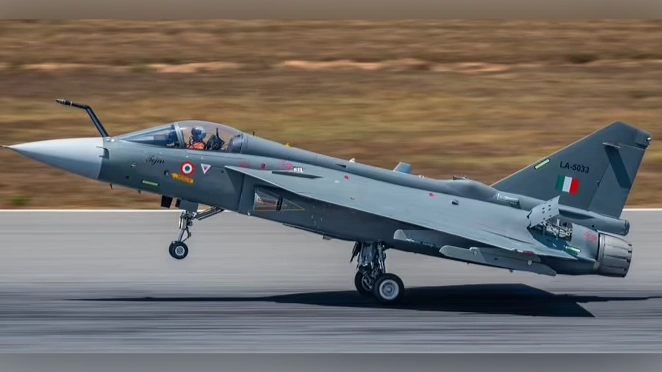
The F414 is not just another engine in a catalogue. It is linked to India’s future fighter plans. Public reporting says the engine is expected to power India’s next generation of indigenously built fighters, including the early path for programs like Tejas Mk2 and the opening phase of AMCA planning. That gives the deal a much bigger role than a normal industrial tie-up.
The AMCA story is also changing. Private industry is expected to play a stronger role in development and early execution. But mass production at scale will still demand deep infrastructure, a trusted supply chain, and engine support that India can count on over many years. That is why the GE HAL F414 engine deal could end up being remembered as a foundation stone, not just a contract update.
The Bigger Winners May Sit Outside HAL
A jet engine is not built by one company alone. It pulls in a long chain of suppliers, materials experts, precision manufacturers, electronics firms, and testing partners. If India genuinely localises more of the F414 production cycle, the effect will not stop at HAL.
This is where the broader defence ecosystem becomes important. Companies linked to aerospace-grade materials, advanced machining, avionics, radar, electronic warfare systems, and platform integration could all see stronger demand over time. That is why investors should stop treating this as only a HAL story. It is also a supply-chain story, and those stories often create the biggest long-term winners.
The One Caveat India Cannot Ignore
There is still one hard reality. India has heard ambitious aviation promises before. What matters now is delivery. The final commercial contract, localisation depth, production timelines, and the ability to avoid the kind of supply delays seen elsewhere in the fighter ecosystem will decide whether this becomes a true strategic breakthrough.
So the smart view is neither blind celebration nor lazy scepticism. This is a serious step. It may prove historic. But history will be written only when engines begin moving through Indian production lines with real consistency.
Why This Story Matters Beyond One Company
India’s defence rise will not be built only by buying more weapons. It will be built by owning more of the industrial process behind them. That is the deeper meaning of the GE HAL F414 engine deal. It gives India a chance to move from licensed dependence to manufacturing depth in one of the most strategic parts of military aviation.
If that transition holds, this will not be remembered as a routine Indo-US defence headline. It will be remembered as the moment India moved closer to solving one of its oldest strategic industrial weaknesses.
Further reading:
For a bigger view of the defence manufacturing cycle, read our Indian Defence Stocks 2026: Ultimate Guide.
You can also explore our earlier HAL-focused analysis, HAL Share Price Target 2026, and our broader take on the Tejas-HAL story in The Tejas Truth.
For source reporting, see Business Standard, The Tribune, and HAL’s March 31, 2026 filing.
This report is intended for informational purposes only and does not constitute investment advice or a solicitation to buy or sell securities.

1 thought on “GE-HAL Jet Engine Deal: The Bigger Story India Cannot Ignore”