By The Eastern Strategist | February 28, 2026
The United States and Israel have launched coordinated military strikes on Iranian targets, marking one of the most significant escalations in Middle East tensions in recent years. President Donald Trump confirmed that “major combat operations” are underway, describing the action as necessary to counter what he called imminent threats from Tehran.
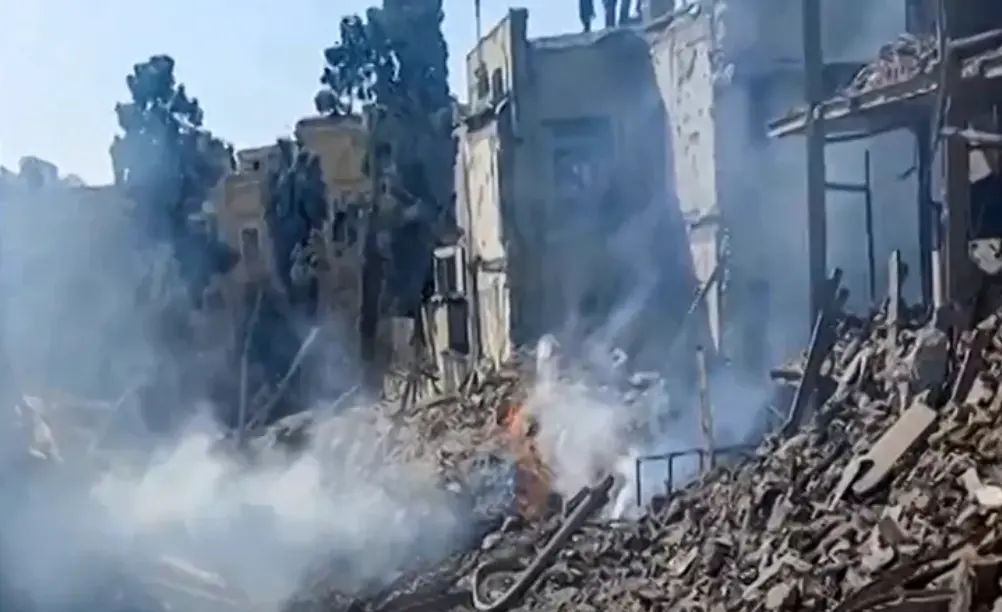
Israel characterized its operation as pre-emptive. Explosions were reported in Tehran and multiple Iranian cities, with targets believed to include military facilities and missile infrastructure. Iranian state-linked outlets reported damage across several provinces, though full assessments remain unverified.
Iran Retaliates Across the Region
In response, Iran launched ballistic missiles toward Israel and claimed to have targeted U.S. military assets in the Gulf. Sirens were activated in Israeli cities as air defense systems intercepted incoming projectiles.
According to Reuters, missiles were also fired toward Gulf states hosting U.S. forces, including Bahrain, Kuwait, Qatar and the United Arab Emirates. UAE authorities reported that one person was killed in Abu Dhabi due to debris from intercepted missiles. Bahrain acknowledged an impact near a U.S. Navy facility.
The situation remains fluid, with official damage and casualty figures still being assessed.
Gulf Airspace Disruptions
The escalation has severely disrupted regional aviation. Major international carriers have suspended or rerouted flights across the Middle East following airspace restrictions over Iran and Iraq. Flight tracking data showed large portions of regional airspace nearly empty as airlines prioritized safety.
The aviation disruption underscores the widening impact of the conflict beyond direct military exchanges.
Strategic Implications
This confrontation now extends beyond bilateral Israel-Iran hostilities. With confirmed U.S. involvement and retaliatory targeting of Gulf-based U.S. assets, the conflict risks evolving into a broader regional confrontation.
Key escalation variables to watch:
- Whether U.S. forces conduct additional waves of strikes
- The scale and persistence of Iranian missile retaliation
- Activation of proxy groups across Iraq, Lebanon, Syria, or Yemen
- Direct Gulf state involvement beyond defensive measures
The immediate trajectory suggests a shift from limited strikes to multi-theatre engagement, though diplomatic backchannels may still attempt containment.
What Comes Next
The coming 24–72 hours will be decisive. If strikes continue on both sides, the region could enter a sustained confrontation phase. If military activity slows and messaging shifts toward deterrence signaling, escalation may stabilize at a high-tension equilibrium.
For now, the Middle East security architecture is under its most acute stress test in years.
More updates will follow as verified information emerges.
The recent coordinated strikes by the United States and Israel on Iranian targets signal a dramatic escalation in the long-chaotic conflict in the Middle East, threatening to expand beyond bilateral confrontation. According to a Reuters report, the offensive has prompted widespread missile retaliation from Tehran and disruptions across the Gulf, underscoring how quickly regional tensions can spiral into broader crisis dynamics. This development builds on long-standing fault lines in West Asia, where great power competition and state rivalry have repeatedly intersected, as explored in our earlier analysis on how India’s diplomatic outreach reflects shifting balance patterns across the region in Middle East on Brink of War: Modi Steps into Israel as Iran Conflict Threatens Global Chaos. The conflict’s expansion also brings renewed focus to deeper structural shifts documented in India’s Middle East Bombshell Shift in Power, and connects directly to the broader pattern of force positioning detailed in US–Iran Military Buildup Analysis. With multiple states now engaged directly or indirectly, the region remains on a dangerous precipice where escalation management and strategic signalling will determine whether the crisis stabilises or escalates further. The coming days will test not only military capabilities but also diplomatic channels, alliance cohesion, energy market resilience, and the strategic calculations of regional actors who must now balance deterrence with de-escalation in an increasingly volatile security environment.