
KUWAIT CITY / WASHINGTON, 03 June: Iran launched missile and drone strikes against targets in Kuwait and Bahrain on Wednesday, widening a conflict that has already drawn in the United States and Israel. The attacks mark one of the most serious escalations in the Gulf in years and raise fresh concerns about energy security, regional stability, and the safety of civilians across the Middle East.
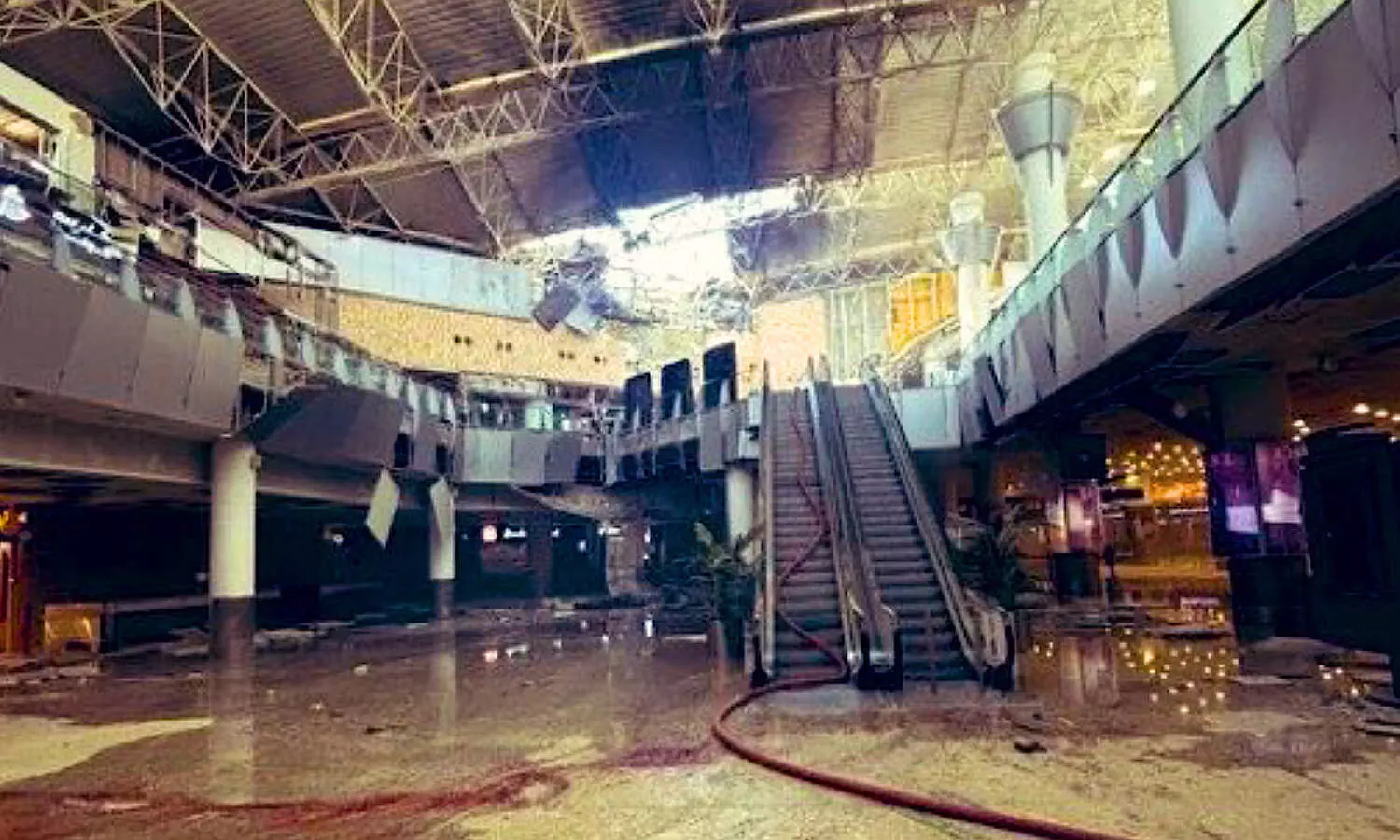
A missile strike on Kuwait International Airport damaged part of a passenger terminal, injured dozens of people, and reportedly killed an Indian national. The incident drew immediate condemnation from several governments and added to fears that the conflict is moving beyond military targets and into civilian infrastructure.
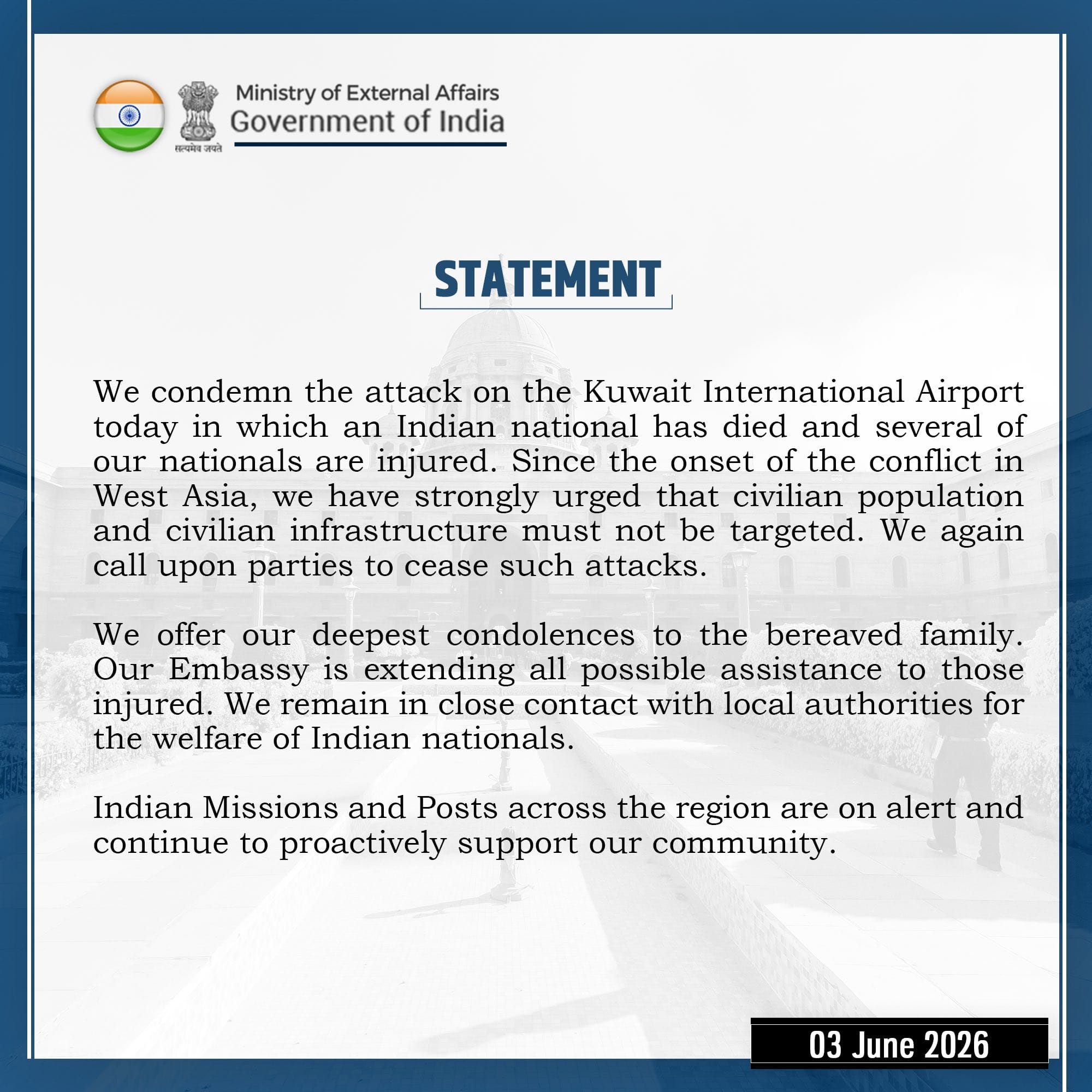
India’s Ministry of External Affairs (MEA) condemned the missile strike on Kuwait International Airport that killed an Indian national and injured several others. In an official statement, the ministry said civilian populations and civilian infrastructure must not be targeted under any circumstances and called on all parties to avoid further escalation.
The MEA expressed condolences to the family of the deceased and said the Indian Embassy in Kuwait was assisting those injured in the attack. It added that Indian missions across the Gulf region remain on alert and are in close contact with local authorities to monitor the situation.
According to Kuwaiti officials, operations at Kuwait International Airport were temporarily suspended after Iranian strikes hit Terminal One, causing casualties and damage to airport facilities. Limited flight operations later resumed as emergency teams assessed the extent of the damage.
The incident has heightened concerns in New Delhi about the safety of the large Indian community living and working across the Gulf, as well as the wider economic impact of a prolonged conflict in the region.
Why It Matters
Iran Strikes Kuwait and Bahrain are significant because they directly involve Gulf Cooperation Council (GCC) states that host important American military facilities. They also come at a time when shipping through the Strait of Hormuz remains heavily disrupted.
The waterway handles a large share of the world’s oil and liquefied natural gas exports. Any prolonged disruption could have consequences far beyond the Middle East, affecting fuel prices, trade routes, and inflation around the world.
Why Iran Strikes Kuwait and Bahrain ?
Iran’s Islamic Revolutionary Guard Corps (IRGC) said the attacks targeted military facilities linked to the United States, including assets associated with the US Navy’s Fifth Fleet in Bahrain.
According to Iranian officials, the strikes were carried out in response to recent American military action against Iranian facilities near Qeshm Island.
The United States has offered a different account. US Central Command (CENTCOM) said American and allied air defenses intercepted a large number of Iranian missiles and drones before carrying out retaliatory strikes against Iranian positions.
As often happens during wartime, both sides are presenting competing narratives. What is clear, however, is that the confrontation has expanded beyond its earlier boundaries and is becoming increasingly difficult to contain.
The Strait of Hormuz Remains Under Pressure
One of the most important areas in the conflict is the Strait of Hormuz.
The narrow waterway connects the Persian Gulf to international shipping routes and is critical to global energy supplies. Shipping companies have already begun rerouting vessels, while insurers are reassessing risks in the region.
For Washington and its partners, ensuring safe passage through the strait has become a major objective. For Tehran, the threat of disruption remains one of its strongest sources of leverage.
As long as tensions remain high, global markets are likely to react to every new development.
Diplomacy Shows Few Signs of Progress
Efforts to reduce tensions have produced little progress.
Officials in Washington continue to insist that sanctions relief cannot be considered unless Iran accepts major restrictions on its nuclear program. Tehran, meanwhile, wants sanctions removed and has linked wider regional issues—including the fighting involving Hezbollah—to any future agreement.
Although reports suggest that some backchannel contacts may still exist, there is little evidence that either side is ready to compromise on its core demands.
That leaves diplomacy struggling to keep pace with events on the ground.
Oil Markets and Global Trade Feel the Impact
Financial markets reacted quickly to the latest escalation.
Brent crude rose following reports of the strikes, reflecting concerns that energy supplies could face further disruption if the conflict continues.
Shipping companies are also adjusting operations. Some vessels are being rerouted away from higher-risk areas, increasing travel times and transport costs.
For countries dependent on imported energy, the situation is becoming increasingly important. Higher oil prices could place additional pressure on governments already dealing with inflation and slower economic growth.
Gulf States Close Ranks
The attacks prompted a strong response from Gulf governments.
Saudi Arabia and the United Arab Emirates condemned the strikes and expressed support for Kuwait and Bahrain. Oman, which has often acted as a mediator in regional disputes, also criticized the attacks while calling for restraint from all sides.
The reaction reflects growing concern among Gulf states that the conflict could spread further if diplomatic efforts fail.
What It Means for India
India has significant interests at stake.
Millions of Indian citizens live and work across the Gulf region, making their safety a major concern for New Delhi. The death of an Indian national in the Kuwait airport strike has added urgency to the situation.
India is also highly dependent on energy imports. Any sustained rise in oil prices could affect inflation, government finances, and economic growth.
For that reason, New Delhi is likely to continue pushing for de-escalation while maintaining dialogue with all major parties involved in the crisis.
The Road Ahead
The conflict has entered a more dangerous stage.
Neither Washington nor Tehran appears willing to back down, and the fighting is now affecting a wider range of countries and interests across the region.
The immediate challenge for world leaders is preventing further escalation while keeping diplomatic channels open. Whether those efforts succeed may determine if the current crisis remains limited or develops into a broader regional war.
For now, uncertainty remains the defining feature of the Middle East’s rapidly changing security landscape.