
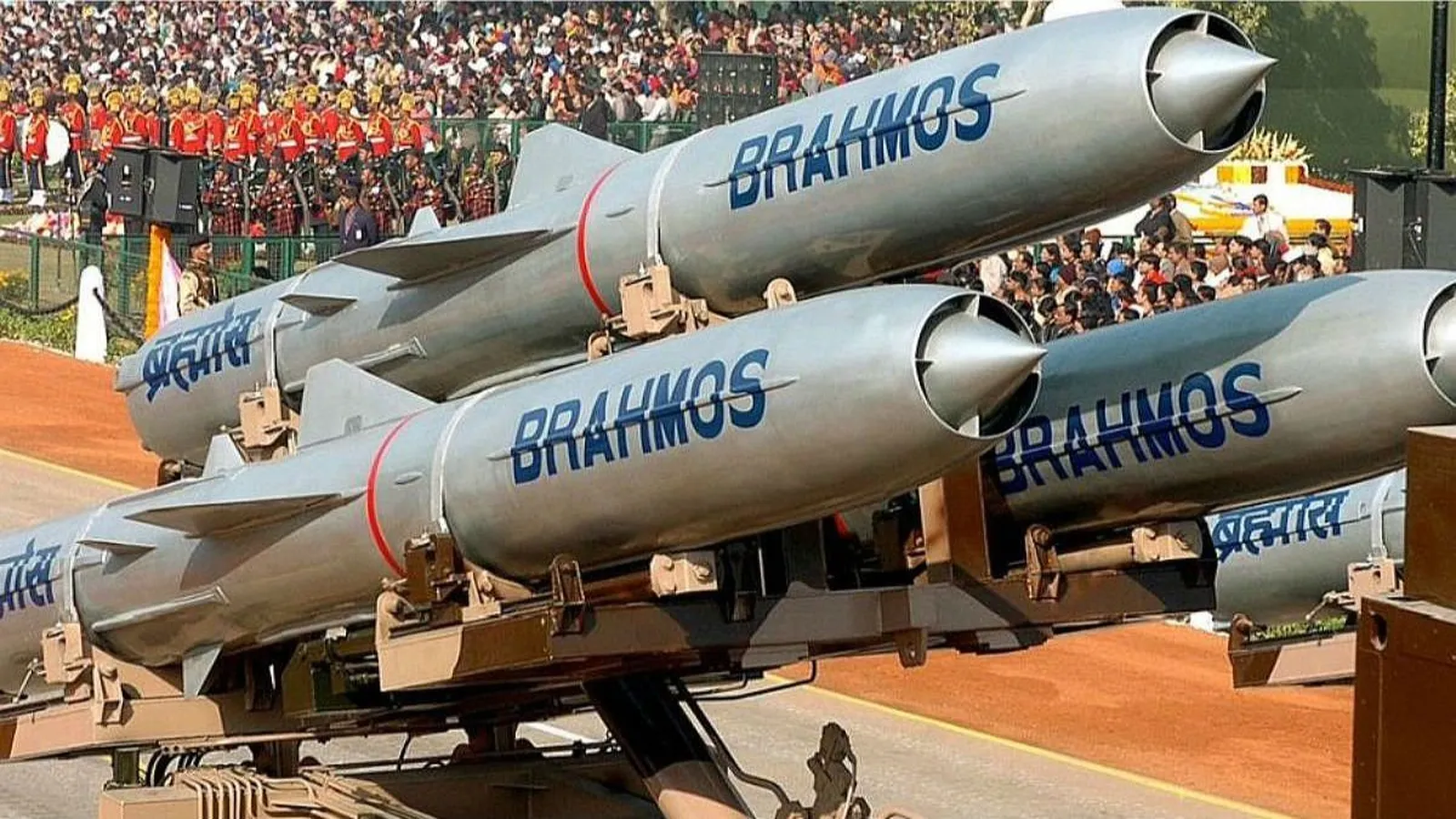
NEW DELHI: India’s BrahMos deal with Vietnam marks another major export breakthrough for New Delhi’s growing defence industry. Speaking at the Shangri-La Dialogue in Singapore, Defence Secretary Rajesh Kumar Singh confirmed that India has signed a BrahMos missile agreement with Vietnam, while negotiations for a similar deal with Indonesia are now in their final stages.
At first glance, the announcement appears to be another defence contract. In reality, it reflects something much larger. The agreement highlights India’s growing emergence as a defence exporter, deepens strategic ties with Southeast Asia, and demonstrates how indigenous military technology is becoming an increasingly important instrument of Indian foreign policy.
For New Delhi, the deal is not simply about selling missiles. It is about exporting strategic influence, strengthening regional partnerships, and expanding India’s presence across the Indo-Pacific.
Why Is India’s BrahMos Deal With Vietnam Important?
The agreement strengthens India-Vietnam defence cooperation, expands India’s defence export footprint, and enhances Vietnam’s maritime deterrence capabilities. It also reflects India’s growing role as a security partner in the Indo-Pacific region.
The deal follows years of steadily expanding ties between India and Vietnam. Defence cooperation, maritime security, technology partnerships, supply chains, and critical minerals have all emerged as major pillars of the relationship.
Analysts had already identified BrahMos cooperation as a likely next step during recent high-level engagements between the two countries. The latest announcement confirms that strategic discussions have now translated into concrete military cooperation.
For Vietnam, the acquisition provides access to one of the world’s most capable operational cruise missile systems. For India, it represents another milestone in its effort to establish itself as a reliable supplier of advanced defence technologies.
Key Facts About the BrahMos-Vietnam Agreement
| Metric | Details |
|---|---|
| Missile System | BrahMos Supersonic Cruise Missile |
| Exporting Country | India |
| Importing Country | Vietnam |
| Announcement | Shangri-La Dialogue, Singapore |
| Confirmed By | Defence Secretary Rajesh Kumar Singh |
| Speed | Up to Mach 2.8-3 |
| Range | Up to 290 km |
| Type | Supersonic Cruise Missile |
| Capability | Anti-Ship and Land Attack |
| Launch Platforms | Land, Sea, Air and Sub-Sea |
Why BrahMos Has Become India’s Flagship Defence Export
BrahMos combines speed, versatility and combat credibility in a way few exportable missile systems currently do. Its growing international appeal reflects India’s broader ambition to transform indigenous military technology into geopolitical influence.
Jointly developed by India and Russia, BrahMos is a two-stage supersonic cruise missile that uses a solid-fuel booster and liquid-fuel ramjet engine to achieve speeds approaching Mach 3.
The missile operates on a fire-and-forget principle and can engage both maritime and land targets. Its low-altitude terminal flight profile and high speed significantly reduce reaction time for defenders.
Key BrahMos Features
- Supersonic speed approaching Mach 3
- Range of up to 290 kilometres
- Fire-and-forget guidance system
- Land-attack and anti-ship capability
- Multi-platform deployment
- Low-altitude terminal flight
- High kinetic impact energy
- Reduced interception probability
The system can be launched from warships, mobile land launchers, submarines and fighter aircraft, making it one of the most versatile missile systems currently available.
How Does The Deal Fit Into India’s Defence Export Strategy?
The Vietnam agreement is part of a much broader effort to transform India from a major defence importer into a globally competitive defence exporter.
For decades, India relied heavily on foreign military equipment. Today, New Delhi is actively building an indigenous defence-industrial base through initiatives such as Aatmanirbhar Bharat, Make in India, Defence Industrial Corridors, iDEX, and ADITI.
Speaking on May 30, Defence Minister Rajnath Singh highlighted the scale of that transformation.
“India was always known as an importer of arms and equipment. However, today, the situation has completely changed, and our defence sector is steadily advancing towards complete self-reliance.”
The numbers support that claim.
India’s Defence Industry Growth
| Indicator | 2014 | 2026 |
|---|---|---|
| Defence Production | ₹46,000 crore | ₹1.51 lakh crore+ |
| Defence Exports | Less than ₹1,000 crore | Approximately ₹40,000 crore |
| Strategic Focus | Import Dependent | Export Oriented |
The rapid growth reflects sustained government efforts to strengthen domestic manufacturing and reduce dependence on foreign suppliers.
Viewed through this lens, the Vietnam agreement is not an isolated success story. It is part of a larger structural shift within India’s defence sector.
Could Indonesia Be The Next BrahMos Customer?
Yes. India has indicated that negotiations with Indonesia are in their final stages, potentially opening another major export market for BrahMos.
Indonesia occupies a strategically important position along some of the world’s most critical maritime trade routes. A successful agreement would further expand India’s defence presence across Southeast Asia and reinforce the growing regional appeal of indigenous Indian military systems.
More importantly, it would signal that the Vietnam deal is not a one-off transaction but part of a wider trend.
Several countries across the Indo-Pacific are increasingly seeking diversified defence partnerships, creating opportunities for emerging suppliers such as India.
What Does This Mean For The Indo-Pacific?
The significance of the BrahMos agreement extends well beyond the missile itself.
The deal highlights the growing convergence between India, Vietnam, and other Indo-Pacific nations seeking stronger defence capabilities, diversified partnerships and greater strategic autonomy.
It also demonstrates how defence exports are becoming an increasingly important component of India’s foreign policy toolkit.
Historically, military exports have often translated into long-term strategic relationships through training, maintenance, logistics support and military-to-military cooperation. BrahMos gives India an opportunity to build exactly those kinds of enduring partnerships.
As New Delhi’s defence manufacturing capabilities continue to expand, indigenous military systems are increasingly serving both economic and geopolitical objectives.
The Vietnam agreement therefore marks more than a successful export sale. It signals the continued rise of India as a defence manufacturing power, a growing security partner in Southeast Asia, and an increasingly influential actor in the evolving Indo-Pacific strategic landscape.
What is the range of the BrahMos missile?
The BrahMos missile has a range of up to 290 kilometres and can travel at speeds approaching Mach 3.
Why is Vietnam buying BrahMos missiles?
Vietnam is strengthening its maritime defence and deterrence capabilities while expanding strategic cooperation with India.
Is Indonesia also expected to buy BrahMos missiles?
India has confirmed that negotiations with Indonesia are in their final stages, although a final agreement has not yet been publicly announced.
Key Takeaway
The India-Vietnam BrahMos deal is not merely an arms export agreement. It represents the intersection of India’s defence export ambitions, India-Vietnam strategic cooperation, and the broader geopolitical competition shaping the future of the Indo-Pacific.

1 thought on “India’s BrahMos Deal With Vietnam Signals a Bigger Shift in the Indo-Pacific”