
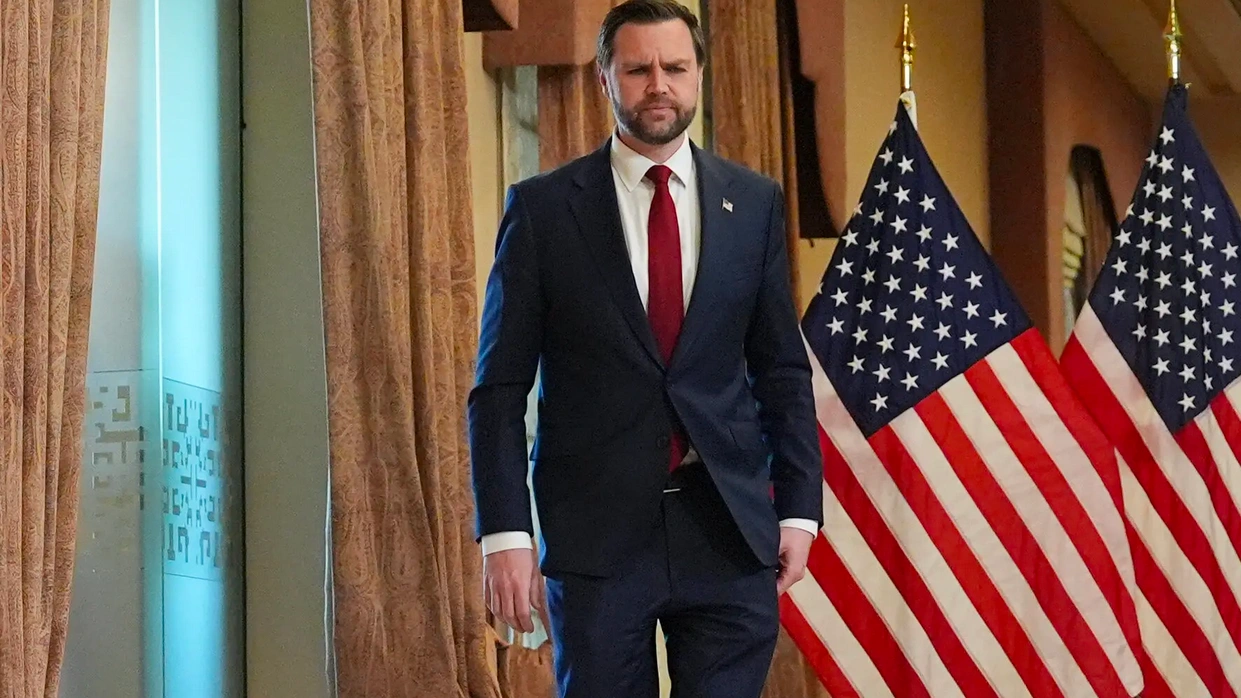
The ceasefire did not collapse on the battlefield first. It cracked at the negotiating table. After 21 hours of direct talks in Islamabad, the United States and Iran walked away without a deal, and the fallout was visible almost immediately in the Strait of Hormuz, where shipping remained nervous, irregular and highly risk-sensitive.
By Abhishek Kumar | The Eastern Strategist
The Islamabad talks were supposed to test whether a fragile ceasefire could be turned into something more durable. Instead, they ended with both sides blaming each other and leaving Pakistan without an agreement. U.S. Vice President JD Vance said Iran refused to accept Washington’s “final and best” offer, with the biggest obstacle centring on a long-term commitment that Tehran would not pursue a path to nuclear weapons. Iran, in turn, accused the United States of making excessive demands. The result was not only a diplomatic failure. It was a fresh reminder that this crisis can move from negotiation to pressure very quickly.
What makes this more serious is the setting. These were the highest-level direct U.S.-Iran talks in decades, held under extraordinary security in Islamabad. That alone had raised hopes that even a limited understanding might hold the ceasefire together a little longer. It did not. The core dispute stayed unresolved: Washington wanted clear nuclear assurances and freedom of maritime passage, while Tehran tied any broader understanding to sanctions relief, frozen assets, reparations and a wider regional bargain.
What broke the talks
The public explanation was nuclear, but the real dispute was wider. The United States wanted Iran to shut down any credible route to a nuclear weapon. Iran would not accept terms that it saw as stripping away its enrichment rights and regional leverage. Just as important, Tehran pushed a package that went far beyond a simple ceasefire. Reports from the talks said Iran wanted sanctions relief, access to frozen funds, war reparations, and terms around the Strait of Hormuz itself. In plain language, Iran was not negotiating only for peace. It was negotiating for position.
This was not a routine failed meeting. It was a failed attempt to stabilise one of the world’s most dangerous energy and security flashpoints.
The sea reacted before the markets fully did
The clearest sign of stress came near Hormuz. Even before the latest talks collapsed, hundreds of tankers had remained stranded in and around the Gulf after the crisis disrupted one of the world’s most important energy chokepoints. Reuters reported that only a small number of supertankers had resumed movement during the ceasefire window, while large volumes of traffic remained delayed or cautious. That is not normal commerce. That is trade moving under fear.
The picture on shipping routes has been mixed, not frozen. Some vessels kept moving, some waited, and some reversed or delayed decisions as risk changed. That is why the phrase “ships turning back” matters. It does not automatically mean the Strait is formally closed. It means operators are making active risk calculations in a corridor where insurance costs, naval warnings, mines, passage uncertainty and political signalling can all change the economics of a voyage in hours. Reuters also reported that U.S. warships moved through Hormuz as part of efforts linked to mine-clearing conditions, which underlines how tense and militarised the environment has become.
That matters because Hormuz is not just another maritime route. It carries around a fifth of global oil and LNG shipments. Even a partial disruption can rattle freight decisions, push up energy anxiety and keep markets on edge. In moments like this, traders do not need a formal blockade to panic. They only need enough uncertainty to assume the next move could be worse.
Iran’s demands were bigger than a ceasefire
One reason the talks were always hard is that Iran’s position was never limited to stopping immediate fighting. Reports around Islamabad pointed to a broader Iranian framework that included recognition of enrichment rights, sanctions relief, access to blocked funds, compensation for war damage, and a structured say over Hormuz transit. That made the talks much larger than a simple de-escalation exercise. Tehran was effectively asking Washington to accept a wider political settlement while the United States was still trying to narrow the discussion to nuclear guarantees and maritime access.
What this means for Pakistan
For Pakistan, this is a setback in optics more than a strategic disaster. Islamabad succeeded in hosting a rare direct channel between Washington and Tehran, and that alone gives it some diplomatic relevance. But a failed round makes it much harder for Pakistan to present itself as a decisive mediator. At best, it can say it created a space for contact. It cannot say it shaped the outcome. In diplomacy, that difference matters. Reuters’ own reporting on the Islamabad venue and the heavy security around the Serena Hotel showed how seriously Pakistan wanted to stage this moment. The failure leaves that effort looking incomplete.
Will war start again?
Not necessarily in the form of an immediate all-out war. But the danger has clearly risen. The more likely near-term pattern is controlled escalation: harder rhetoric, more naval signalling, pressure around shipping lanes, and the risk of a strike or incident that forces both sides to respond. That is why Hormuz now matters more than ever. If a ship is hit, if a mine-clearing operation goes wrong, or if one side tries to convert threat into actual interdiction, the crisis could move very fast.
For now, the short-term outlook is not peace. It is pressure. Both sides still appear to be bargaining through leverage rather than choosing immediate all-out war. But failed diplomacy changes the balance. It pushes the burden of signalling back to the sea, to the skies, and to the markets. That is why the sight of ships hesitating near Hormuz carries so much meaning. It is not just a shipping story. It is a warning.
TES Insight
The Islamabad collapse did not merely end one round of talks. It shifted the centre of gravity back to Hormuz. When diplomacy fails in a crisis like this, the pressure does not disappear. It moves outward — into sea lanes, tanker decisions, naval deployments and market nerves.
For the bigger picture, read our Iran War Hub , our earlier report on the U.S.-Iran peace talks in Islamabad , and our analysis of how India-linked shipping is moving through Hormuz .