
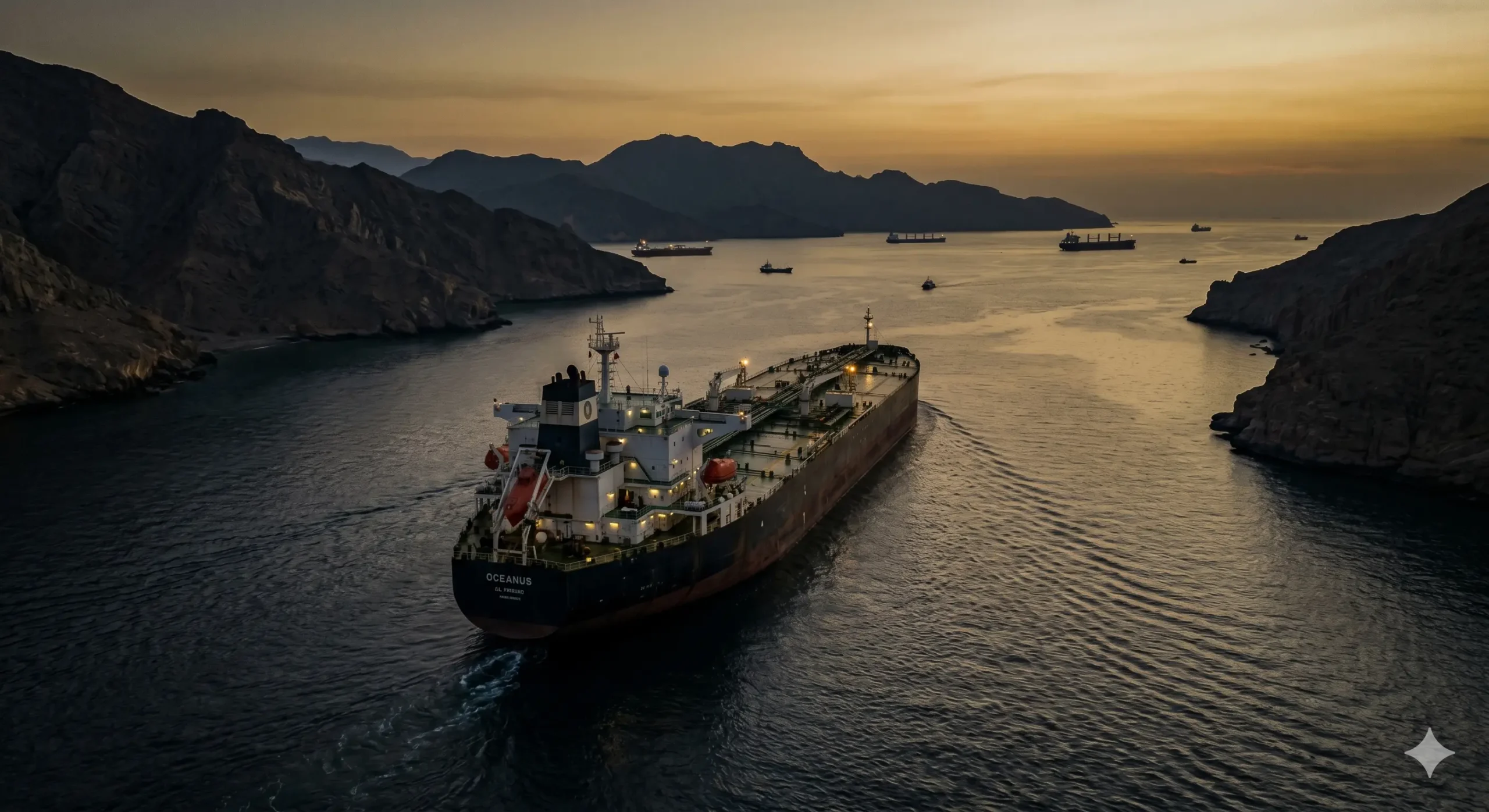
Hormuz crisis economic impact is no longer a niche policy subject or a faraway war file. It is becoming a cost story. The missiles grab attention, but the real damage often arrives through oil, shipping, insurance, freight, fertiliser and inflation. In plain terms, the confrontation may be unfolding near a narrow waterway, but the bill can travel much farther than the warships.
Most readers hear “Strait of Hormuz” and think of a map. They should be thinking about invoices. This is one of the world’s most sensitive energy chokepoints. When tension rises there, markets do not wait politely for diplomats to finish talking. They react first, and everyone else pays later.
That is the angle too many reports still miss. This is not only about who threatened whom, which navy moved where, or whether a new round of talks might happen. The bigger story is how a regional confrontation can quietly turn into a global cost shock. Wars are often covered through firepower. Markets read them through bottlenecks.
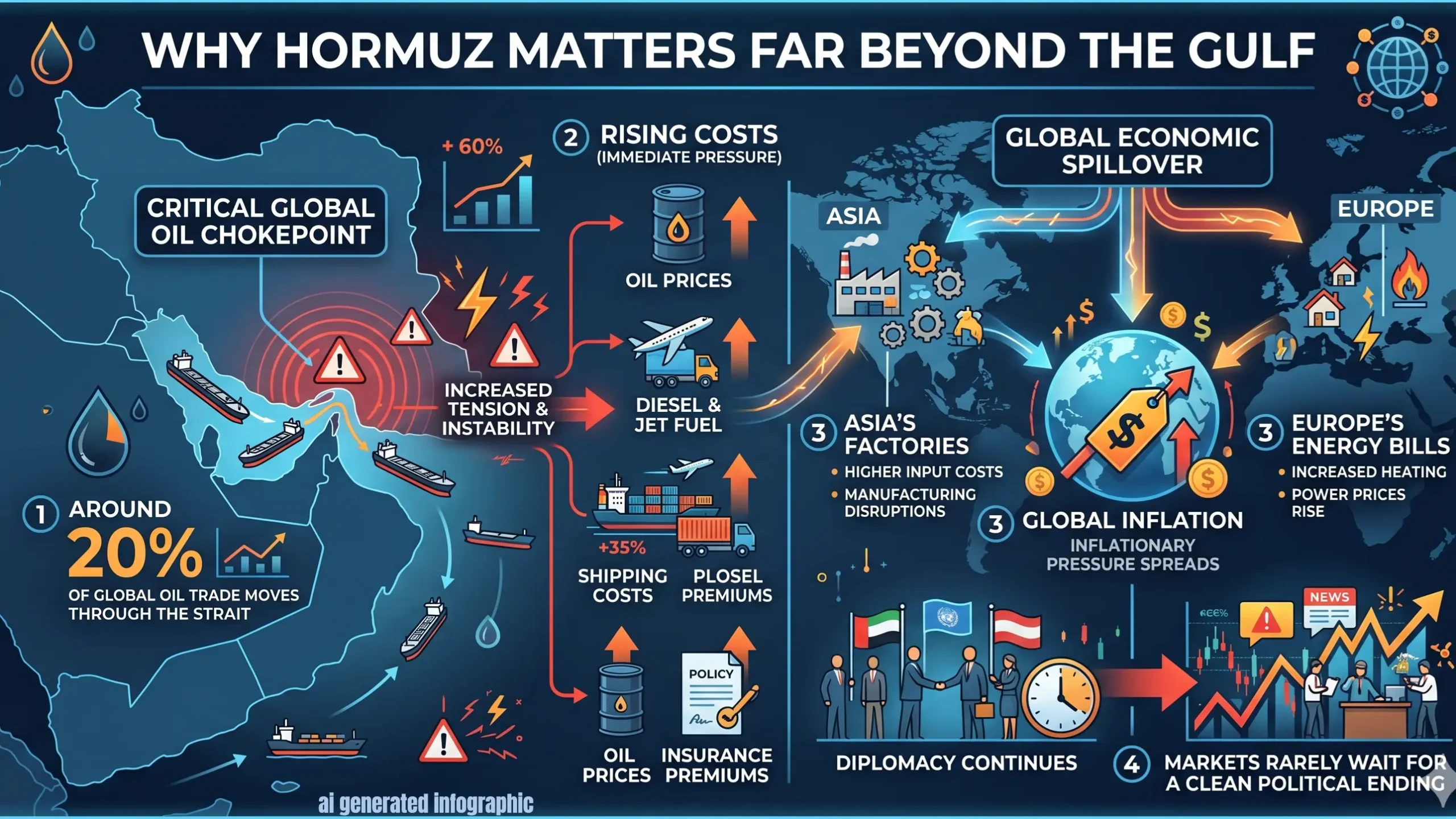
Infographic: Why Hormuz matters far beyond the Gulf
1. Around 20% of global oil trade moves through the Strait of Hormuz.
2. When tension rises, oil, diesel, jet fuel, shipping and insurance costs usually feel the pressure first.
3. The shock does not stay in the Gulf. It can spread into Asia’s factories, Europe’s energy bill and global inflation.
4. Diplomacy may continue, but markets rarely wait for a clean political ending.
This is not just a war story. It is a cost-of-living story.
The easiest mistake is to treat the Hormuz crisis as one more episode in a familiar Middle East script. It is more dangerous than that. A disruption in a chokepoint like this does not stay confined to strategy papers and military briefings. It leaks into shipping schedules, energy contracts, fuel bills and industrial costs.
Once that starts, the effects multiply. Freight becomes more expensive. Insurance premiums rise. Delays begin to stack up. Importers get nervous. Traders add a risk premium. Governments start talking about relief. By that stage, the crisis has already moved out of the security world and into daily economic life.
The world watches wars through headlines. Markets read them through costs.
Why higher oil prices hit much more than the petrol pump
Many readers still think expensive crude simply means expensive fuel. That is only the first layer. Higher oil prices also affect transport, aviation, chemicals, plastics, packaging, fertiliser and power-intensive industries. Then comes the second wave: goods become more expensive to move, store and produce.
This is where the crisis stops looking like distant geopolitics and starts feeling local. A tanker route in the Gulf can shape trucking costs, airline pricing, food bills and manufacturing margins thousands of miles away. That is the quiet power of Hormuz. It is not dramatic in the way a missile strike is dramatic, but it is often more persistent.
Asia may carry a bigger burden than many expect
One of the least appreciated parts of this story is Asia. People often assume the deepest pain will stay close to the Gulf. In reality, Asia may end up carrying a large share of the economic strain. The reason is simple: Asia is the world’s manufacturing floor, and manufacturing does not like energy shocks.
If oil and gas become more expensive, if shipping lanes become more fragile, and if supply chains slow down, then Asian production systems come under pressure. That means not only higher input costs for factories, but weaker trade momentum, tighter margins and potentially broader inflation effects. A Gulf crisis can quickly become an Asian cost shock. And an Asian cost shock rarely stays in Asia for long.
The 4-layer economic spillover
- Costlier imported energy
- Higher factory input costs
- More expensive shipping and trade
- Stronger inflation pressure and weaker growth
Europe’s caution says something important
Another striking part of the story is that the broader Western response has not looked perfectly uniform. That matters. When allies show anxiety but not complete alignment, it usually means they all see the same danger, but do not agree on the same route out of it.
Europe’s concern is not hard to understand. A prolonged Hormuz shock does not only threaten regional stability. It also threatens domestic inflation, industrial competitiveness and political comfort at home. Once energy prices begin climbing fast, leaders stop speaking only the language of strategy. They start speaking the language of relief, subsidies and damage control.
Diplomacy is not dead. It is just running behind the market.
For all the threats and hard language, diplomacy has not disappeared. That is one reason this crisis remains dangerous rather than settled. Talks can stall without collapsing completely. Backchannels can survive even while public statements get harsher. Mediators can stay active even as military pressure rises.
But there is a hard limit here. Markets do not patiently wait for diplomacy to catch up. If ships slow, if routes change, if traders panic and if governments brace for subsidies, then the economic damage begins before any political compromise arrives. In that sense, diplomacy is still alive, but it is already behind on points.
Why protests and political backlash also matter
The domestic angle matters too. Protests in New York over arms sales and the wider war atmosphere are a reminder that this crisis is no longer just a foreign-policy briefing item. Once a conflict begins to shape public anger, alliance politics, sea-lane risk and inflation expectations at the same time, it has outgrown the label of a simple regional flare-up.
That is what makes this moment so politically sensitive. It is not only about military pressure on Iran or maritime pressure in Hormuz. It is also about how far governments can carry economic pain before their own publics start asking what exactly the strategy is meant to achieve.
What this means for India and ordinary readers
For India and other major energy importers, the practical question is simple: does this crisis threaten everyday costs? The answer is yes, especially if the disruption lasts. More expensive crude can feed into transport costs, industrial expenses and inflation pressure. Not everything rises at once, but the pressure builds in layers, and that is what makes it tricky.
This is why Hormuz should not be treated as a distant strategic abstraction. It is the sort of crisis that first appears on a map, then in a headline, then in a market chart, and finally in household budgets. The gunfire may be far away. The price signal is not.
Conclusion: tension at sea, pressure on everyone else
Hormuz crisis economic impact is the real story readers should be watching now. The most important point is not simply that the waterway is tense. It is that the tension there can reshape oil prices, shipping costs, industrial margins, inflation expectations and political choices far beyond the Gulf.
That is why this is not merely a US-Iran confrontation story. It is also a Europe story, an Asia story, a market story and, ultimately, a household story. Hormuz is not just a strip of water on the map. It is one of the world economy’s pressure valves. Tighten it enough, and the whole system starts breathing harder.