
Ebola Screening Lapse Exposes Gaps in Global Health‑Security and Travel Rules
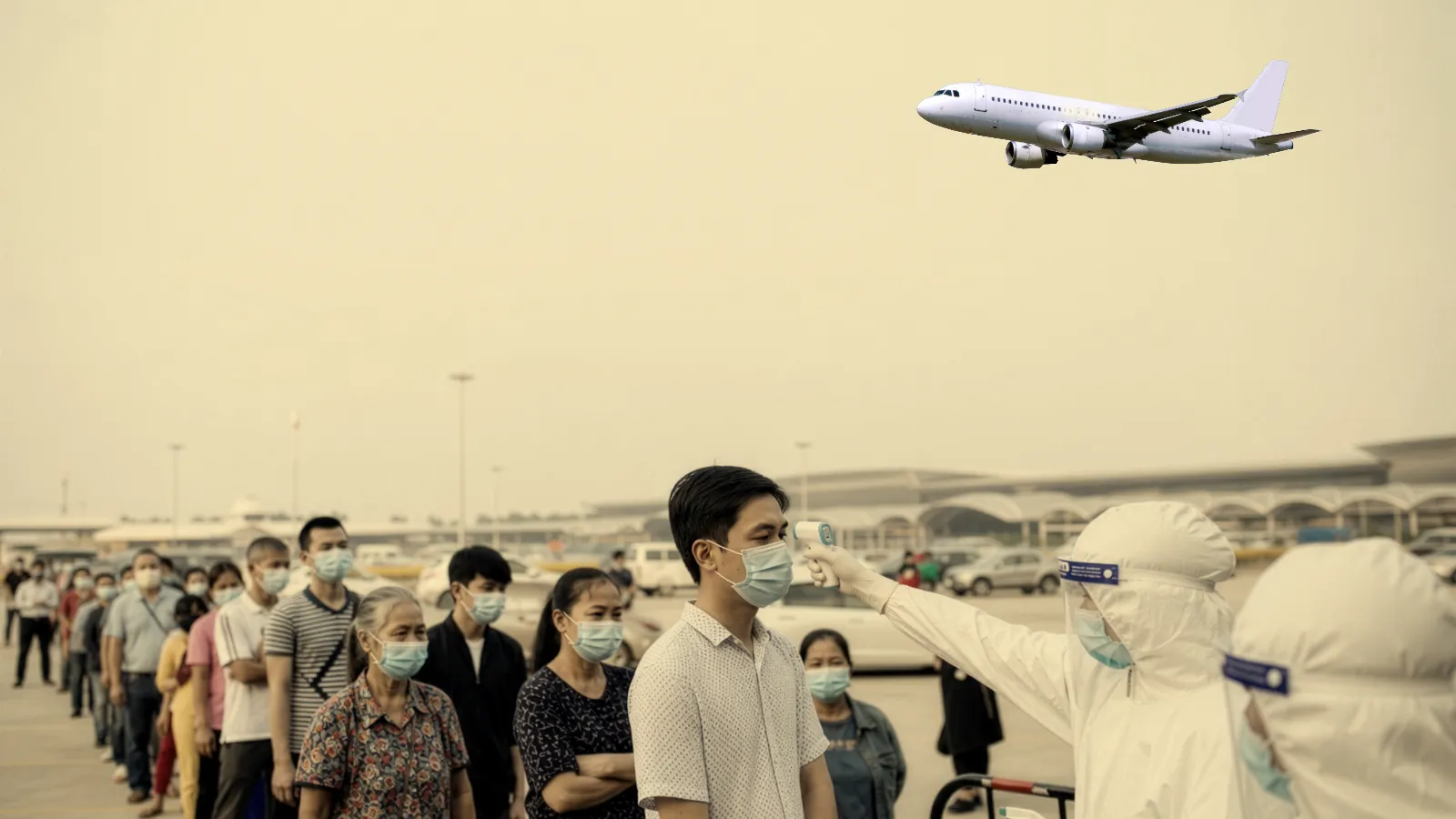
When a U.S.‑bound Air France flight from Paris to Detroit was rerouted to Montreal, Canada, because a passenger from Ebola‑hit Congo had boarded “in error,” many passengers saw little more than a delay and a detour. But the episode is quickly becoming a symbol of a much larger problem: how fragile, uneven, and politically charged the world’s systems are for managing disease outbreaks in an era of mass air travel.
The incident on May 21, 2026, involved a traveler from the Democratic Republic of Congo—one of several African nations at the heart of an ongoing Ebola outbreak—who was allowed onto a direct flight to Detroit in violation of updated U.S. travel restrictions. U.S. Customs and Border Protection authorities, alerted mid‑flight, told the airline the plane could not land in Detroit with that passenger, and the aircraft was diverted roughly 500 miles north to Montreal‑Trudeau Airport. Canadian health officials screened the individual on the tarmac, found no signs of Ebola, and later returned the passenger to Paris, while the rest of the flight continued toward Detroit.
On the surface, nothing went wrong medically. But the political and policy aftershocks are still unfolding.
Screening gaps and global exposure
Public‑health experts have long warned that diseases such as Ebola, though difficult to transmit, can travel farther than borders if even one person slips through the screening net. The 2014–15 Ebola crisis showed how quickly a single case can trigger panic, travel bans, and supply‑chain disruptions far beyond the outbreak zone. Since then, the World Health Organization and national governments have tried to walk a narrow line between containment and keeping air routes open.
Yet this incident underscores that the reality on the ground often falls short. Exit‑screening at airports in outbreak‑hit countries remains patchy, and internal airline processes—boarding lists, national‑entry rules, and last‑minute seat changes—can still allow passengers from sanctioned regions onto restricted routes. When that happens, the burden of enforcement shifts to the receiving country, which often reacts with abrupt, high‑profile measures like flight diversions rather than quiet, behind‑the‑scenes corrections.
For the rest of the world, that means a single boarding error in Kinshasa, Paris, or Montreal can ripple into split‑second decisions in Washington, Ottawa, and Paris, reshaping entire schedules and millions of passenger‑minutes in a matter of hours.
Politics, fear, and the risk of stigma
Even more troubling than the procedural lapse is what the diversion reveals about how politics and fear shape global‑health policy. Ebola remains a rare disease, and the actual risk of catching it on a commercial flight is extremely low under normal conditions. WHO and other agencies have repeatedly emphasized that exit‑screening, risk‑based travel advice, and rapid medical response are far more effective than blanket travel bans or shaming passengers from affected regions.
Yet this case unfolded in a climate where governments are under pressure to “show toughness” on infectious‑disease threats. Airport‑style screenings, refusals, and mid‑flight diversions create a visible signal of control, even if they add little to genuine public‑health safety. For people from Congo, Uganda, and other Ebola‑affected countries, such incidents can deepen a sense of being treated as potential vectors rather than as individuals with the same right to travel, work, or study abroad.
Critics argue that overly restrictive or inconsistently applied rules can backfire: they may deter people from declaring their travel history, drive up the cost of reaching hospitals abroad, and foster stigma that discourages early reporting and treatment. In the long run, that can make outbreaks harder to contain, not easier.
A test of global‑health cooperation
What makes this more than a single airline‑border‑bureaucracy failure is that it is a test of how the world coordinates across three spheres: states, airlines, and global‑health bodies.
National governments set the rules, airlines operate the routes, and WHO provides guidance—but the Montreal‑Detroit reroute shows how uncoordinated, ad‑hoc they still are in practice. When U.S. authorities told Air France the plane could not land in Detroit, it was not a joint decision with Canadian or French health agencies; it was an enforcement‑style order that then forced Canada to absorb the logistical and political fallout.
Experts in global‑health security have long called for standardized protocols, real‑time data sharing, and clear “no‑go” lists that are transparent, time‑bound, and subject to scientific review. Right now, the system is anything but that: national rules can change fast, airlines scramble to adapt, and passengers can find themselves indefinitely rerouted, quarantined, or turned away without a coherent explanation.
For the next outbreak—whether another Ebola flare‑up, a new respiratory virus, or a pathogen we have not yet seen—this incident is a warning that the world’s current playbook is still cobbled together, not carefully designed.
What the world should do differently
None of this is meant to downplay genuine risk. Ebola is a serious disease, and closing borders can be a legitimate last‑resort tool. But the lesson from the diverted Air France flight is not that travel restrictions should be scrapped; it is that they should be smarter, fairer, and more collaborative.
Key steps include:
- Strengthen exit‑screening and airline‑gate controls in outbreak zones, so that most Ebola Screening Lapse are caught before boarding, not mid‑flight.
- Harmonize entry rules among major destination countries so that passengers are not caught in a patchwork of conflicting regulations.
- Invest in rapid diagnostic and response systems at key hubs, so that a suspicious case can be assessed and contained quickly without wholesale disruption.
- Communicate the actual risk to the public honestly, instead of letting fear and political messaging drive the narrative.
In the end, the Air France plane carried no Ebola case, and the Montreal‑Detroit detour ended without a medical emergency. But the episode carried a warning: in a hyper‑connected world, a single passenger error can expose the thin line between global‑health preparedness and panic‑driven improvisation. How the world responds to the next such incident—whether it deepens coordination, transparency, and fairness or retreats into blunt, reactive restrictions—will say far more about our readiness for the next major outbreak than this flight alone.
Read More
Why Fetterman’s Chief of Staff Quit — And Why Washington Is Watching Closely
An inside look at the resignation shaking Senator John Fetterman’s political circle and the wider implications for Democrats.
What Happens If Indian Talent Stops Moving To The United States?
From Silicon Valley to Wall Street, here’s how a slowdown in Indian migration could reshape America’s innovation economy.
Russia Launches Spring Nuclear Drill With Belarus Amid NATO Tensions
Moscow and Minsk begin joint nuclear exercises as security tensions across Eastern Europe continue to rise.