
Defense & Espionage | Special Report
EXPOSED: The Secret Chinese Satellite Guiding Iranian Missiles to US Bases
It reads like the plot of a high-stakes spy thriller, but the danger unfolding in the Middle East is entirely real. A missile does not hit a target by simply guessing. It needs eyes. The world just found out exactly whose eyes are guiding the destruction.
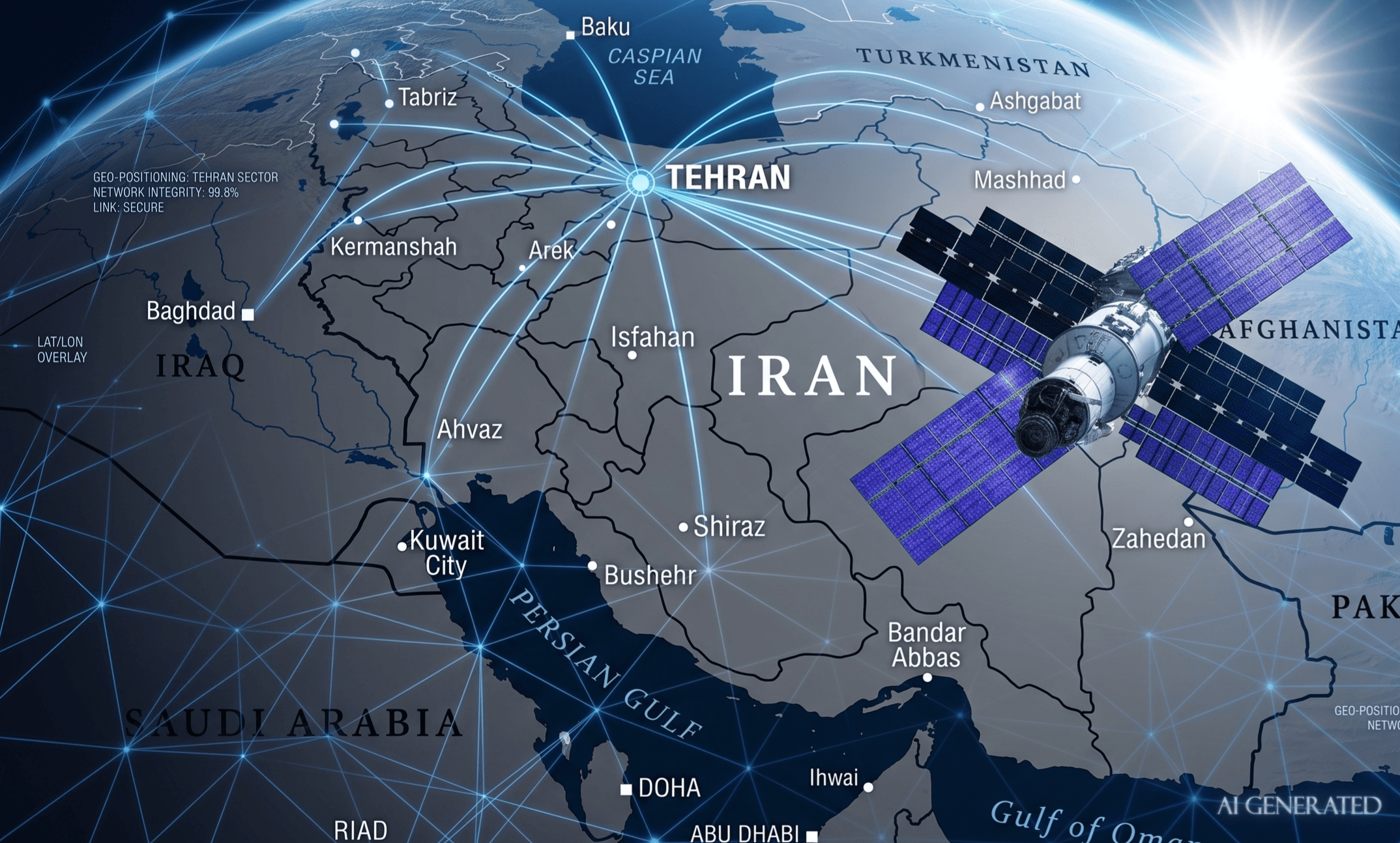
According to a massive leak of Iranian military documents, first brought to light by the Financial Times, Iran has been utilizing a highly advanced, Chinese-made spy satellite to track, monitor, and target United States military bases across the region. For anyone tracking the shifting sands of global power, this revelation changes the entire calculus of the current war.
The $36 Million Purchase
The details of the transaction are brutally clear. In late 2024, the Islamic Revolutionary Guard Corps (IRGC) quietly wired approximately $36.6 million to a private Chinese technology firm called Earth Eye Co. The product? A state-of-the-art reconnaissance satellite named TEE-01B.
This is not a basic weather camera. The TEE-01B is capable of capturing images with a half-meter resolution. That level of precision means Iranian commanders sitting in control rooms in Tehran can clearly count individual fighter jets, fuel trucks, and troop movements at American installations thousands of miles away.
- Hardware Origin: Earth Eye Co. (China)
- Acquisition Cost: $36.6 Million (Estimated)
- Capabilities: 0.5-meter high-resolution targeting imagery
- Ground Control: Emposat (Beijing-based satellite network)
Watching the Missiles Land
The leaked military logs prove that this Chinese technology was not just a deterrent; it was actively used to draw blood during the intense drone and missile strikes in March.
Records show the satellite was specifically commanded to monitor the Prince Sultan Air Base in Saudi Arabia on March 13, 14, and 15. The satellite took detailed photographs of the base right before the attack, and immediately after the dust settled. On March 14, US President Donald Trump stood before the press and confirmed that American aircraft at that exact Saudi base had been hit.
The surveillance did not stop there. The Chinese lens also locked onto the Muwaffaq Salti Air Base in Jordan, the US Fifth Fleet naval headquarters in Bahrain, and the Erbil airport in Iraq. Iran knew exactly where to aim, and exactly what damage was done.
The Hidden Ground Support
Owning a piece of hardware in space is useless without a way to drive it. To make the system fully operational, the IRGC was granted access to commercial ground stations operated by Emposat, a major satellite control provider based in Beijing.
This is the most alarming part of the leak. Iran was not merely purchasing static photographs from a vendor. They essentially had the keys to operate the satellite system using Chinese ground infrastructure. While Beijing officially claims to be neutral in the ongoing conflict, these private tech deals suggest a much darker reality.
🌍 READ IN HINDI: THE ASIAN POWER TRIANGLE
This crisis goes far beyond the Middle East. It is actively reshaping the Asian power dynamics. How will the clash between America, Iran, and China directly impact India’s economy and foreign policy?
Read the full geopolitical analysis on the Hindi portal: होर्मुज संकट: चीन, अमेरिका, ईरान और एशिया पर इसका सीधा असर
A Dangerous Shift in Power
For a journalist with two decades on the news desk, the pattern is obvious. This revelation fundamentally alters the regional balance of power. Previously, the Iranian military relied on older, domestic satellites like the Noor-3, which could only muster blurry, 5-meter resolution images.
The massive technological leap to 0.5-meter clarity using Chinese hardware transforms Iran’s ballistic missile forces from a blind threat into a highly lethal, precision-strike military arm.
The White House, the Pentagon, and the CIA have remained tight-lipped, refusing to comment on the Reuters and FT reports. But the silence speaks volumes. The rules of engagement in the Middle East have been rewritten, and the pen used to write them was manufactured in Beijing.