Geopolitics & Global Markets | Editorial Analysis
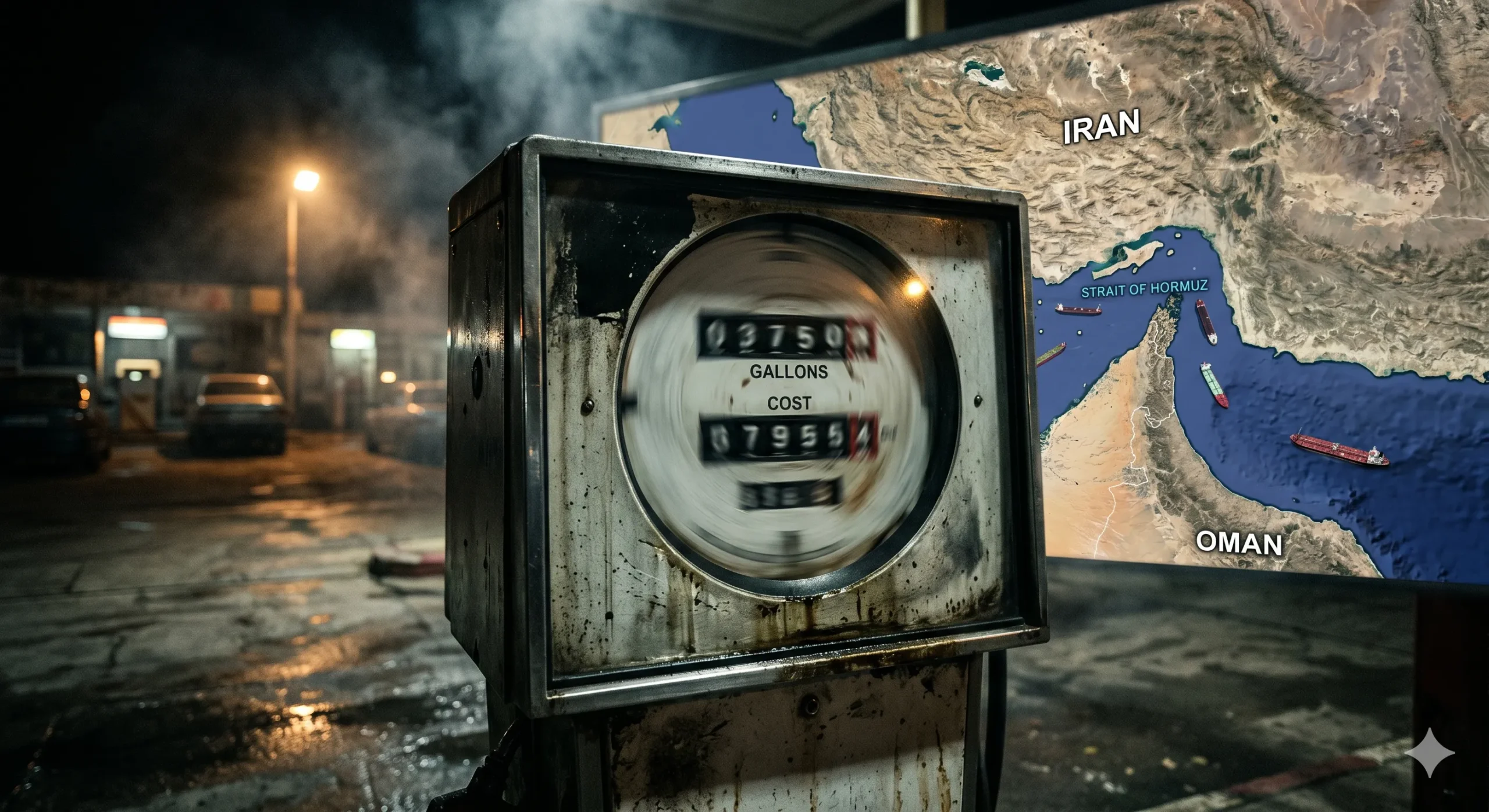
The world woke up to a nightmare scenario this week. At exactly 10:00 a.m. EDT on Monday, the United States Central Command threw a heavy iron chain across the Persian Gulf. A complete US naval blockade of Iran ports is now officially in effect. The immediate trigger? The spectacular collapse of high-stakes diplomatic talks in Islamabad over the weekend. The US delegation walked away from the table, and within hours, the warships moved in.
For the policymakers in Washington, this is a calculated military maneuver. But for the rest of the world—from the factory floor in Germany to the daily commuter in Mumbai—this standoff is a fast-moving financial disaster. The world’s most critical energy artery has been brutally severed, threatening to trigger a severe global economic crash.
To understand how shifting global alliances paved the way for this moment, it is essential to look at the broader geopolitical chessboard. We recently analyzed this exact scenario in our deep dive into the Trump Hormuz blockade and its direct impact on China and India.
The Blockade and the Backlash
Washington claims the blockade is “impartial,” meant to stop cargo entering or leaving Iran while supposedly allowing neutral ships to pass to other destinations. But anyone who understands the geography of the Middle East knows that a “partial” blockade in these narrow waters is a dangerous illusion.
Tehran did not waste time mincing words. Iran’s Revolutionary Guards immediately branded the US action as international “piracy.” Their counter-threat was chillingly simple: if Iranian ports are choked, no port in the entire region will remain secure. The fear of retaliatory missile strikes against neighboring oil terminals has effectively turned the Gulf into a red zone for commercial shipping.
Interestingly, America is playing a lone hand here. Heavyweight NATO allies like Britain and France have openly refused to join the blockade, prioritizing the safety of global energy supplies over cornering Tehran.
The IMF Sounds the Death Knell for Europe
If you want to know exactly how bad things are, look at the International Monetary Fund (IMF). The global financial watchdog has dropped a report that essentially predicts a dark, cold year for the West.
Europe is sitting squarely in the crosshairs. The IMF has aggressively slashed the Eurozone’s growth forecast to a miserable 0.5%. With the Persian Gulf closed to commercial shipping, cargo vessels are taking a massive detour around the entire continent of Africa. Factories across Germany and Italy are already suffocating under skyrocketing industrial energy bills.
The situation in the United Kingdom is even more severe. British economic growth has been downgraded to just 0.3%. The massive costs of rerouting ships are being passed directly to the consumer. As we noted last week, the Hormuz crisis is no longer just a war story; it is becoming a brutal cost-of-living shock.
The Middle East’s Golden Trap and China’s Silence
Here is the ultimate irony of the 2026 crisis. Usually, when bullets fly in the Middle East, Arab oil nations sit back and count their profits as crude prices touch the sky. Not this time.
Global oil prices are threatening to cross $100 a barrel, but major exporters like Saudi Arabia and the UAE are caught in a geographical trap. Millions of barrels of oil are stuck at the docks because commercial tankers refuse to enter the militarized zone. The physical inability to ship the product completely wipes out the financial benefit of high prices.
Meanwhile, the silence from Beijing is deafening. As the world’s largest oil importer, China has a massive stake in this chokepoint, yet they are playing a long, calculated game. You can unpack Beijing’s underlying strategy in our exclusive piece on why China’s Hormuz message matters.
🌍 Special Feature for Our Hindi Readers
This crisis isn’t just a Western problem; it is actively reshaping the Asian power triangle. How will the clash between America, Iran, and China directly impact India’s economy and foreign policy?
Read the full analysis on our Hindi portal: होर्मुज संकट: चीन, अमेरिका, ईरान और एशिया पर इसका सीधा असर (Hormuz Sankat: China, America, Iran aur Asia Impact)
The Direct Threat to the Common Citizen
We can talk about macroeconomics all day, but the reality for the common citizen is terrifying. Developing nations, particularly massive energy consumers like India, are highly vulnerable. If crude prices stabilize above the $100 mark, domestic supply chains will fracture. Transportation costs will surge instantly, driving up the price of basic vegetables, food grains, and daily essentials.
Central banks are completely paralyzed by this scenario. They cannot print more oil, and they cannot lower interest rates to boost growth while inflation is raging. The middle class is being squeezed from both sides: stagnant wages in a slowing economy and skyrocketing daily expenses.
Despite the heavy gloom, the global markets are clinging to a very thin thread of hope. Whispers of a secret “final and best offer” have started leaking from diplomatic circles, suggesting a weekend meeting in Geneva. But if those desperate talks fail to break this catastrophic deadlock, the US naval blockade of Iran will no longer just be a military standoff—it will be the undisputed catalyst of the next global economic crash.