
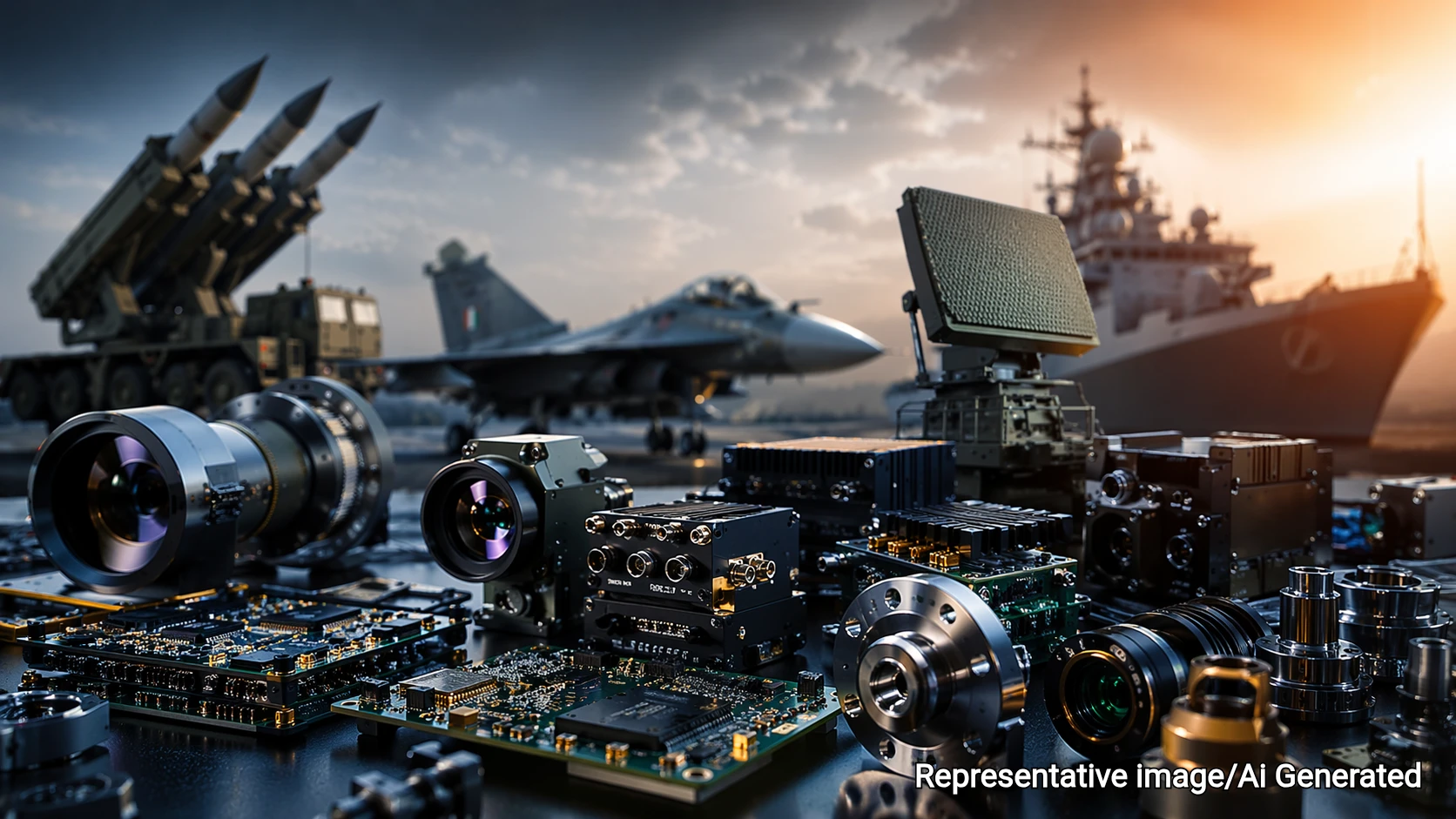
India’s defence story is no longer limited to HAL, BEL and BDL. A wider layer of hidden Indian defence companies is now working inside the country’s missile, radar, optics, electronics and precision-engineering chain. These firms do not get the same public attention as the large public-sector names. But their role is becoming harder to ignore as India’s defence manufacturing base expands.
That shift matters because military strength is not built only through the final platform the public sees. It is also built through the electronics inside a missile, the optics inside a targeting system, the control units inside a launcher and the precision parts that keep the system reliable. A country that can build more of these inner layers at home is in a stronger position than one that only assembles the outer shell.
That is also why the defence story is no longer only about the familiar giants. HAL, BEL and BDL still anchor the sector. But they do not work alone. Around them, specialist Indian defence companies are building capability in missile-linked electronics, electro-optics, fuzing systems, fire-control units, RF modules, machining and advanced materials. For a wider market view, read our Indian Defence Stocks 2026 guide.
The public sees the platform. The real story sits inside it.
BDL remains the visible missile manufacturing name. That is why many investors still treat it as the whole missile story. It is not. A missile programme is not one company. It is a chain of manufacturers, electronics suppliers, optics specialists and precision-engineering firms working behind the prime contractor.
For ordinary readers, the point is simple. A country does not become stronger only by displaying missiles, aircraft or warships. It becomes stronger when it can build more of the systems inside them. That is where real industrial depth begins.
For retail investors, this is where the sector becomes more interesting and more difficult. Many of these businesses do not manufacture the final missile or aircraft. They make the electronics, optics, control units and machined parts inside it. That can place them closer to the technical core of the sector. But not every defence-linked company deserves automatic enthusiasm. Capability, execution, order quality and product relevance matter more than the theme.
Missile technology is not only BDL
Many investors still speak about missile technology as if it begins and ends with BDL. That view is too narrow. BDL is the visible integration and manufacturing name. But a missile also needs guidance electronics, launch systems, fuzing, rugged power units, testing equipment and precision mechanical parts. Once that becomes clear, the defence supply chain starts looking much wider.
If you want the bigger industrial context, our analysis on the GE-HAL F414 engine deal explains why subsystem depth matters far beyond one headline defence contract.
Apollo Micro Systems: the electronics layer
Apollo Micro Systems is one of the cleaner examples of a hidden Indian defence company. The company says it offers missile-defence solutions from fuzing to fire control for tactical and strategic missile systems. It also lists components for missiles, rockets, mortars and torpedoes. That places Apollo Micro in the electronics and control layer rather than the final airframe layer.
In practical terms, this is the kind of company that works on the functions that help make a system usable in the field. The market often overlooks that layer because the work is technical and mostly invisible outside defence circles.
MTAR Technologies: the precision backbone
MTAR Technologies sits in a different part of the chain. Its defence and aerospace page says it supplies high-precision components, subsystems and systems for strategic programmes and has supported defence initiatives from the development stages of India’s strategic missile programme. That is a direct window into the precision-manufacturing side of India’s defence build-up.
These are not flashy products. But if this layer is weak, the final system suffers. That is why precision engineering matters so much in strategic manufacturing even when it gets less public attention than the final launcher, aircraft or missile body.
Data Patterns: the electronics brain behind the hardware
Data Patterns describes itself as a vertically integrated defence and aerospace electronics solutions provider. Its product pages list radar and radar subsystems, RF and microwave systems, launch and fire-control systems, rugged military electronics, avionic systems and electronic-warfare products. That makes it one of the strongest examples of a company working in the sensing, signal-processing, testing and control layer of defence manufacturing.
A missile or radar system may look like a hardware story from a distance. In practice, it is also an electronics story. That is where companies like Data Patterns become relevant for readers trying to understand the deeper shape of India’s defence sector.
Paras Defence: optics, tracking and response
Paras Defence operates in another important segment. The company says it works in defence and space optics, defence electronics and heavy engineering, and says it is the only company in India manufacturing infrared optics in large quantities. That places Paras in the detection, tracking and response side of the chain.
In modern conflict, that can matter as much as raw firepower. A country that improves in this segment is not only adding more products. It is improving what its systems can see and how quickly they can react.
What the bigger picture shows
Put together, these companies point to a defence sector that is becoming more layered than the public conversation often suggests. The public still sees the final platform first. That will not change. But underneath that visible layer sits a wider industrial base of missile-linked electronics, RF modules, optics, fuzes, test systems and precision components.
This matters for investors as well. The long-term defence story may not run only through the best-known names. It may also run through the firms quietly supplying mission-critical subsystems, optics, special materials and control hardware. That is why any serious look at Indian defence companies should include the quieter supply-chain players, not just the public-sector anchors.
For another angle on how the supply chain is getting repriced by global conflict and ammunition demand, read our report on India’s munitions supply chain.
The better way to read the sector
The right question is no longer only who makes the final missile, launcher or aircraft. The better question is who makes the hidden systems inside it. Which company handles the electronics. Which one builds the optics. Which one supplies the fuzing, testing or precision parts. That is where a deeper change in India’s defence manufacturing base is becoming visible.
India’s defence story is still anchored by the big public names. But it is no longer only about them. It is also about the firms supplying the inner layers of those platforms. They get less attention. They should not be ignored.