Strategic Explainer
Every time Iran, Israel, the Strait of Hormuz, proxy warfare, missiles or drones return to the headlines, one name quickly follows: the IRGC. The full name is the Islamic Revolutionary Guard Corps. But describing it as just another military force is the fastest way to misunderstand Iran. The IRGC is better understood as a political-military power structure born out of the 1979 Islamic Revolution. It was created not only to defend the country but to defend the revolution and the system that came after it.
That is where this story really begins. To understand what the IRGC is and why it appears in nearly every major Iran crisis, you first have to understand the Islamic Revolution itself. You have to understand why the Shah fell, how Ayatollah Ruhollah Khomeini emerged as the central force of the uprising, and why the new Islamic Republic decided it needed a separate revolutionary guard alongside the regular army.
If you want the wider conflict backdrop first, read our report on the wider U.S.-Iran-Israel war picture.
What was the Islamic Revolution
The Iranian Revolution of 1978 and 1979 overthrew Shah Mohammad Reza Pahlavi and replaced the monarchy with an Islamic Republic. This was not just a change of government. It changed the structure of power in Iran. It changed the relationship between religion and politics. It changed the role of the military. It also changed Iran’s relationship with the wider world. Britannica describes the revolution as a broad uprising that drew support from very different forces, from clerics and bazaar merchants to students and anti-Shah political groups.
That is why calling it only a religious revolt misses the point. It was also a revolt against monarchy, repression and a political order many Iranians saw as too tightly tied to Western power. Different groups entered the uprising with different grievances. They were united against the Shah. They were not united on what should come next.
Why did anger against the Shah run so deep
The Shah’s rule looked modernising on the surface but authoritarian underneath. Iran saw state-led development, industrial growth and closer ties with the West. It also saw deeper repression. Political dissent was tightly controlled. Many Iranians came to believe that development was being imposed from above while culture, religion and political dignity were being pushed aside. The Shah’s closeness to Washington only sharpened that sentiment.
This is another point many readers miss. The Shah was not opposed only by clerics. He faced a broad anti-monarchy coalition. Students, merchants, intellectuals, nationalists and leftists all played a role. That mattered because once the Shah fell, the real struggle was no longer just about removing him. It became a struggle over who would control the institutions of the new Iran.
How did Khomeini become the central figure
Ayatollah Ruhollah Khomeini became the most powerful face of the anti-Shah movement because he offered more than resistance. He offered a new political order. Even from exile, his speeches and messages travelled into Iran through clerical networks and recordings that circulated widely. By the time the monarchy was collapsing, Khomeini had become more than a dissident cleric. He had become the figure around whom a new state could be built. Britannica’s profile of Khomeini captures how quickly his authority rose after the collapse of the old order.
What actually happened in 1979
Protests intensified through 1978. By January 1979 the Shah had left the country. By February the old order had effectively collapsed. A referendum later formalised the Islamic Republic. But the deeper struggle did not end with the fall of the monarchy. It shifted. The central question became simple: who would build and control the institutions of the new state.
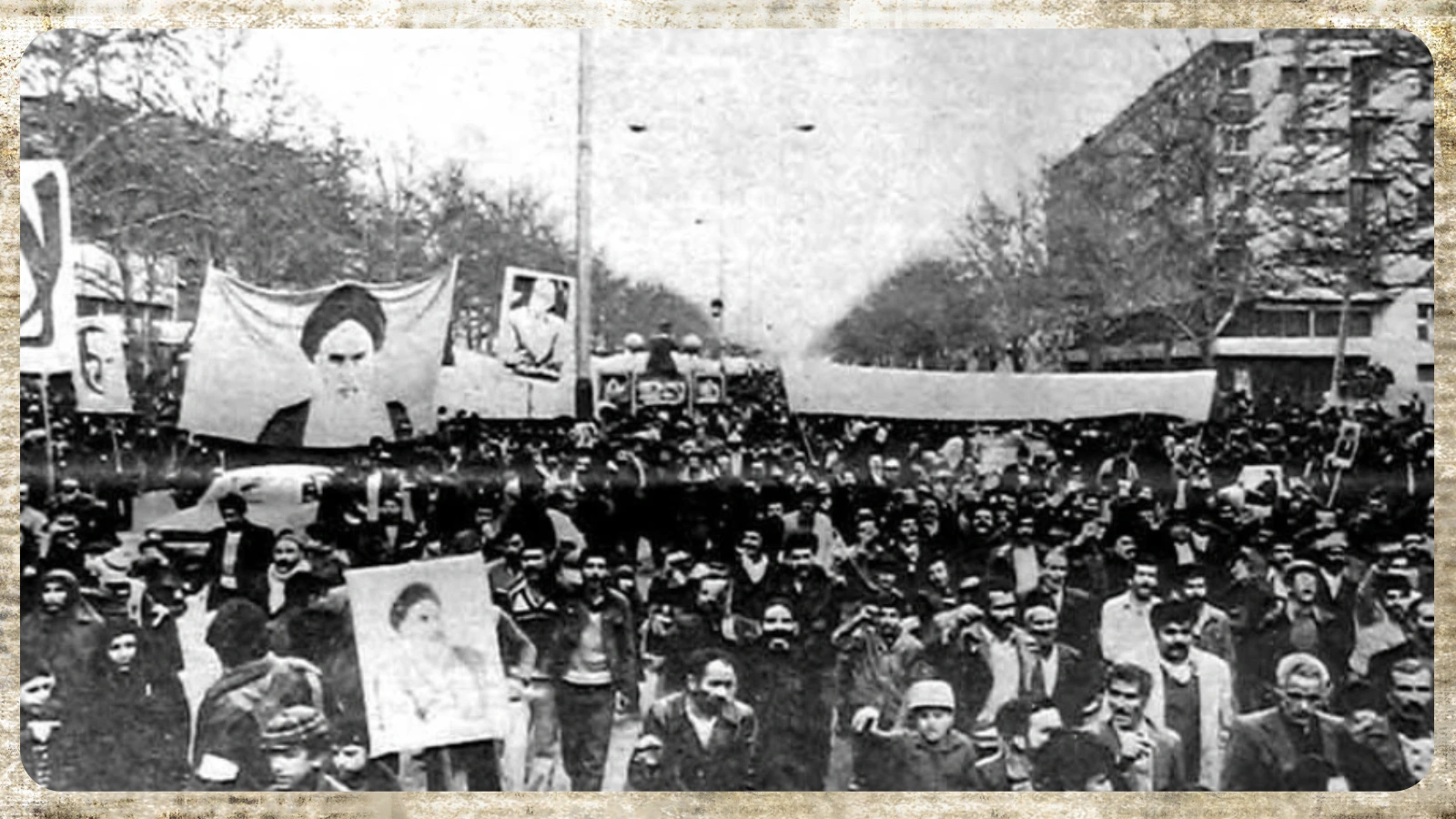
In pictures: this visual sequence captures the road from mass revolt to the rise of the revolutionary state.
From Revolution to the IRGC
A visual bridge from street revolt to the rise of a revolutionary power structure
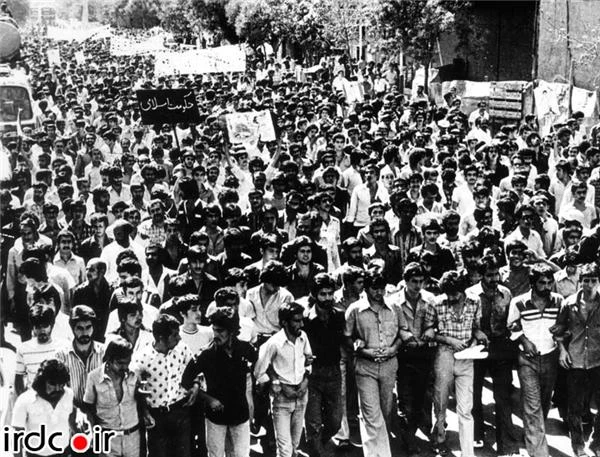
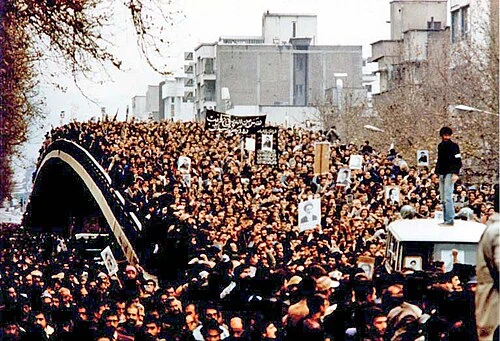
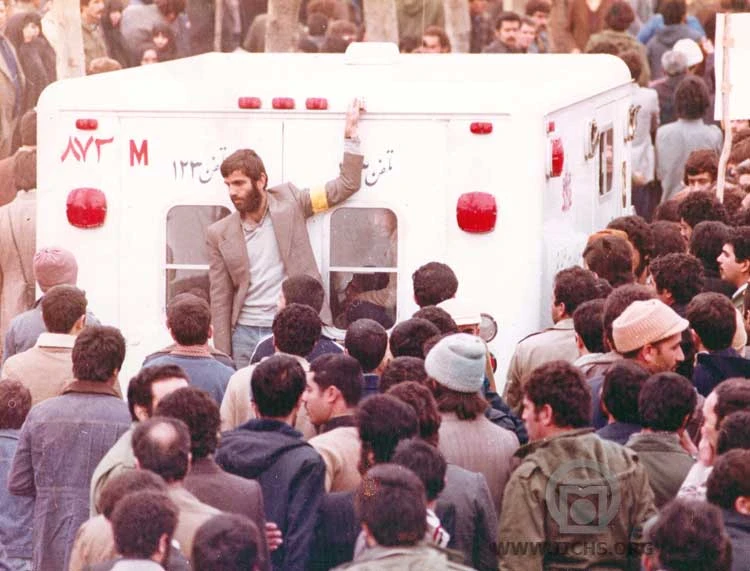
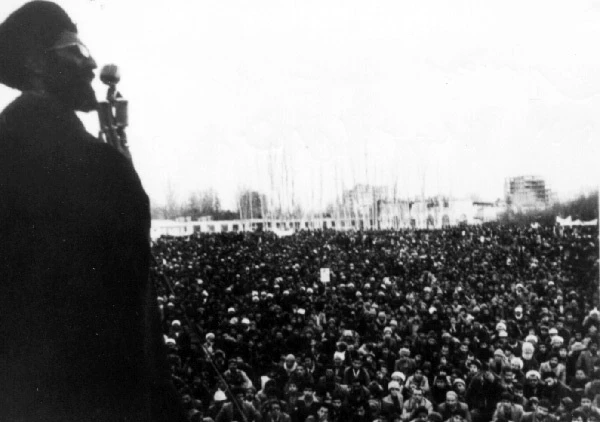
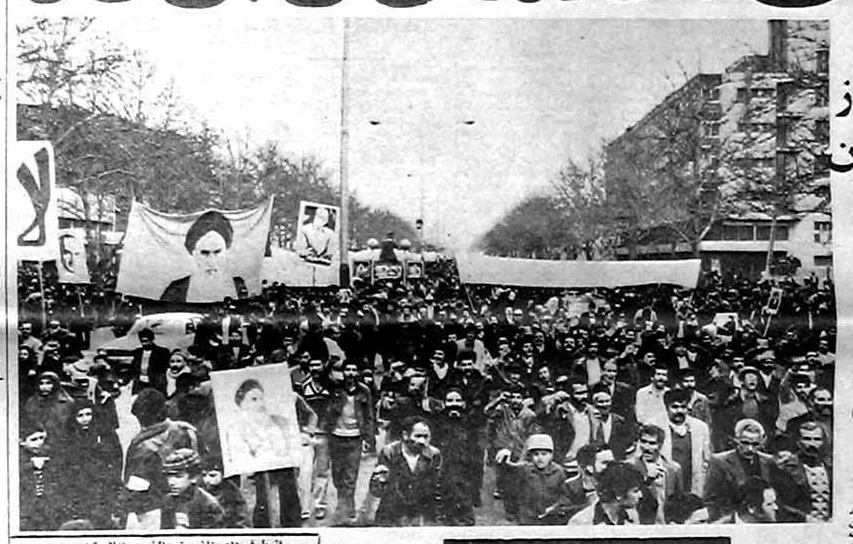
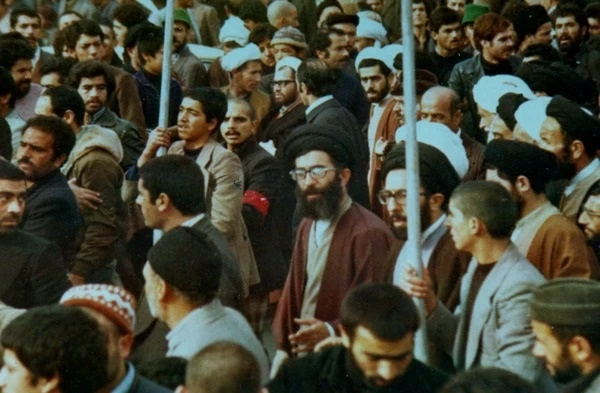
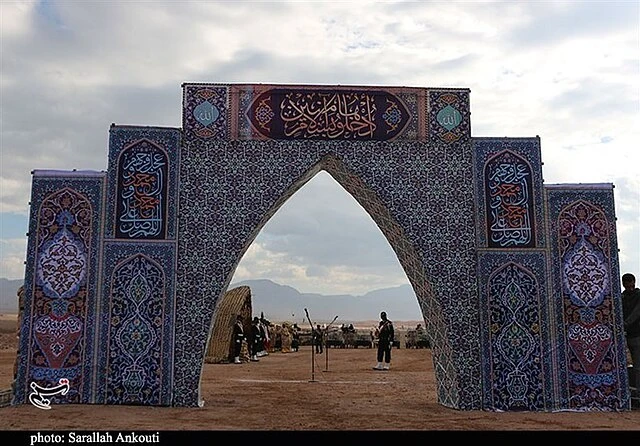
That was the moment when Khomeini’s camp began building new revolutionary institutions alongside the inherited state. The IRGC came out of that institution-building struggle. It was not an afterthought. It was a founding tool of the new order.
Why was the IRGC created
The new Islamic Republic did not fully trust the regular army because that army had belonged to the Shah’s system. That is why the IRGC was established in April 1979 by decree. Its initial mission was to defend the revolution, secure the new Islamic order and organise the forces that had emerged from the anti-Shah struggle. Britannica’s IRGC profile notes that it was created to defend the regime and its revolutionary ideology.
In simple terms the regular army was Iran’s traditional military. The IRGC was the shield of the revolution. The army defended the state in the conventional sense. The IRGC was built to defend the new political-religious order and the strategic logic behind it.
How is the IRGC different from Iran’s regular army
Iran still has a regular army. But the IRGC is separate. It has a different mission, a different logic and a different relationship to the state. The regular army is tied to conventional defence. The IRGC is tied to the survival and projection of the Islamic Republic. That distinction is the key to understanding why the IRGC matters so much.
If you want to understand how Iran’s military depth shapes outside calculations, read our analysis on why a U.S. ground invasion of Iran could become a strategic trap.
How did the IRGC become so powerful
The Iran-Iraq War changed everything. It gave the IRGC battlefield experience, organisational depth, legitimacy and a larger public role. Over time the organisation expanded beyond armed force. It moved into politics, business, construction, internal security and foreign operations. That is why describing it as only a military force no longer works. The Council on Foreign Relations backgrounder remains one of the clearest short guides to this evolution.
Today the IRGC is better understood as a power centre inside the Iranian state. That conclusion follows from its expanding influence across military, political, economic and regional spheres.
What is the Quds Force
If the IRGC is the shield of the revolution at home then the Quds Force is its external arm. This is the branch most closely associated with foreign operations. It is tied to Iran’s efforts to build networks, partnerships and influence beyond its borders. That is why its name repeatedly appears in stories about Iraq, Syria, Lebanon and the wider Middle East. Britannica’s Quds Force entry is useful on this point.
What is the Basij
The Basij is another piece of the picture. It is commonly understood as a volunteer militia structure connected to internal mobilisation and social control. In practical terms it shows that the IRGC story is not just about battlefields and foreign operations. It is also about internal order and the defence of the system inside Iran itself.
Why does the world watch the IRGC so closely
Because the IRGC sits at the junction of missiles, drones, regional pressure, foreign networks and Iranian strategic signalling. It is not simply a domestic institution. It is part of how Iran projects power and manages threat perception across the region. That is why its name appears in nearly every major West Asia crisis.
For a look at how Iran’s growing targeting and surveillance reach fits into that wider story, read our report on how Iran’s alleged Chinese satellite support sharpened its strike capability.
The IRGC story also cannot be separated from the wider energy and escalation map. Our report on how the Iran war opened a new energy front at South Pars shows how strategic pressure now runs through energy infrastructure as well as military confrontation.
For the broader force posture behind this tension, read our analysis of the scale of the U.S.-Iran military buildup.
International policy toward the IRGC is not identical everywhere. But suspicion is deep. Reuters reported in April 2026 that Argentina designated the IRGC as a terrorist organisation. That was one more sign of how sharply the group is viewed in parts of the wider international system.
What most people still miss
First, the IRGC was not born as a normal army. It was created to protect a revolution. Second, the 1979 revolution was not a simple clerical revolt. It was a broad uprising whose outcome was ultimately captured and institutionalised by a religious-political camp. Third, the real struggle after the Shah’s fall was not only who won the revolution. It was who controlled the institutions that came after it. The IRGC was central to that answer.
Fourth, the IRGC’s strength does not come only from missiles and guns. It also comes from networks, political access, economic reach and its claim to revolutionary legitimacy. That is what turns it from a security body into a system-shaping institution.
The bigger picture
If you want the shortest possible definition, it is this: the IRGC is not just Iran’s military. It is the power structure created by the 1979 Islamic Revolution to defend the new order at home and project its strategy beyond Iran’s borders.
And if you want the shortest definition of the revolution itself, it is this: the 1979 Islamic Revolution did not just remove the Shah. It remade Iran’s state, military, ideology and place in the world.
Sources: Britannica on the Iranian Revolution, Britannica on the IRGC, Britannica on the Quds Force, Council on Foreign Relations backgrounder, Reuters report