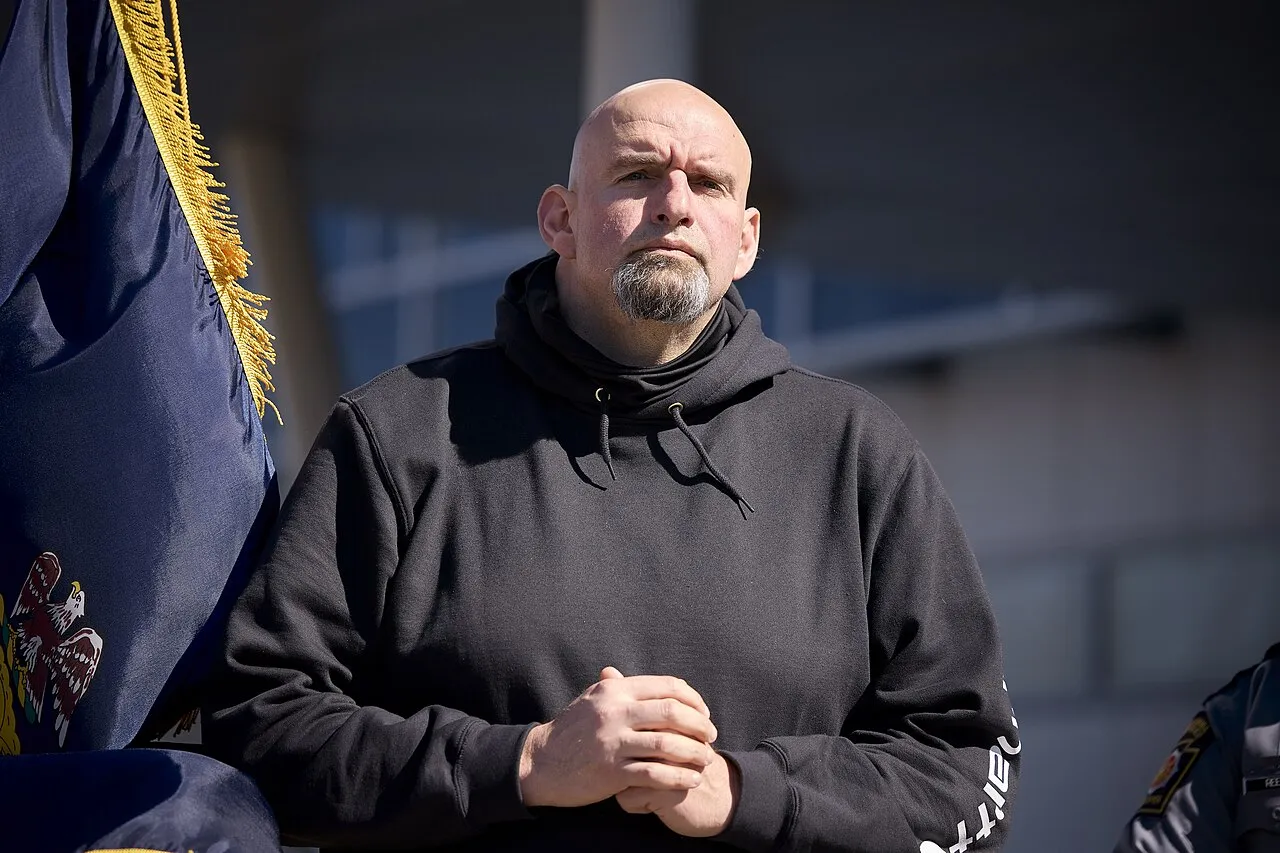
John Fetterman’s chief of staff quits as the senator’s hard‑line Iran stance and Trump ties spark party backlash.Fetterman is facing fresh scrutiny over his support for Trump’s foreign‑policy approach divides Democrats.
Pennsylvania Senator John Fetterman has lost his chief of staff, Cabelle St. John, in the latest high‑profile departure from his Senate office. The move comes as Fetterman’s support for President Donald Trump’s confrontational stance toward Iran places him at odds with many of his Democratic colleagues and fuels questions about the stability of his staff and political brand.
St. John, a longtime adviser who began as Fetterman’s deputy chief of staff and later became his top aide, has announced plans to leave the role in 2026. Her departure follows a broader pattern of turnover in Fetterman’s office, with several senior aides exiting over the past two years amid concerns about internal management and policy direction.
Staff Changes and Internal Tensions
Fetterman’s office has gone through multiple chiefs of staff and senior communications staff since he entered the Senate, a level of churn that has drawn coverage from national outlets. In 2025, Krysta Sinclair Juris stepped down as chief of staff, and St. John assumed the post, only to resign later under a similar swirl of speculation about office dynamics.
Reports describe a “staff retention problem” in Fetterman’s office, with some former aides citing internal disagreements over tone, policy, and the senator’s public alignment with Trump. While the reasons for individual departures are not always publicly detailed, the pattern of exits has contributed to a narrative that Fetterman’s office is under strain as he navigates health‑related scrutiny and a more confrontational political image.
Fetterman’s Stance on Iran
Fetterman has built a reputation as one of the more hawkish Democrats on Iran, arguing that a firm U.S. posture is necessary to prevent Iran from acquiring nuclear weapons and to counter its influence in the Middle East. He has publicly backed Trump‑era military strikes and pressure campaigns, including operations in 2026 that targeted Iran’s Supreme Leader and broader efforts to restrict Iran’s regional reach.
In interviews, Fetterman has also criticized Democrats and media outlets that push back against Trump’s Iran policy. He has said that some of the criticism “plays into the hands” of Tehran and could weaken U.S. deterrence, a stance that has set him apart from many in his party and deepened perceptions that he has shifted right on foreign policy.
The 2026 Iran War‑Powers Vote
The debate over Fetterman’s approach came into sharp focus in May 2026, when the Senate considered a resolution to limit Trump’s authority over hostilities involving Iran. The measure would have placed new checks on the president’s power to conduct military operations related to the conflict, emphasizing the role of Congress in authorizing war.
The vote failed by a narrow 50–49 margin, with Fetterman casting the only Democratic vote against the restrictions. In his remarks, Fetterman argued that constraining the president could weaken the U.S. bargaining position in a tense standoff, while supporters of the resolution said the measure was a necessary step to restore congressional oversight. The episode highlighted divisions within the Democratic Party over how much authority to grant the president in ongoing conflicts with Iran.
Resignation and Reactions
St. John’s resignation has added another layer to questions about Fetterman’s office. As a senior aide who worked closely with the senator since his arrival in Washington, her departure is being read by analysts as a sign of continued internal uncertainty. Some former staff and party insiders have told reporters that Fetterman’s hard‑line Iran posture, his alignment with Trump, and clashes over strategy and messaging factored into the decision‑making of those who left, though none have publicly tied her resignation to a single policy dispute.
Fetterman has acknowledged staff turnover but has emphasized his focus on policy priorities, including national security and defense. In public statements, he has defended his Iran‑related positions as a matter of preventing nuclear proliferation and maintaining U.S. leverage in the region.
Broader Implications for the Democratic Party
For national observers, Fetterman’s stance on Iran and his relationship with Trump’s foreign‑policy approach offer a case study in how Democrats are grappling with questions of war powers, national security, and party identity. Some Democrats view Fetterman’s hard‑line stance as a pragmatic response to regional threats, while others see it as out of step with the party’s emphasis on diplomacy and congressional checks on executive power.
For the broader public, the story illustrates how individual senators’ positions on high‑stakes foreign‑policy issues can influence not only national debates but also the stability and staffing of their offices. As Fetterman looks ahead to the 2028 Senate election cycle, the combination of staff departures, policy shifts, and internal party tensions is likely to remain a focal point for both supporters and critics.
“Senator Fetterman occupies a distinct space in the Senate, navigating Iran and Trump in a way that both energizes some voters and deepens divisions within his party,” a political analyst told the press. “As his office adapts to yet another senior change, his choices on Iran and presidential power will continue to shape how he is viewed in Washington and beyond.”
John Fetterman is a U.S. Senator from Pennsylvania and a member of the Democratic Party. He first gained national attention as a progressive, beard‑and‑hoodie‑wearing mayor of the small town of Braddock, Pennsylvania, before rising to lieutenant governor and then winning a high‑profile Senate race in 2022 by narrowly defeating a Republican opponent. In recent years, Fetterman has shifted from that early progressive image, taking a more hawkish stance on foreign‑policy issues such as Iran and Israel and aligning more closely with President Donald Trump on several national‑security matters, which has drawn scrutiny both inside and outside the Democratic Party.