
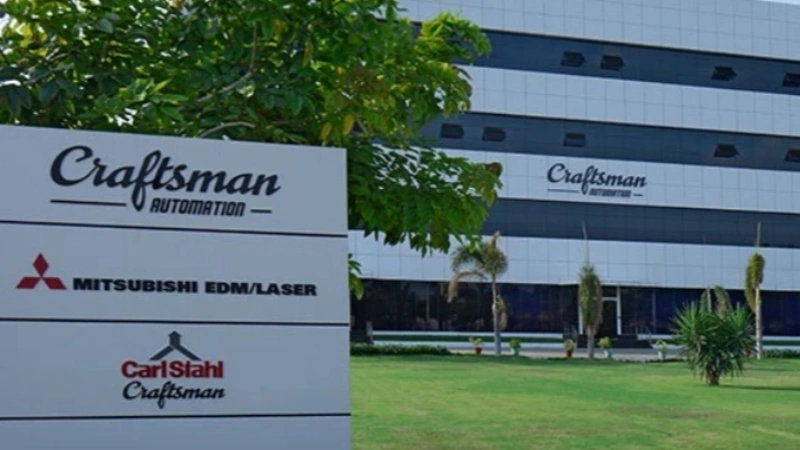
By its own disclosures, Craftsman Automation operates across automotive powertrain, aluminium products, and industrial engineering. The company’s public materials describe a multi-location manufacturing network and a large built-up production base. Key hubs include Jamshedpur. That footprint offers a clear view of what India’s manufacturing rise now demands. Not just factories, but the ecosystem around them.
India’s industrial story is often told through the loudest headlines. A new policy. A new investment. A new production target. A new round of market excitement. But manufacturing strength is built elsewhere. It is built on shop floors, inside foundries, across machining lines, in warehouse yards, and through transport systems that keep production moving on time. That is why companies like Craftsman Automation matter. They are not just component suppliers. They are part of the engineering base India will need if it wants to be seen as a serious manufacturing country rather than a low-cost assembly ground.
The company’s public materials present it as a diversified engineering business. Its product profile spans automotive powertrain, aluminium die-cast products, and industrial engineering. Its manufacturing disclosures also point to a multi-location setup built around customer proximity and delivery discipline. That combination is what makes the company worth studying. India’s next industrial leap will not come from assembly alone. It will come from firms that can cast, machine, fabricate, assemble, and deliver with steady quality.
Craftsman’s public disclosures also show why it is not treated as a routine auto-components name. The company speaks of strategically located manufacturing facilities and a wide production base. That does not make this an investment story. It does show why scale, process discipline, and execution depth now carry value of their own.
More Than a Parts Maker
The bigger point is not size alone. It is capability. A country cannot become a serious engineering power if too much of the real value still sits outside its machining strength, casting quality, process control, and supplier discipline. The future will not belong only to those who make the loudest claims about localization or electric mobility. It will belong to those who can build real industrial depth under those promises.
That is why engineering-led manufacturers deserve closer attention. They show what industrial seriousness looks like in practice. Not glamour. Capability. Not branding. Execution. Not noise. Repeatability.
Editor’s Cut: India’s auto rise will not be secured by assemblers alone. It will be secured by companies that build real engineering depth inside the gate and dependable operating systems outside it.
The Ecosystem Behind Manufacturing
This is where logistics enters the story. A serious engineering company does not run on machines alone. It runs on vendor discipline, dispatch timing, documentation quality, maintenance support, and transport systems that can match plant schedules. When a manufacturer builds itself around time-sensitive delivery and industrial proximity, logistics stops being a side function. It becomes part of the business itself.
This part of industrial growth is often ignored in policy celebrations and market chatter. Factories get photographed. Machinery gets highlighted. But the system around the factory matters just as much. Transporters matter. Ancillary vendors matter. Maintenance support matters. Loading discipline matters. Compliance matters. Turnaround time matters. These often decide whether a plant remains merely respectable or becomes part of a reliable manufacturing ecosystem.
Viewed this way, Craftsman Automation is useful not simply as a company case study, but as a window into a broader industrial shift. Its public manufacturing profile suggests an operating model that depends on precision inside the plant and consistency outside it. That is an important distinction. A factory can buy machines. Building an ecosystem takes longer.
Why Jamshedpur Matters
That is why regional clusters like Jamshedpur deserve more attention than they usually get in national industry writing. The Jamshedpur and Adityapur belt matters not only because of legacy reputation. It matters because it still offers something many industrial regions struggle to build. A functioning ecosystem around manufacturing activity. When an engineering company operates in such a cluster, it is not simply adding another factory address. It is joining a wider chain of industrial labour, ancillary support, workshops, loading infrastructure, service vendors, and local transport capacity.
For Jamshedpur, that is the real test. A factory can have machines, technical skill, and customer demand. But if vehicle turnaround is weak, dispatches are delayed, compliance slips, or local vendor support remains patchy, the competitiveness of the whole ecosystem suffers. India still spends too much time celebrating visible industrial assets and too little time strengthening the working systems around them.
Those working systems often decide whether a cluster can support serious manufacturing over the long term. Transporters who understand plant discipline matter. Service providers who can work to industrial timelines matter. Ancillary vendors who reduce friction instead of adding it matter. These are not side characters in the industrial story. They are part of the core story.
What This Tells Us About India’s Industrial Future
The broader lesson is hard to miss. India’s auto rise will not be secured by assemblers alone. It will be secured by companies that build real engineering ecosystems. Machining depth matters. Casting strength matters. Process discipline matters. Multi-location execution matters. So do the vendor networks that support industrial reliability.
In that sense, the Craftsman Automation story is bigger than one stock, one plant, or one city. It points to a simple truth about Indian industry. Factories create output. Systems around them decide whether that output can be sustained with discipline.
For industrial regions like Jamshedpur, that is where the future will be decided. Not only by whether a factory arrives, but by whether the ecosystem around it can keep industry moving with reliability, speed, and consistency.
For readers following India’s industrial rise, this story is part of a bigger shift. You can also read our analysis on the GE HAL F414 engine deal and why real technology transfer matters for India’s manufacturing future. In the case of Craftsman Automation, the point is simple. One plant never tells the full story. The company’s official manufacturing profile, facility network, and annual report make that clear. The real strength of an industrial company lies in the system around the factory. That is where serious manufacturing either holds together or starts to weaken.