
How the Iran War Is Reawakening the Global Defence Industry
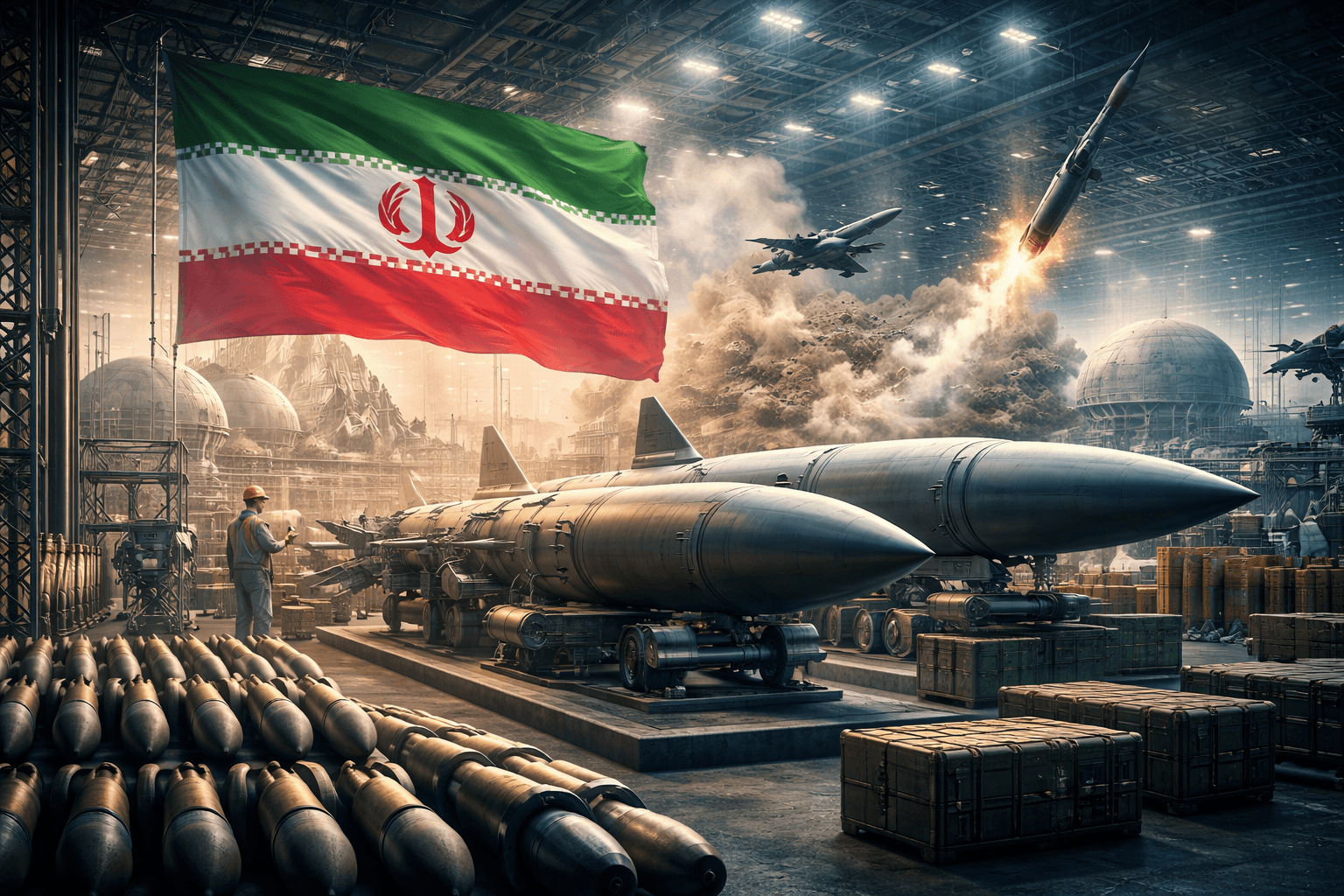
The Iran war defence industry surge is reshaping global military production as governments rush to rebuild missile stockpiles and expand defence manufacturing.
As a result, governments are turning toward the industrial base. Defence manufacturers across the United States, Europe, and the Middle East are facing mounting pressure to accelerate production and replenish rapidly shrinking arsenals. The Iran conflict is therefore doing something larger than shifting military balances—it is reviving the strategic importance of defence manufacturing itself.
Table of Contents
The Industrial Shock of the Iran War
For much of the post-Cold War period, Western militaries assumed that future conflicts would be short, technologically decisive, and limited in scale. Defence supply chains were streamlined accordingly. Production lines were optimized for efficiency rather than volume, while stockpiles of missiles and munitions gradually declined.
Recent wars have shattered those assumptions. The conflicts in Ukraine and the Middle East have revealed that modern warfare consumes weapons at extraordinary speed. Air-defence interceptors, cruise missiles, drones, and artillery systems can be expended within days during periods of intense combat.
The Iran conflict has intensified this realization. Missile exchanges, air-defence operations, and long-range strike missions are drawing down inventories that often take months or even years to replenish. In response, governments are pushing defence companies to accelerate manufacturing capacity and rebuild stockpiles across multiple weapons categories.
The Return of the Arsenal Economy
The global defence industry is therefore entering a new phase. American defence contractors are expanding production lines for missiles, aircraft systems, and munitions. European firms are increasing investment in ammunition factories and air-defence systems, while Israel’s defence sector is ramping up output of missile-defence technologies, drones, and precision-guided weapons.
This shift marks the return of what might be described as the “arsenal economy.” Military strength is once again being linked not only to technological sophistication but also to industrial capacity—the ability to manufacture weapons quickly and at scale during periods of geopolitical tension.
The Iran war has accelerated this trend by highlighting the limits of peacetime supply chains. Governments that once prioritized efficiency and cost reduction are now rediscovering the strategic value of redundancy, domestic production, and resilient defence manufacturing ecosystems.
India’s Emerging Role in the Defence Supply Chain
For India, the evolving defence landscape presents a significant opportunity. Long dependent on foreign suppliers for advanced military systems, New Delhi is now attempting to reposition the country as a manufacturing partner within the global defence industry.
Indian companies are increasingly participating in international supply chains for aerospace structures, electronics, sensors, and missile technologies. Public-sector firms such as Hindustan Aeronautics Limited and Bharat Electronics Limited remain central to the country’s defence ecosystem, while private companies like Data Patterns, Paras Defence, and other specialized technology firms are gaining prominence in areas such as optics, electronic warfare, and anti-drone systems.
If global defence production continues to expand, India could emerge as a key industrial node in the broader network of military manufacturing—supplying components, electronics, and systems to partners across multiple regions.
The Strategic Meaning of the New Arms Boom
Wars often reshape industries as much as they reshape geopolitics. The deeper significance of the Iran conflict lies in its ability to revive the link between military power and industrial capacity. Governments are once again being reminded that technological superiority means little without the factories capable of sustaining it.
The current surge in defence manufacturing may therefore represent more than a temporary response to a regional crisis. It could signal the beginning of a longer period of global rearmament in which states invest heavily in weapons production, supply chains, and industrial resilience.
In that sense, the true battlefield of modern warfare may extend far beyond the skies over the Middle East. It may lie in the factories, laboratories, and assembly lines that produce the weapons systems on which modern military power ultimately depends.
Related Analysis
- US-Iran War Market Impact and Defence Stocks
- Why Did the US Attack Iran? Epic Fury Strikes Explained
- US-Israel-Iran War Analysis
Source: Reuters