
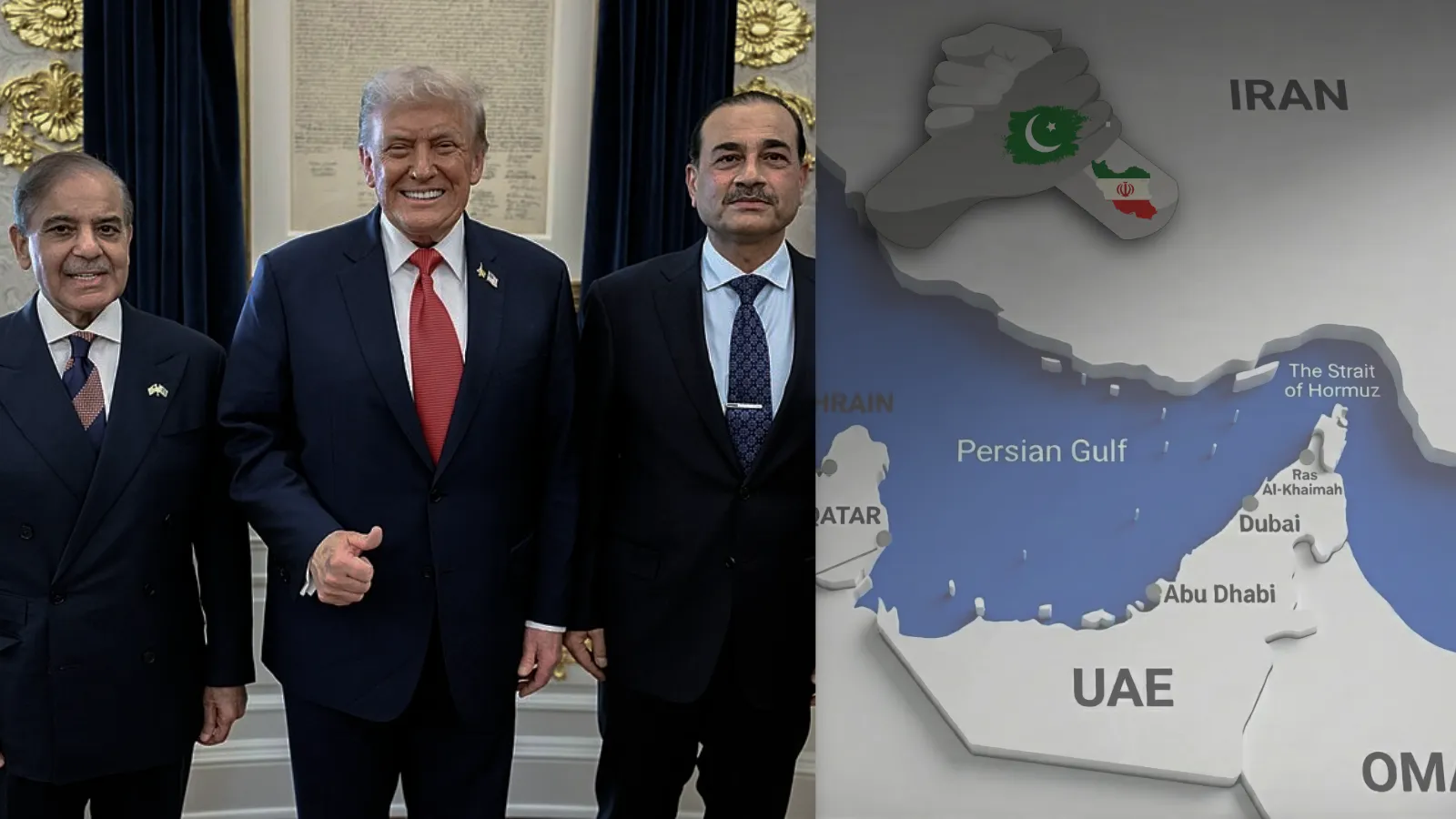
Pakistan Iran Aircraft Allegations Raise New Questions for Trump and Washington
Just weeks after Pakistan positioned itself as a key intermediary between Washington and Tehran during the Iran crisis, U.S. officials are now questioning whether Islamabad quietly allowed Iranian military aircraft to use Pakistani airbases during the conflict.
The allegations, first amplified through reports citing U.S. officials and later picked up by multiple international outlets, center around Pakistan Air Force Base Nur Khan near Rawalpindi. According to the reports, Iranian military aircraft — including a reported RC-130 reconnaissance platform — may have been moved to Pakistani territory during the height of U.S. and Israeli military operations against Iran.
Pakistan has denied the claims.
Officials in Islamabad have argued that Nur Khan Air Base is located close to populated areas near Rawalpindi and Islamabad, making the covert presence of foreign military aircraft difficult to conceal.
But the controversy is growing because of the timing.
At the same moment Pakistan was presenting itself as a diplomatic bridge between the United States and Iran, Washington was reportedly receiving intelligence suggesting Islamabad may have quietly helped Tehran protect sensitive military assets from potential American strikes.
That contradiction could matter far more than the aircraft themselves.
A Familiar Problem in Washington
The Pakistan Iran Aircraft Allegations have revived an old debate inside Washington about Pakistan’s strategic behavior during regional crises.
For decades, U.S.-Pakistan relations have swung between security cooperation and deep mistrust. American administrations have repeatedly relied on Pakistan for logistics, mediation and counterterror coordination, while simultaneously accusing Islamabad of maintaining parallel relationships with rival actors.
The latest controversy risks reopening those doubts.
Republican Senator Lindsey Graham called for a “complete reevaluation” of Pakistan’s mediation role after reports emerged that Iranian military aircraft may have been allowed to use Pakistani airbases during the conflict.
The statement carries weight beyond routine political criticism.
Graham remains one of the Republican Party’s most influential voices on national security issues and has long been closely aligned with Trump-era foreign policy thinking. His comments suggest parts of Washington may now question whether Pakistan was acting as a neutral mediator or strategically balancing between both sides.
That distinction is important.
Pakistan was not officially part of the conflict. In public, Islamabad positioned itself as a diplomatic intermediary working alongside regional actors including Saudi Arabia and Egypt to reduce escalation between Washington and Tehran.
But mediation does not necessarily mean neutrality.
The Trump Contradiction
The political optics are especially awkward for the Trump administration because the Pakistan Iran Aircraft Allegations surfaced shortly after Pakistan’s military leadership received unusually warm public treatment from Washington.
President Donald Trump had recently adopted a noticeably softer tone toward Pakistan’s leadership at a time when relations between the two countries appeared to be stabilizing after years of tension linked to Afghanistan and counterterror policy.
That made the latest reports particularly uncomfortable.
On one side, Washington was engaging Pakistan as a useful regional intermediary with influence over Tehran. On the other, American officials were reportedly examining whether Pakistan quietly allowed Iran to shield military assets on its territory during the same crisis.
For critics inside Washington, the episode risks reinforcing a long-standing belief that Pakistan often attempts to maintain relationships with competing powers simultaneously — cooperating publicly with the United States while quietly preserving strategic ties elsewhere.
Pakistan, however, may see the situation very differently.
Why Pakistan May Have Chosen Strategic Ambiguity
From Islamabad’s perspective, maintaining working relations with Iran is not optional.
Pakistan shares a long and sensitive border with Iran. The two countries face overlapping concerns involving border security, insurgent groups, sectarian tensions and regional instability. A complete collapse in relations with Tehran would create serious security complications for Pakistan’s western frontier.
Islamabad also has strong incentives to avoid becoming directly entangled in any U.S.-Iran confrontation.
That balancing instinct has shaped Pakistani foreign policy for years.
The country maintains security cooperation with the United States, deep military and economic ties with China, close relationships with Gulf monarchies and a complicated but necessary relationship with Iran.
In practice, that often produces what outside powers describe as strategic ambiguity.
Supporters of Pakistan’s approach argue Islamabad is simply trying to survive in a region where rigid alignments can quickly become dangerous. Critics argue the same strategy creates distrust because Pakistan frequently appears to tell different things to different partners depending on the situation.
The current controversy fits directly into that history.
The China Factor
China also looms in the background of the crisis.
According to figures cited in regional defense assessments, China supplied roughly 80 percent of Pakistan’s major arms imports between 2020 and 2024.
That military dependence has strengthened the strategic relationship between Beijing and Islamabad at a time when U.S.-China rivalry is intensifying globally.
Beijing has consistently supported regional stability around Iran because of its energy interests and infrastructure investments tied to the Belt and Road Initiative. China also maintains deep economic and political ties with Tehran.
That does not automatically mean China directed Pakistan’s actions in this case.
But it does mean Islamabad’s strategic calculations are increasingly shaped by a regional environment where Chinese interests cannot be ignored.
For Washington, this creates another layer of concern.
American policymakers are no longer evaluating Pakistan only through the lens of counterterrorism or Afghanistan. Increasingly, Pakistan is being viewed within the larger framework of U.S.-China competition and shifting power balances across Asia and the Middle East.
That changes the stakes.
Why Nur Khan Matters
The location mentioned in the Pakistan Iran Aircraft Allegations is also symbolically important.
Nur Khan Air Base is one of Pakistan’s most sensitive military facilities and serves as a major transport and logistics hub for the Pakistan Air Force. The base is located near Rawalpindi, home to Pakistan’s military headquarters.
The facility also carries recent strategic baggage.
In 2025, Nur Khan reportedly suffered damage during Indian precision strikes linked to the brief India-Pakistan military confrontation following the Pahalgam attack. Satellite imagery reviewed by multiple defense analysts at the time showed visible runway and infrastructure damage.
That history makes the latest allegations even more politically sensitive.
If Iran did temporarily move military aircraft to Nur Khan during the conflict, it would suggest Pakistan was willing to take considerable diplomatic risk despite already facing heightened regional security pressures.
Pakistan continues to reject the allegations.
So far, no publicly released satellite imagery or official intelligence assessment has conclusively proven that Iranian military aircraft were stationed at the base.
That uncertainty matters.
The story may ultimately remain in the category of intelligence claims that are difficult to fully verify publicly. But even unconfirmed Pakistan Iran Aircraft Allegations can affect diplomatic trust, especially during periods of regional crisis.
The Real Damage May Already Be Done
Whether the aircraft were actually present at Nur Khan may not be the only issue now confronting Washington and Islamabad.
The larger problem is perception.
U.S.-Pakistan relations have historically suffered less from open disagreements and more from suspicions of double games during moments of geopolitical tension.
Those suspicions are now resurfacing again.
The Trump administration still appears interested in maintaining functional ties with Pakistan because of Islamabad’s geographic importance and regional influence. Pakistan also remains useful to Washington as a communication channel in crises involving Iran, Afghanistan and parts of the broader Islamic world.
But trust inside the relationship remains fragile.
Pakistan Iran Aircraft Allegations have exposed a deeper strategic reality: Pakistan may no longer see its regional interests as fully aligned with Washington’s priorities.
That does not necessarily mean Islamabad is moving into an anti-American bloc.
It does suggest Pakistan is becoming more comfortable operating between rival power centers rather than firmly inside any single camp.
For Washington, that ambiguity may become increasingly difficult to accept as global competition sharpens.
And for Pakistan, the challenge will be determining how long it can continue balancing between America, China, Iran and the Gulf states without eventually being forced to choose sides.
Did Pakistan officially confirm the reports?
No. Pakistani officials denied allowing Iranian military aircraft to use Pakistani airbases and argued such activity would be difficult to hide because of Nur Khan’s location near populated areas.
Why are U.S. officials concerned?
The concern is not only about aircraft movement itself. The Pakistan Iran Aircraft Allegations raised broader questions inside Washington about whether Pakistan was acting as a neutral mediator during the crisis while quietly maintaining operational cooperation with Tehran.
Why does Nur Khan Air Base matter?
Nur Khan is one of Pakistan’s most important military airbases and serves as a major transport and logistics hub near Rawalpindi and Islamabad.
Could this damage U.S.-Pakistan relations?
Potentially. Relations between Washington and Islamabad have historically been shaped by cycles of cooperation followed by mistrust during regional conflicts.
Why would Pakistan take such a risk?
Islamabad maintains relationships with China, Iran, Gulf states and the United States simultaneously, making complete alignment with any one side difficult.