
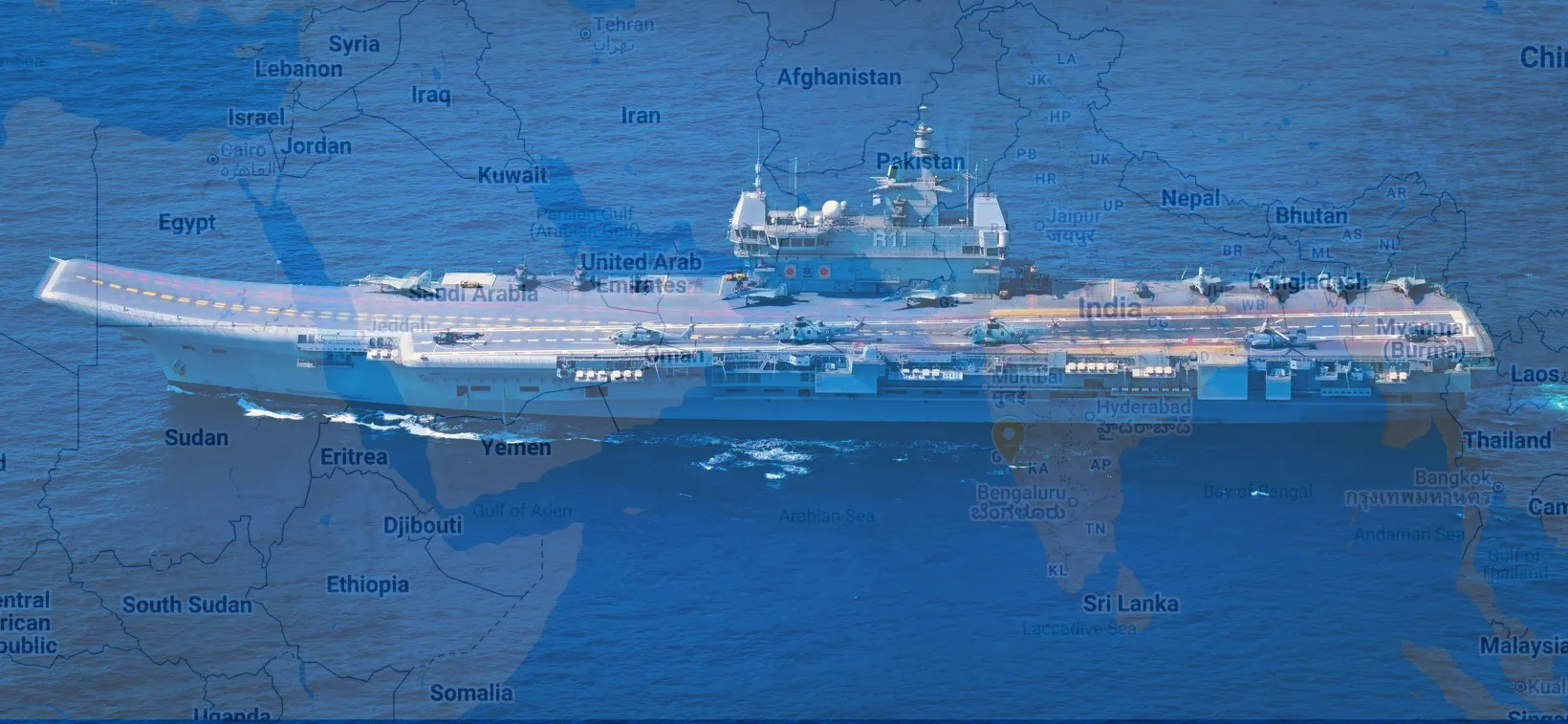
Project Seabird Karwar: India’s Maritime Powerhouse
Today, the Indian Ocean is one of the most important and busy sea regions in the world. Keeping this area safe is vital for India’s trade and security. To do this, the Indian Navy is continuously upgrading its strength.
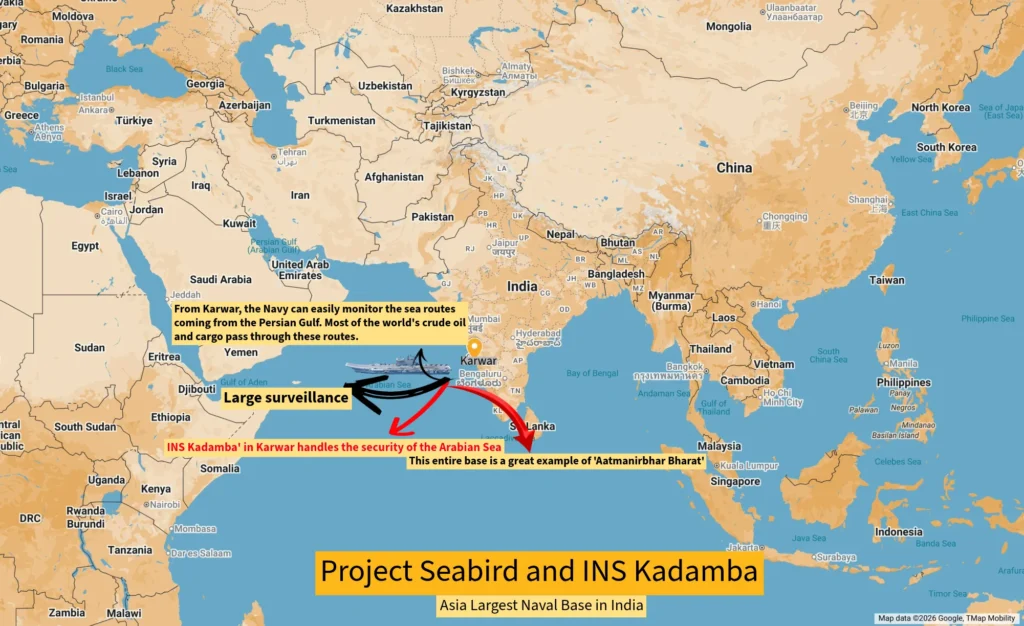
The biggest part of this master plan is Project Seabird. Under this project, a massive, high-tech naval base named INS Kadamba is being built in Karwar, Karnataka. When fully complete, it will be the largest naval base in Asia, east of the Suez Canal.
Why Did the Navy Need Project Seabird Karwar?
For decades, the Indian Navy’s Western Fleet depended mostly on the Mumbai port. But after the 1971 war and over the following years, it became clear that Mumbai was too crowded.
- Traffic in Mumbai: Mumbai is a busy commercial port. It is packed with merchant ships, fishing boats, and tourist ferries. In an emergency, it is very hard to move warships out quickly.
- The Karwar Advantage: Karwar’s location is perfect. It has deep sea on one side and the hills of the Western Ghats on the other. These hills act as a natural wall, hiding the military base from enemy eyes.
- Watching Trade Routes: From Karwar, the Navy can easily monitor the sea routes coming from the Persian Gulf. Most of the world’s crude oil and cargo pass through these routes.
Engineering Marvel and ‘Make in India’
Project Seabird Karwar is a great example of ‘Aatmanirbhar Bharat’ (Self-Reliant India). More than 90% of the materials and technology used here are made in India. Let’s look at some special features:
1. The 10,000-Tonne Shiplift
Usually, ships are repaired by keeping them in water-filled ‘dry docks’, which takes a lot of time. But the Karwar base has a huge ‘shiplift’ that can carry up to 10,000 tonnes. It works like a giant elevator. It lifts large warships straight out of the water and moves them on railway tracks into a repair shed. This allows multiple ships to be repaired quickly at the same time.
2. Covered Docks Taller than Qutub Minar
In the recent expansion of this base (Phase IIA), giant ‘Covered Dry Berths’ have been built. These are up to 75 meters high—taller than Delhi’s Qutub Minar! Ships are parked inside them for repairs. The biggest advantage is that work doesn’t stop even in heavy rain or salty sea winds. Also, enemy satellites cannot see which new radar or weapon is being fitted on the ship inside the closed shed.
3. A Safe Haven for Submarines
The Indian Navy operates excellent submarines like the Kalvari-class. The deep and quiet waters around Karwar are perfect for them. There is also a special facility to measure underwater sound (Acoustic Ranging). This makes sure our submarines remain quiet, trick enemy radars, and stay hidden deep in the sea.
Air Power and Civilian Flights
Project Seabird Karwar is not just for ships. A large ‘Naval Air Station’ has also been built to support air power.
- Long Runway: A 2,700-meter-long runway is ready here. Large surveillance aircraft like the Navy’s P-8I can easily take off from here. This will help protect our ships from the sky.
- Civilian Airport: The best part is that this air station will also be used for civilian flights. This will give a huge boost to tourism and business in the Uttara Kannada district, making travel easier for common people.
Two-Front Security: INS Kadamba and INS Varsha
India is securing its sea borders from both sides:
- West Coast: ‘INS Kadamba’ in Karwar handles the security of the Arabian Sea. India’s aircraft carriers (INS Vikramaditya and INS Vikrant), destroyers, and submarines are stationed here.
- East Coast: On the other side, a base named ‘INS Varsha’ is being developed for security in the Bay of Bengal. Its main job is to keep our nuclear-powered submarines safe.
Together, these two bases give India an unbeatable safety shield in the sea.
Environment and Local Development
Building such a massive project also impacts the environment and local people.
- Green Project: The Navy has built this base following strict ‘IGBC Gold Rated’ standards. Techniques that save water, use solar energy, and cause minimum harm to the environment have been actively used.
- Jobs and Local Growth: Building this base has created direct and indirect jobs for thousands of people. With the expansion, Karwar is turning into a big economic hub. The government and courts have also ensured that families whose land was taken for the base received proper compensation, so that the benefits of development reach everyone.
The Bottom Line
Project Seabird Karwar is not just a military base; it is the symbol of a strong and modern India. The journey from the crowded port of Mumbai to the highly secure hills of Karwar shows that the Indian Navy is fully prepared to face any future challenges in the Indian Ocean.