
Cocos Islands Maritime Geopolitics
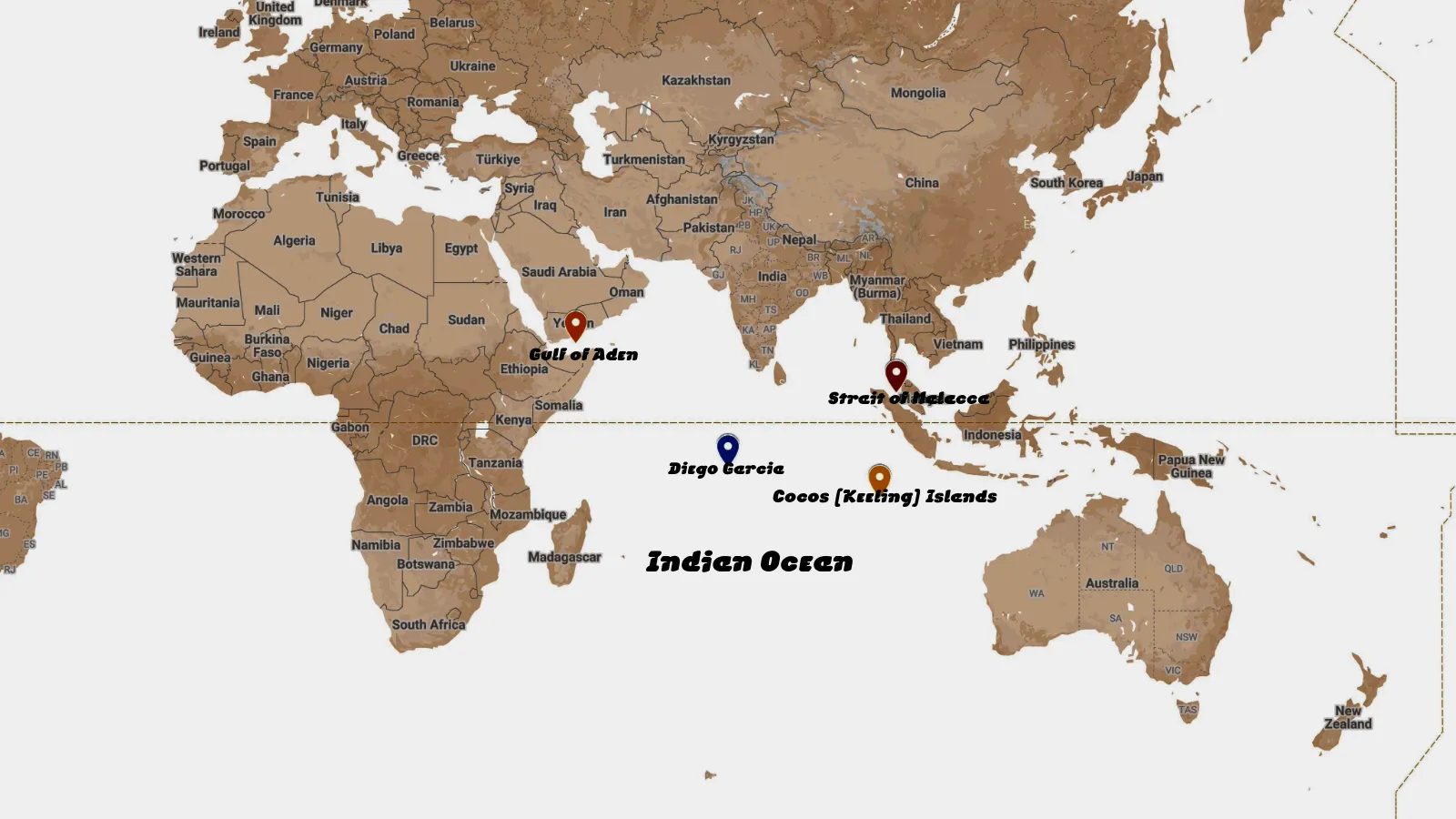
Look at a map of the Indian Ocean. The eye naturally drifts to the known chokepoints—the Strait of Malacca, the Gulf of Aden, or the heavily militarized US base at Diego Garcia.
Further south, roughly halfway between Australia and Sri Lanka, lie the Cocos (Keeling) Islands. Two coral atolls. A population of about 600. For decades, the Australian territory was largely an administrative afterthought, known mostly for its isolation and a brief naval battle during World War I.
That is changing. Canberra is currently spending nearly $400 million to upgrade the island’s airfield, widening the runway and expanding its support facilities. Heavy construction equipment is already reshaping the tarmac.
The reasons for this construction lie beneath the water.
When foreign navies—specifically, Chinese nuclear attack submarines—want to enter the Indian Ocean from the Pacific, the Strait of Malacca is a poor option. The strait is heavily congested with commercial shipping, and its depth drops to around 25 meters in some stretches. A submarine trying to slip through undetected is almost guaranteed to be spotted by coastal radars, visual lookouts, or surface patrols.
The operational alternatives are the Sunda and Lombok straits further south in the Indonesian archipelago. The Lombok Strait, in particular, is over 250 meters deep. It provides a natural, deep-water transit corridor for submarines to dive and avoid detection entirely.
When a vessel exits those southern straits into the open ocean, it passes relatively close to the Cocos Islands.
For the Indian Navy, this southern route has long been a logistical headache. India’s maritime surveillance grid is anchored in the north by the Andaman and Nicobar Islands, a formidable chain that keeps a tight watch on Malacca and the Bay of Bengal.
But tracking a submarine in the deep southern Indian Ocean required deploying ships or aircraft thousands of kilometers from the Indian mainland. An aircraft taking off from southern India spends a significant portion of its fuel just reaching the search area. Time on station is severely limited. It is an expensive, inefficient way to hunt submarines.
The strategic geography of the Cocos Islands fixes this blind spot.
Recent diplomatic agreements have opened the door for New Delhi. Under the Mutual Logistics Support Agreement signed between India and Australia, the two militaries can use each other’s bases for refueling, maintenance, and supplies. It cuts through the diplomatic red tape that usually slows down joint operations.
In practical terms, this means Indian Navy Boeing P-8I maritime patrol aircraft can land at Cocos, refuel, and conduct anti-submarine sweeps deep into the southern waters without needing a dedicated Indian military base in the region.
The P-8 is built specifically for this work. Based on a commercial Boeing 737 airframe, it drops patterns of acoustic sensors—sonobuoys—into the water to pick up the faint mechanical noises of submerged vessels. It also carries magnetic anomaly detectors to sense massive metal hulls moving underwater.
By operating out of Cocos, Indian and Australian P-8s can establish a continuous surveillance net over the deep-water exit routes. A plane can drop its sensors, return to Cocos to refuel, and pass the tracking data to another aircraft arriving on station.
Building on a remote atoll is difficult. The $400 million Australian project isn’t just about paving asphalt. It involves shipping thousands of tons of construction material across the ocean to reinforce the runway so it can handle the heavy landing weight of fully loaded patrol aircraft.
Beyond the runway, military analysts expect the island to host upgraded signals intelligence facilities. These listening posts intercept electronic emissions and radio traffic from ships traversing the region, adding another layer of data to the surveillance grid.
Military planners prefer stability, which is why Cocos is becoming increasingly important compared to other regional outposts.
Washington relies heavily on Diego Garcia in the central Indian Ocean for strategic bomber deployments and naval logistics. However, that base carries significant legal and diplomatic baggage. Mauritius claims the Chagos Archipelago, which includes Diego Garcia, and the UK faces persistent pressure from the UN and international courts to hand it over. The long-term political friction makes it a complicated asset.
Cocos, by contrast, is undisputed sovereign Australian territory. There is no international legal battle over its status. The local population generally supports the infrastructure spending, as it brings logistics contracts and economic activity to a place with few other industries. For the US, Australia, and India, it offers a secure, politically quiet location.
The Indian Ocean is too vast to monitor from a single coastline. As Beijing increases its naval deployments under the premise of anti-piracy operations and protecting its sea lines of communication, the need to track its subsurface fleet has become a priority in New Delhi.
The construction equipment currently operating on the Cocos Islands isn’t drawing the kind of global media attention seen in the South China Sea. There are no artificial islands being dredged, no dramatic standoffs with coast guard vessels.
But for naval planners in New Delhi and Canberra, the expanded runway does exactly what it needs to do. It quietly closes the southern gap.