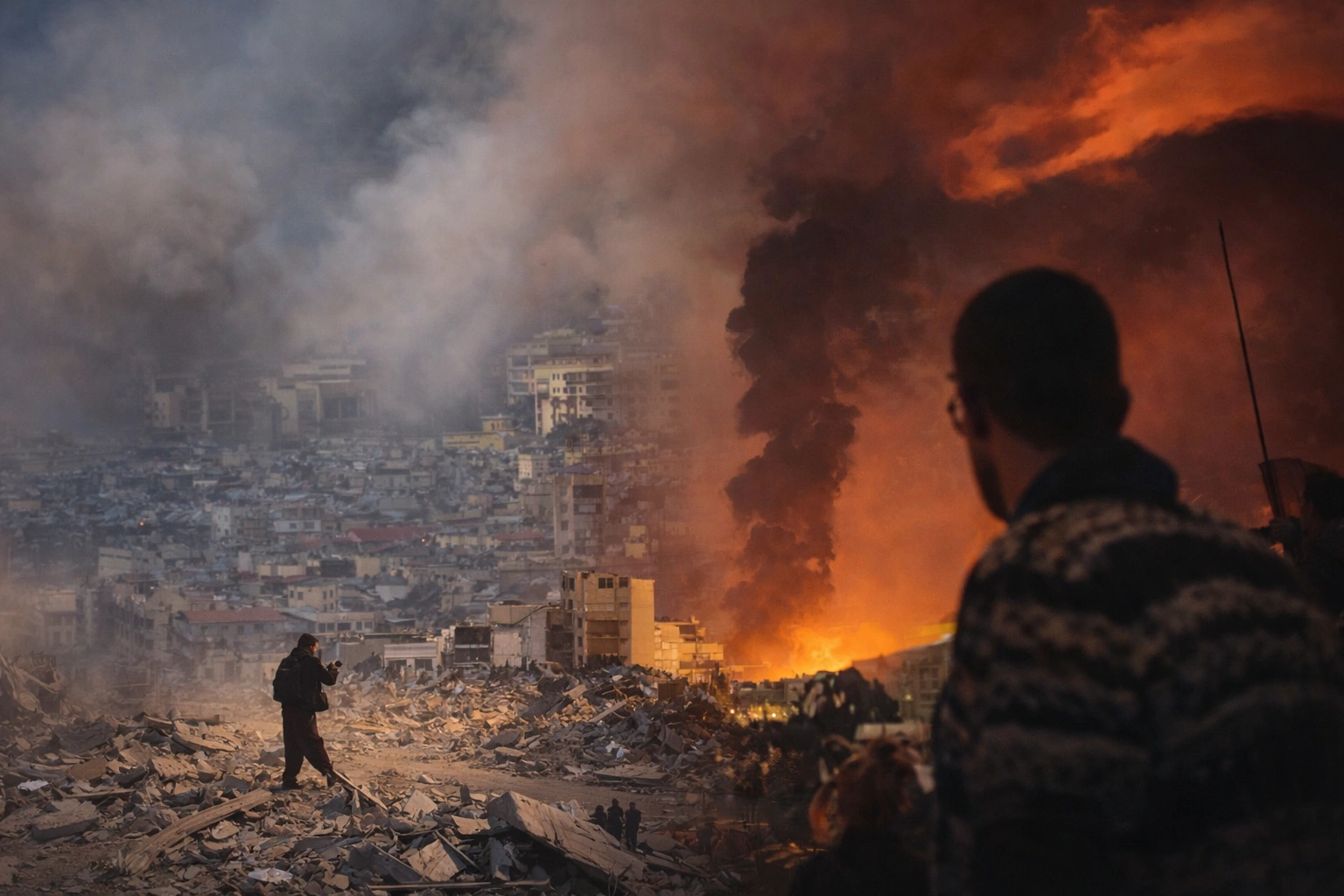
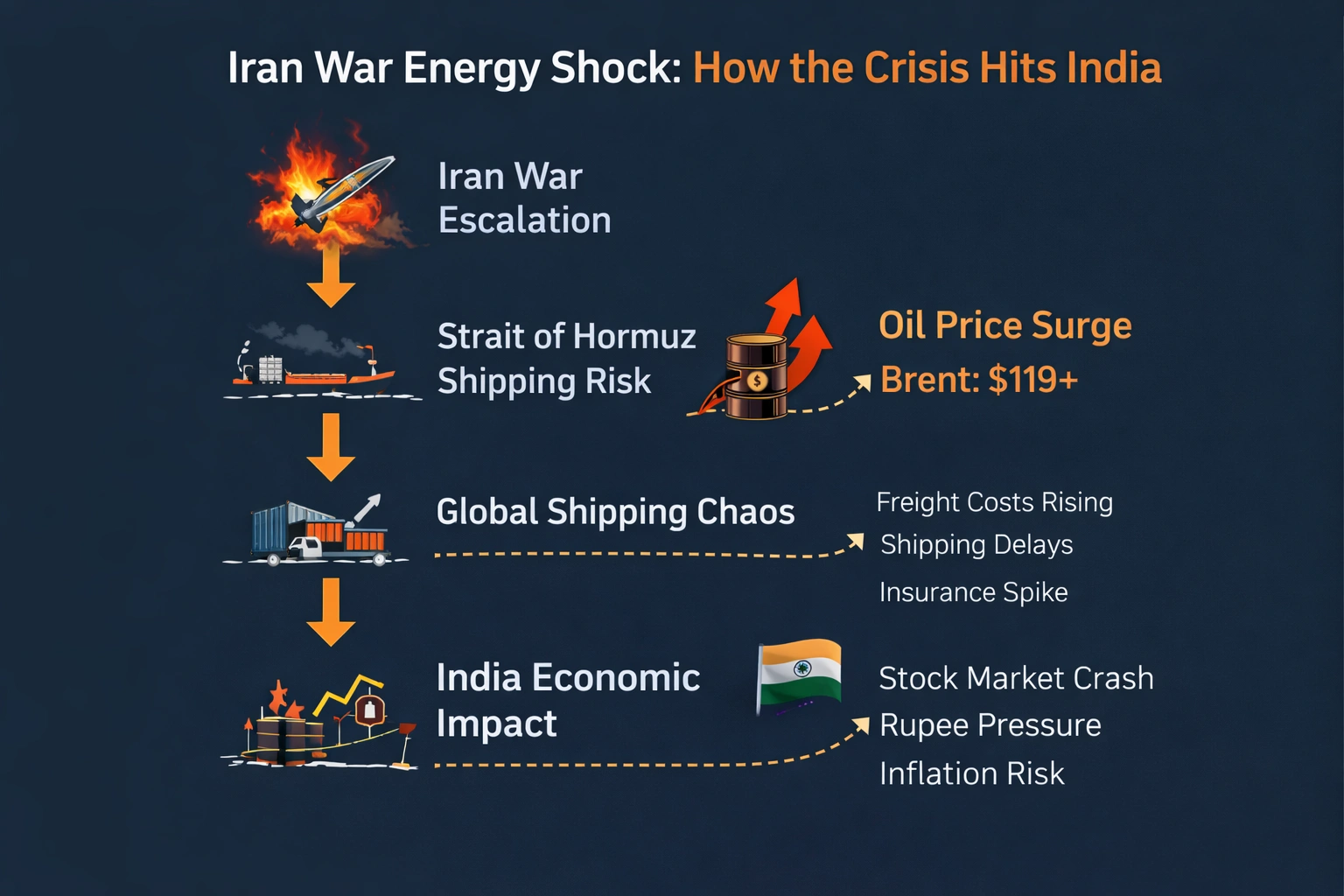
The Iran war impact on India became immediate when Brent crude surged to $119 on March 9, 2026. The sudden spike signaled a severe disruption in global oil supply as tanker insurance collapsed across the Strait of Hormuz.
While global media focuses on missile strikes and battlefield escalation, the deeper crisis lies in global energy logistics. India now faces the risk of fuel shortages, currency pressure, and a major economic shock.
Foreign investors reacted immediately. Massive capital flight wiped out nearly Rs 12.78 trillion in market wealth in a single trading session on Dalal Street.
Why the Crisis Begins With a Leadership Change in Tehran
Mojtaba Khamenei now holds absolute power after being confirmed as Iran’s Supreme Leader following the death of Ayatollah Ali Khamenei.
His rise signals the complete dominance of the Islamic Revolutionary Guard Corps over Iran’s political system. Diplomacy is fading rapidly as Tehran shifts toward military confrontation with the United States and Israel.
Iran has already launched multiple waves of missile strikes under Operation Honest Promise 4. With domestic legitimacy tied to military resistance, Tehran has little incentive to pursue rapid de-escalation.
Why Marco Rubio’s Statement Changes the Rules of Engagement
US Secretary of State
Marco Rubio accused Iran of attempting to hold the global economy hostage by threatening energy supply routes.
This rhetoric signals a major shift in Washington’s military strategy. Iranian missile bases, drone facilities, and naval assets are now considered legitimate targets in a campaign designed to permanently weaken Iran’s military capabilities.
However, airstrikes near major oil infrastructure risk catastrophic collateral damage to energy facilities across the Persian Gulf.
Why Jaishankar’s Statement Reveals India’s Real Strategy
India has adopted a carefully balanced diplomatic position. External Affairs Minister
S. Jaishankar called for restraint and dialogue during his address to Parliament.
At the same time, New Delhi allowed the Iranian vessel IRIS Lavan to dock at Kochi port on humanitarian grounds, demonstrating India’s commitment to strategic autonomy.
The government’s primary concern remains the safety of nearly 8.5 million Indian citizens living and working across the Gulf region.
Why the Strait of Hormuz Matters More Than Strike Maps
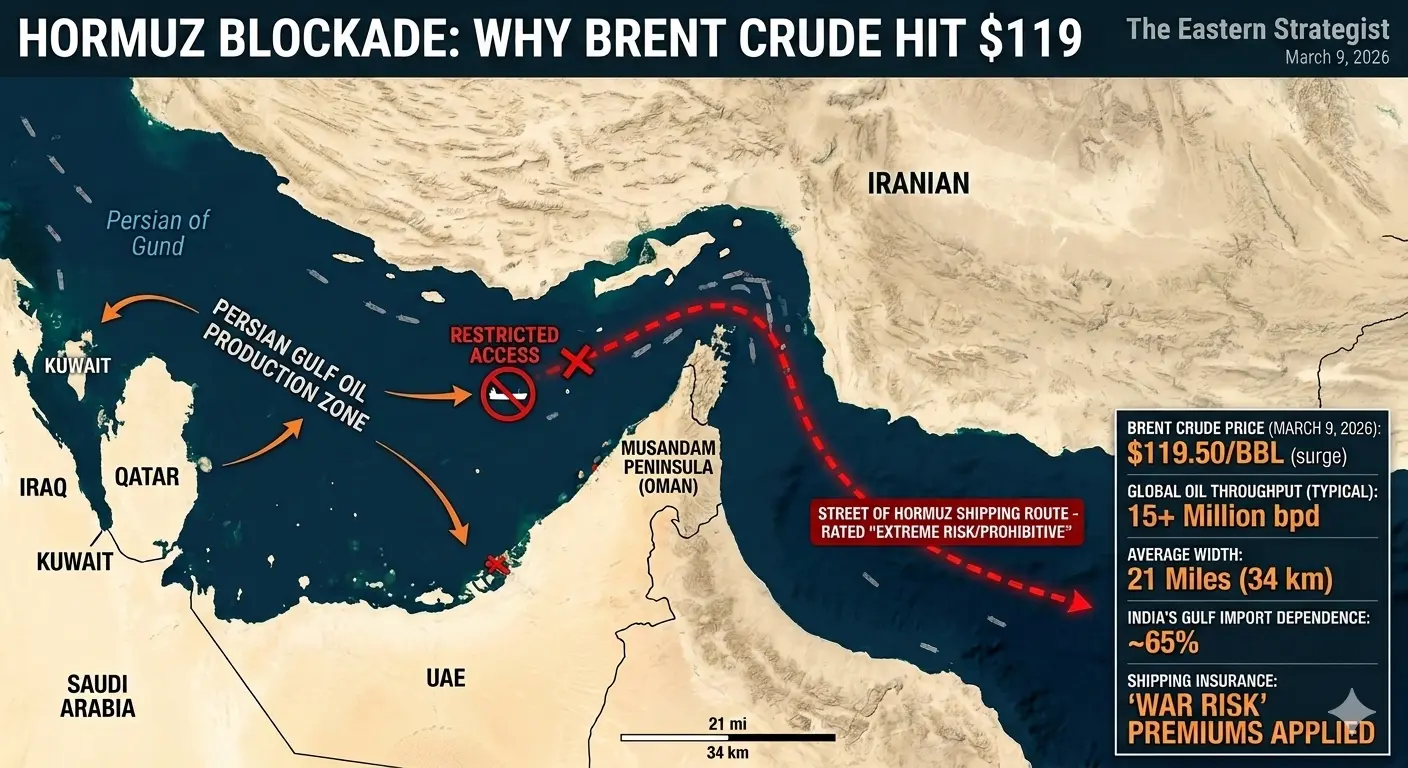
The Strait of Hormuz is the jugular vein of global energy markets. According to the
U.S. Energy Information Administration, nearly one-fifth of global petroleum trade passes through this narrow waterway.
When insurance companies suspended tanker coverage after the latest strikes, the physical movement of crude oil slowed dramatically.
Shipping disruptions forced LNG suppliers to halt deliveries to Asian buyers including India, raising the possibility of severe energy shortages.
Why Global Shipping Routes Are Abandoning Indian Ports
Global shipping companies have begun rerouting vessels away from the Persian Gulf to avoid naval confrontation zones.
Major logistics firms introduced emergency surcharges that can add thousands of dollars to the cost of transporting a single container.
This sudden surge in freight costs threatens the competitiveness of Indian exports, particularly textiles and engineering goods.
How the Conflict Could Permanently Change Indian Oil Strategy
India’s refineries are optimized for heavy crude from the Middle East. Switching rapidly to American or African oil requires costly technical adjustments.
Russian crude offers partial relief, but longer shipping routes and higher insurance costs reduce the advantage of discounted prices.
Energy diversification will likely become a long-term strategic priority if the crisis continues.
Why the Indian Share Market Crashed Without Warning
Dalal Street reacted violently to the energy shock. The BSE Sensex plunged more than 1,300 points as investors rushed to exit risk-sensitive sectors.
Oil marketing companies such as Indian Oil and Bharat Petroleum dropped sharply as rising crude threatens their marketing margins.
Foreign investors fear that higher oil prices could significantly widen India’s current account deficit.
The Strategic Bottom Line
India is not fighting the Iran war, yet the economic shock waves are already reaching its economy. Energy markets, shipping routes, and global capital flows are reacting faster than governments can respond.
If the Strait of Hormuz remains unstable for several months, New Delhi will be forced to accelerate oil diversification, expand strategic petroleum reserves, and rethink its dependence on Gulf energy supplies.
For a deeper breakdown of how the conflict began, read our earlier analysis of the
first week of the Iran war.