
In This Briefing
The brutal reality of modern warfare is that even bleeding-edge missile systems are completely useless without robust military mobility to drag them to the frontline. Having covered global defense supply chains for two decades, I can tell you that supersonic fighter jets get the prime-time television headlines, but heavy-duty logistics trucks actually win the wars. Right now, international supply lines are choking under the weight of Red Sea embargoes and post-pandemic bottlenecks. You simply cannot sustain a prolonged border conflict if your troops are bleeding out while waiting weeks for imported engine parts or specialized chassis components from a “neutral” third party that might decide to cut you off mid-crisis.
India’s defense establishment has finally recognized this strategic nightmare. They aggressively pushed a mandate for rapid defense indigenization, terrified by the prospect of fighting a two-front war with foreign hardware that could be remotely disabled or diplomatically throttled. But the actual, grueling heavy lifting isn’t happening in the air-conditioned briefing rooms of New Delhi. It is grinding away right now on the shop floors of Eastern India, where the Tata Motors commercial vehicle plant in Jamshedpur is quietly transforming into the undisputed, steel-forged spine of the Indian Army.
The Engineering Reality of the LAC
Look at the recent hardware handovers to understand the sheer scale of this pivot. The delivery of over 1,500 specialized military mobility vehicles—specifically the highly formidable Tata SD 1015 (4×4) platforms and heavy artillery tractors—from the Jamshedpur facility is a massive wake-up call to regional adversaries. These aren’t just “trucks”; they are the arteries of the nation’s defense.
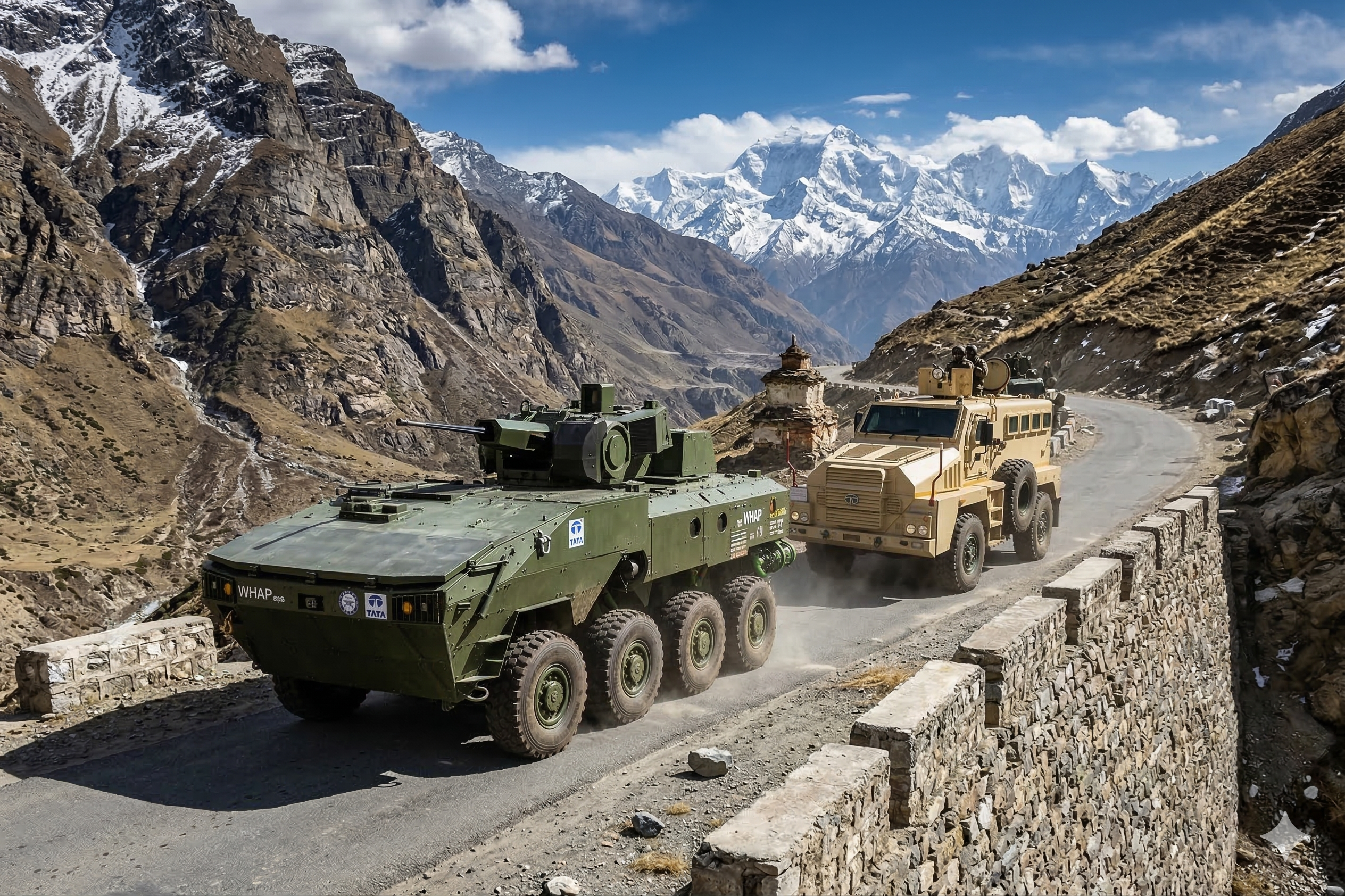
We aren’t talking about standard commercial lorries painted olive green. These are heavily fortified, 115 kW-powered tactical platforms engineered to survive the most hostile combat environments on the planet. With the protracted standoff along the Line of Actual Control (LAC) showing zero signs of thawing, Indian troops are battling sub-zero temperatures, treacherous 15,000-foot altitudes, and razor-thin mountain passes. During the dreaded six-month “road closed” winter period in Ladakh, the military requires over 1,000 tons of daily supplies just to keep soldiers alive in the freezing deserts.
A single vehicle breakdown in that unforgiving environment doesn’t just cost the exchequer money; it costs lives and surrenders the tactical high ground. The SD 1015 troop carriers rolling out of Jharkhand are built to conquer this exact logistical hellscape, featuring enhanced payloads, reinforced suspensions, and extreme-weather operability. By forcing this military mobility production entirely domestic, Tata Motors effectively kills the geopolitical risk of sudden foreign embargoes. When your entire supply chain is locked within the subcontinent—from the high-grade ballistic steel forged locally to the final hydro-pneumatic suspensions bolted in Jamshedpur—you strip foreign adversaries of their ability to leverage equipment shortages against you.
Exporting ‘China Plus One’ Hardware
But there is a much larger geoeconomic play happening here that extends far beyond India’s northern borders. The global market is desperately hunting for a “China Plus One” alternative. This isn’t just about moving civilian iPhone factories to Chennai; it is a mad scramble for reliable, sanction-proof defense procurement.
Developing nations across the Global South, particularly in Africa and the Middle East, want to modernize their aging militaries. However, they are increasingly terrified of falling into Beijing’s debt-trap diplomacy, and they want to avoid the exhausting, preachy political conditionalities usually attached to Western arms sales. India is aggressively stepping into that exact vacuum, using Jamshedpur’s engineering DNA as its battering ram.
The expertise required to build these heavy military mobility platforms domestically is directly feeding broader corporate gambits—most notably Tata Advanced Systems’ (TASL) historic inauguration of a defense facility in Berrechid, Morocco, in late 2025. This plant is currently producing the Wheeled Armoured Platform (WhAP 8×8), a 24-ton amphibious beast jointly designed with the DRDO. This is pure geopolitical leverage. In the fierce competition for the Moroccan military contracts, the Indian-designed WhAP 8×8 explicitly beat out China’s NORINCO Type 08 infantry combat vehicle. Morocco found the Indian platform superior, more reliable, and free of Beijing’s geopolitical baggage. Building India’s first overseas private defense plant to service the African market directly counters Chinese influence on the continent. None of that high-level, intercontinental maneuvering happens without the gritty industrial baseline established on the factory floors of Jharkhand.
The Adityapur Spillover Effect
You also cannot ignore the massive economic shockwave this localized defense boom sends through the regional MSME sector. The defense output at the Tata Motors plant acts as a massive financial anchor for the neighboring Adityapur Auto Cluster. This was the exact focal point of the MSME Defence Conclave held right here in Jamshedpur in early 2026. As Union MoS Defence Sanjay Seth highlighted, the goal is to forge a hardened Jamshedpur-Ranchi-Bokaro defense corridor.
When a giant like Tata Motors scales up its military mobility contracts, the hundreds of small and medium workshops in the area are forced to aggressively upgrade their own quality control. They have to pivot from machining cheap commercial auto-parts to manufacturing high-precision, combat-ready components that meet stringent MIL-SPEC (Military Standard) requirements. We are seeing local firms move from standard commercial axles to engineering anti-blast suspended seats and advanced hydraulic winches for self-recovery in combat zones. This isn’t just growth; it is an industrial evolution.
The Logistics-Geopolitics Nexus
Why does this matter to the average investor or policy analyst? Because we are entering an era of “just-in-case” manufacturing rather than “just-in-time.” The global conflict in Eastern Europe has proven that the side with the deeper industrial sink—the ability to keep 4x4s moving and artillery tractors fueled—ultimately outlasts the side with the fancier, but fragile, imported tech.
Jamshedpur is solving the “maintenance-geopolitics nexus.” By controlling the blueprints, the materials, and the assembly, India can maintain its military mobility indefinitely, even if the rest of the world goes into a trade lockdown. This level of self-sufficiency is a deterrent in itself. It tells potential aggressors that India’s logistical tail is short, domestic, and impossible to cut. For companies like Tata Motors, this is a transition from being a vehicle manufacturer to becoming a guardian of sovereign trade routes.
The Strategic Verdict
The heavy industrial plants of Jamshedpur are no longer just churning out commercial vehicles; they are mass-producing sovereign geopolitical leverage. Every SD 1015 that rolls off the line is a statement of intent. By guaranteeing the military mobility of the Indian Armed Forces in the world’s most dangerous terrains, and setting the stage for highly lucrative overseas defense exports to Africa and the Middle East, local heavy engineering has become critical to national survival.
True superpower status isn’t just measured by the standing size of an army or the sleekness of a fighter jet. It is measured by the sheer, unyielding domestic industrial brute force that keeps that army moving forward when the world turns hostile. Right now, Jamshedpur is delivering exactly that. The message to the corporate giants of Jharkhand is clear: your shop floors are now the frontlines of India’s global ambition.