
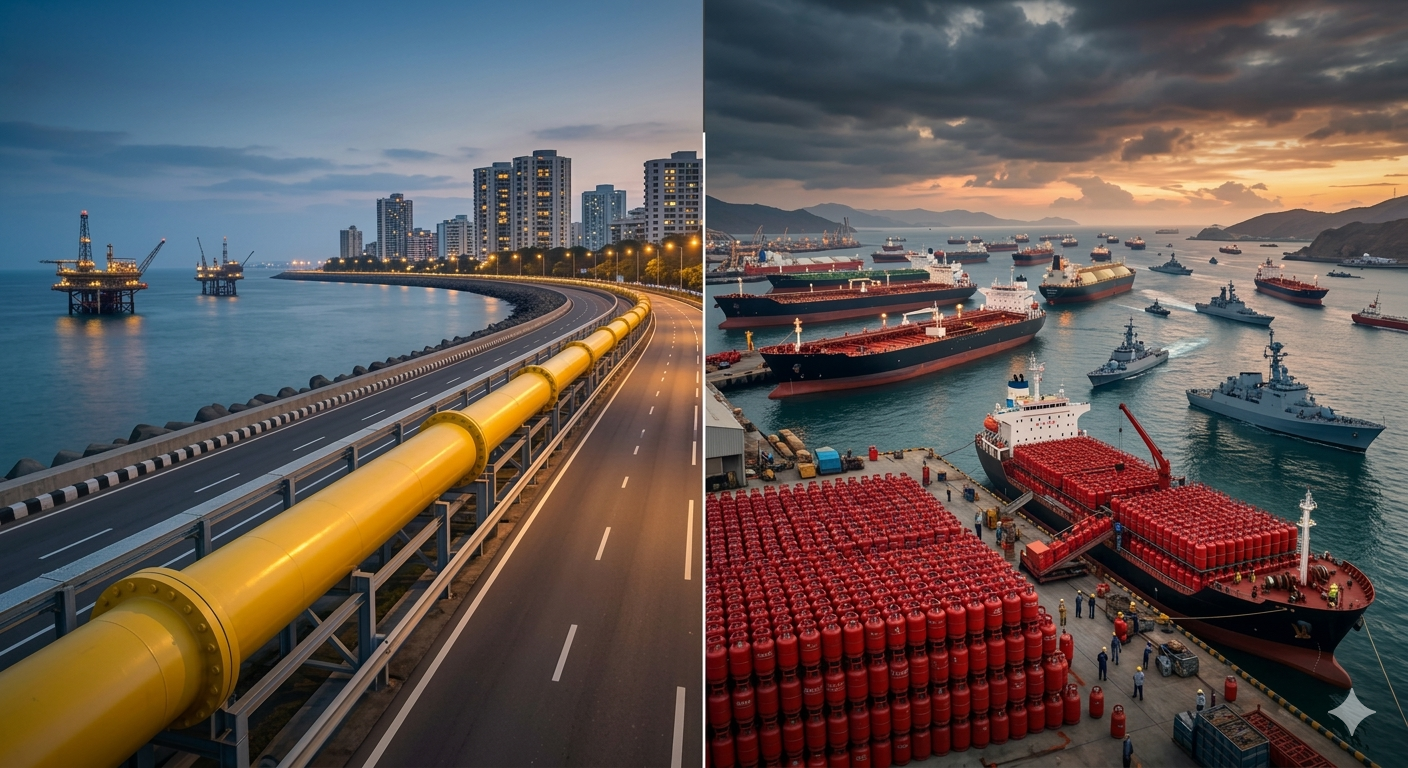
PNG vs LPG reality: People are getting nervous about the Middle East. With tensions rising around the Strait of Hormuz—the narrow ocean highway that handles a massive chunk of the world’s fuel—a big question is hitting close to home: If the ships stop sailing, will Indian kitchens run out of gas?
The short answer? It depends entirely on whether your gas comes from a red cylinder or a yellow pipe.
Here is the simple math behind India’s cooking gas supply, and why the government is in such a rush to dig up city roads and lay down gas pipes.
The Red Cylinder Problem (LPG)
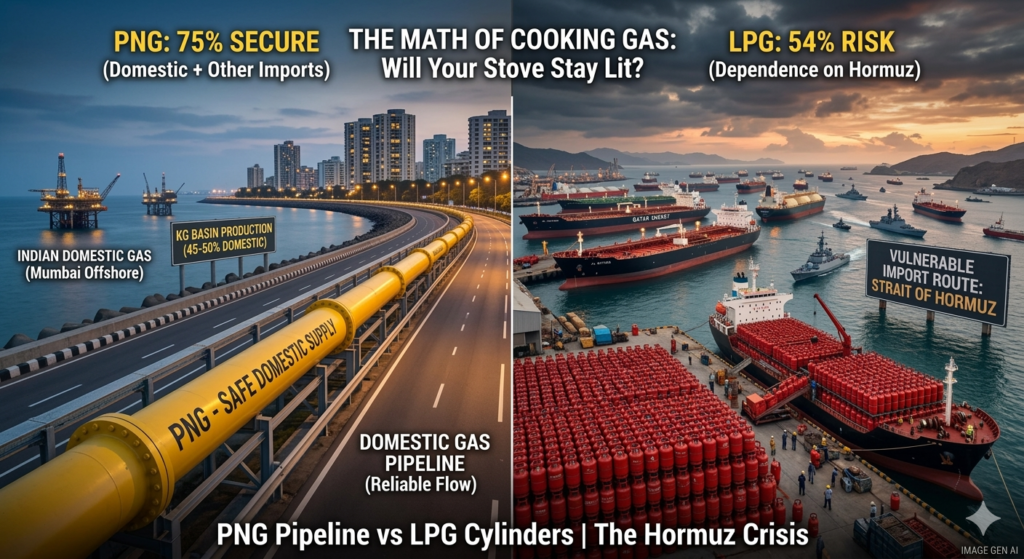
Let’s look at standard LPG cylinders first. India burns through roughly 30 to 32 million tonnes of LPG every single year.
The problem is that we don’t make enough of it. India only produces about 40% of its LPG demand at home. The rest arrives on massive ships.
Here is exactly where your cylinder gas comes from:
- 40% is made in India.
- 6% is shipped from safe routes.
- 54% sails directly through the Strait of Hormuz from Gulf countries.
If the Hormuz chokepoint closes, more than half of India’s cylinder supply is instantly trapped.
The Piped Gas Advantage (PNG)
Now look at Piped Natural Gas (PNG). The story here is completely different.
Right off the bat, half of all our piped gas never gets on a boat. Around 45-50% is pumped directly from Indian soil and waters—places like the KG Basin, Assam, Tripura, and Mumbai Offshore.
We do import the rest as Liquefied Natural Gas (LNG), but we buy it from a wider variety of places. Out of the total piped gas supply:
- 50% is made in India.
- 25% comes from safe routes (US, Australia, Africa).
- 25% comes through the Strait of Hormuz (Qatar, Oman).
Even better: if supplies ever do drop, the government’s rulebook states that household kitchens get priority. Industries and factories will lose their gas supply long before your stove stops working.
The Bottom Line: Visualizing the Risk
When you put the numbers side-by-side, the risk gap becomes obvious.
Vulnerability to a Middle East Blockade:
LPG (Cylinders) Risk: 54%
███████████████████████░░░░░░░░░░░░░░░░░░░
PNG (Piped Gas) Risk: 25%
██████████░░░░░░░░░░░░░░░░░░░░░░░░░░░░░░░░
(Solid bars show the percentage of fuel at risk if the Hormuz route closes)
The Final Scorecard
This math is exactly why the government is pushing so hard to connect homes to city gas grids. It isn’t just about convenience. Every household that switches from a cylinder to a pipe slightly reduces India’s dependence on the world’s most dangerous shipping lane.
If the worst happens in the Gulf, the pipes will likely keep flowing. The cylinders will be much harder to find.