
Strategic Analysis | India Defence | Border Technology
India’s Ministry of Defence has placed artificial intelligence, drones, cyber, space and faster military reform inside its official modernisation agenda. The Indian Army has separately pushed “technology absorption” as a priority. Together, those signals point to a quieter change in how India is preparing to secure the Line of Actual Control, the western frontier and sensitive corridors such as Siliguri.
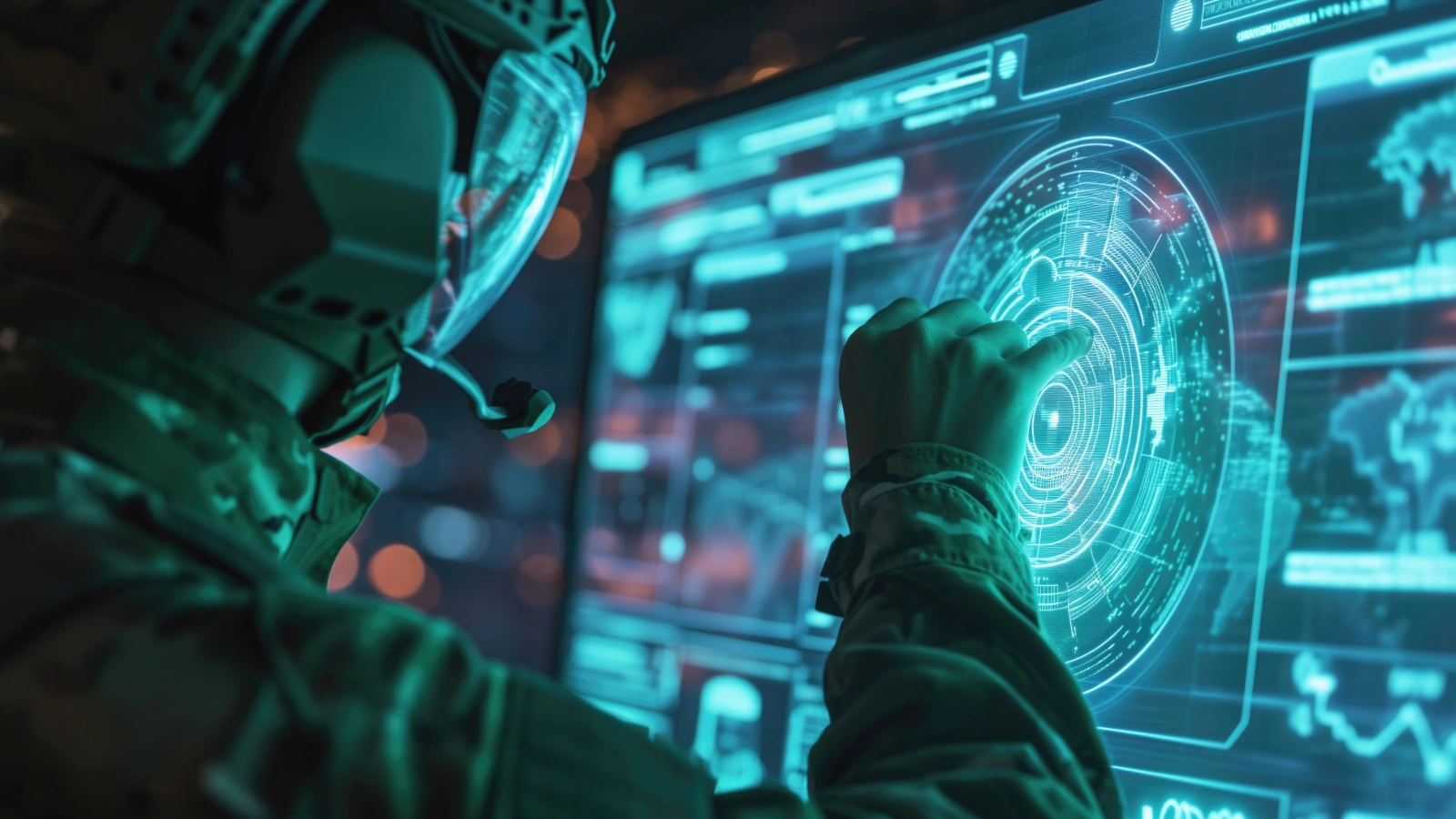
This is not a story about a fully automated border. India has not built one. What is visible is a gradual move from manpower-heavy border defence to a more connected system built around sensors, drones, counter-drone tools, command networks and faster mobility.
The military logic is straightforward. The side that detects movement earlier, verifies it faster and moves forces sooner has more room to prevent a local incident from becoming a wider crisis.
Why borders are becoming data problems
India’s land borders have always been unforgiving. The Himalayas bring altitude, weather and long supply lines. The western border brings infiltration, drone drops, tunnels and cross-border pressure. The Northeast depends on narrow access routes and difficult terrain.
That geography has not become easier. But the layer above it is changing.
A mountain pass can now be watched by drones. A river crossing can be monitored by sensors. A road junction can become part of a wider surveillance picture if it is connected to cameras, radar feeds, satellite imagery and command systems.
That is the quiet shift. Border security is no longer only about placing more men on more ridges. It is also about knowing what is moving, where it is moving, and how quickly a response can reach it.
The official signal is hard to miss
The Ministry of Defence declared 2025 as the “Year of Reforms”, with emphasis on cyber, space, artificial intelligence, machine learning, hypersonics and robotics. That language puts software, sensors and multi-domain operations inside the official reform agenda.
The Army’s own technology push is visible in official reviews. A PIB year-end review referred to automation, digitisation, data management and an AI roadmap. It also mentioned an AI Incubation Centre for the Indian Army at Bharat Electronics Limited’s research and development centre.
These are not minor bureaucratic details. Armies do not change through equipment alone. New systems matter only when doctrine, training, procurement and field use begin to move in the same direction.
India’s challenge is not to buy more drones and call it transformation. The harder task is to make soldiers, commanders, software teams, defence firms and public-sector institutions work inside one operational chain.
CIBMS came before the AI buzzword
India’s technology-led border model did not begin with artificial intelligence. One earlier foundation was the Comprehensive Integrated Border Management System, or CIBMS.
The Ministry of Home Affairs describes CIBMS as a way to integrate manpower, sensors, networks, intelligence and command-control systems for better situational awareness and faster response on the India-Pakistan and India-Bangladesh borders.
In simpler terms, it is the smart-border idea: fencing and patrols backed by electro-optic sensors, cameras, radars, communications networks and control rooms.
The point is often misunderstood. Technology does not make border forces redundant. It changes what they can see, how quickly they can verify a threat, and where manpower should be moved.
Drones forced the issue
Drones have made this transition urgent. Along India’s northern and western borders, unmanned systems are already part of the security environment.
They can carry cameras, weapons, narcotics, small arms or electronic payloads. They can probe air-defence readiness. They can also expose blind spots in surveillance.
In March 2025, Chief of Defence Staff General Anil Chauhan highlighted the need for advanced detection and neutralisation systems because of rising drone threats along India’s northern and western borders and in the Indian Ocean Region.
Operation Sindoor reinforced that lesson. An official Ministry of Defence review linked the operation to India’s use of indigenous drones, counter-unmanned aircraft systems, layered air defence, electronic warfare and net-centric platforms.
The next border crisis will not be shaped only by infantry posts and artillery positions. It will also be shaped by drones, jammers, radars, air-defence systems, command software and real-time data links.
The Himalayan frontier makes technology unavoidable
The Line of Actual Control with China is one of the world’s most difficult military theatres. Altitude, thin air, harsh weather, limited roads and long supply lines make surveillance and response difficult even in normal conditions.
In such terrain, technology acts as a force multiplier. Drones can watch areas that cannot be patrolled constantly. Sensors can help monitor approaches in poor visibility. Satellite and geospatial tools can improve route awareness. Roads, bridges and tunnels allow troops and supplies to move with less delay.
That is where the Border Roads Organisation’s infrastructure push fits in. In December 2025, the Defence Ministry said 125 strategically significant BRO infrastructure projects had been dedicated to the nation. A later budget update said BRO’s capital allocation for FY 2026-27 had been increased to ₹7,394 crore, with emphasis on tunnels, bridges and airfields.
Roads and tunnels are not separate from surveillance. A sensor that detects movement has limited value if India cannot respond in time.
India’s border-tech shift therefore has two layers. One is digital: drones, sensors, networks and data. The other is physical: roads, tunnels, bridges, airfields and forward logistics.
Why Siliguri remains central
The Siliguri Corridor remains India’s most sensitive land link to the Northeast. It connects the Indian mainland to Assam, Arunachal Pradesh, Sikkim, Meghalaya, Nagaland, Manipur, Mizoram and Tripura.
Any major disruption here would carry military, economic and political consequences. Siliguri is not just a narrow strip of land. It is a logistics system.
Roads, rail lines, airfields, bridges, fuel movement, communications and civilian supply chains all depend on this zone in different ways.
The defensible conclusion is not that India has built secret AI checkpoints around Siliguri. The stronger point is that New Delhi is likely to treat the corridor as a priority zone for surveillance, faster movement, air-defence readiness and intelligence coordination.
What changes for China?
For China, a more technology-assisted Indian posture raises the cost of surprise. Along the LAC, a stronger mix of drones, sensors, satellite monitoring, roads and command systems can make limited movements harder to hide and easier to record.
That does not remove the risk of confrontation. In some situations, it may sharpen it. When both sides see more and react faster, commanders have less time to separate routine movement from pressure tactics.
Used carefully, better awareness can strengthen deterrence. Used poorly, it can shorten the distance between detection and escalation.
What changes for Pakistan?
On the western front, the challenge is different. The threats include infiltration, tunnels, narcotics, arms movement, drone drops and tactical pressure across the border.
Smart fencing, sensors, drones and counter-drone systems can reduce the gaps that such activity depends on. Small infiltration teams and drone-based supply networks rely on weak visibility, slow response and uncertain attribution.
A more connected border system can shrink that space. It will not remove it.
Fog, dust, rain, heat, snow, electronic interference and civilian clutter can still produce false alarms. Terrain still matters. So does human judgement.
The counter-drone market is becoming a defence story of its own
One likely beneficiary of this shift is India’s domestic counter-drone ecosystem.
The CDS has called for greater indigenisation in unmanned systems and counter-measures. Official statements after Operation Sindoor also highlighted the operational value of Indian UAV and counter-UAV systems.
That creates openings for defence companies, startups, electronics firms, radar makers, optics specialists, software developers and electronic-warfare suppliers.
The future border grid will need more than drones. It will need anti-drone radars, jammers, spoofing tools, command software, AI-assisted classification, rugged communications and possibly directed-energy systems.
The border is becoming a market for Indian defence innovation.
Procurement speed may decide the outcome
India’s traditional defence procurement system was built for platforms that changed slowly: aircraft, artillery, tanks, ships and missiles. AI tools, drones, electronic systems and directed-energy technologies change much faster.
The Draft Defence Acquisition Procedure 2026 recognises this pressure. It notes that technological change in artificial intelligence, quantum computing, new drone technologies and directed-energy weapons can move faster than the traditional two-to-three-year acquisition cycle.
That is not a paperwork issue. It is an operational one.
If India wants a living border-technology grid, it will need quicker trials, modular upgrades, software iteration, battlefield feedback and tighter contact between soldiers and developers.
The danger is not technology. It is speed without control
The strongest argument for AI-assisted border systems is speed. They can detect movement faster, combine feeds faster and alert commanders faster.
But speed is also the risk.
A false alert can travel quickly. A drone image can be misread. A sensor signal can be mistaken for hostile movement. An algorithm can prioritise a track without understanding local context.
During a crisis, those seconds matter. Political pressure, media noise and military readiness can narrow the space for calm judgement.
AI can support detection and decision-making. Escalation control still has to remain human.
The accountability gap
India’s public debate on defence technology is still mostly about capability. Drones. Missiles. Satellites. Artificial intelligence. Electronic warfare.
Less attention goes to rules, audit trails, data handling, human control and operational accountability.
That gap will matter more as border systems become more automated. Who validates an AI-assisted alert? Who decides when a drone track is hostile? How are false positives reviewed? What data is retained? What is shared between agencies? How quickly can a local commander override a machine-generated recommendation?
These are not anti-military questions. They are questions serious military powers eventually have to answer.
What to watch by 2030
First, AI-assisted surveillance. Drones, satellites, radars, electro-optic sensors and ground feeds are likely to be fused into a more common operational picture.
Second, counter-drone deployment. Cheap drones will force layered detection and neutralisation systems, from radars and jammers to hard-kill systems and possibly directed-energy options.
Third, border infrastructure. Roads, tunnels, bridges, airfields and forward logistics will remain as important as software. A sensor grid is weak if troops cannot reach the point of concern.
Fourth, private-sector participation. Indian startups and defence firms will have a larger role in sensors, autonomous systems, rugged electronics, software and command platforms.
Fifth, regulation. India will need clearer norms for AI in military and border settings. The point is not to slow technology. The point is to stop technology from creating uncontrolled escalation.
The strategic message
India’s border-tech shift is becoming part of its deterrence architecture. The Himalayan frontier, the western border and the Siliguri Corridor are no longer just lines on a map. They are layered security systems where geography, logistics, sensors, drones, data and human command have to work together.
India has not built a fully automated border. But the direction is clear. New Delhi wants borders that can see earlier, move faster and depend less on foreign technology.
That could strengthen deterrence against China and Pakistan. It could also create new risks if machine-speed alerts outrun human judgement.
The next decade of Indian border security will be shaped by two hard questions: how quickly India can absorb frontier technology, and whether it can control the consequences once that technology reaches the edge of the map.