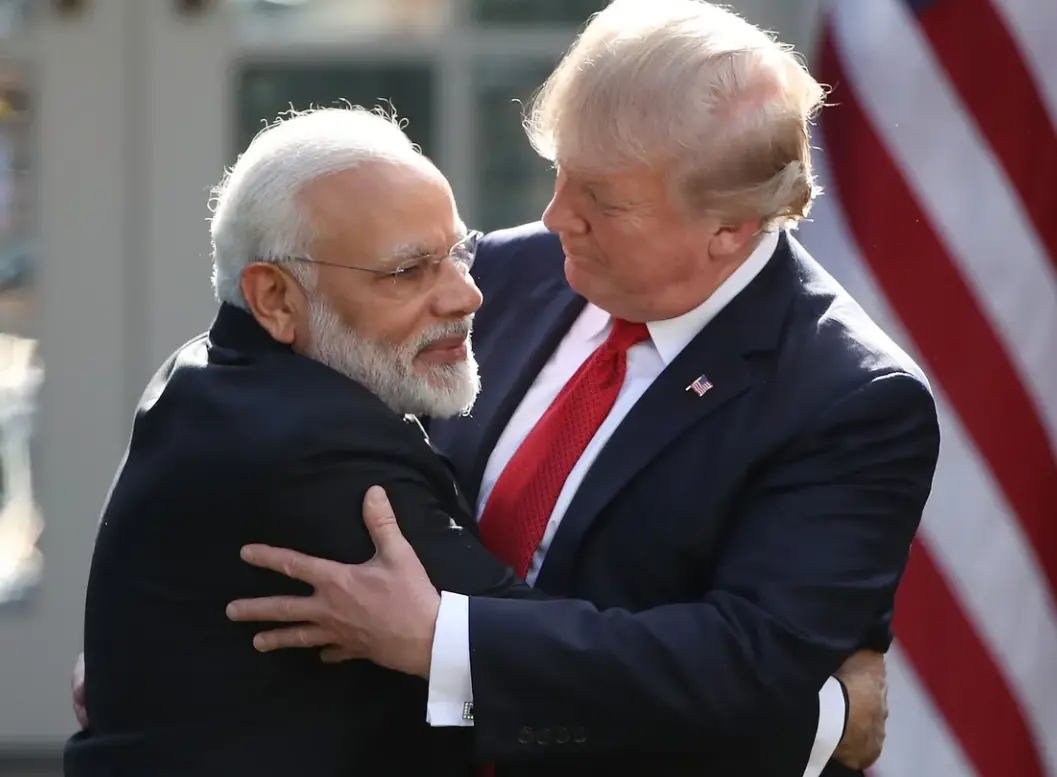
India and the United States have ended three days of trade talks in Washington with a positive public message. The harder part begins now: market access, agriculture, digital rules, tariff uncertainty and how much policy space New Delhi is willing to trade for deeper access to the American market.
Indian and American officials ended three days of trade talks in Washington with a positive public message, but the harder part of the negotiation is still ahead.
India’s Commerce Ministry said the April 20–23 discussions covered the first phase of an interim agreement and the wider India-US Bilateral Trade Agreement. The agenda included market access, non-tariff measures, technical barriers to trade, customs and trade facilitation, investment promotion, economic security alignment and digital trade, according to the official Press Information Bureau statement.
Reuters reported that both sides are working toward a long-term target of $500 billion in bilateral trade by 2030. Bilateral goods and services trade stood at about $212 billion in 2024. The same report also carried the caution that matters most: a US official said the talks were constructive, but gaps remain.
That is the useful reading of the talks. The deal is moving. It is not settled.
The legal backdrop has changed
The talks are taking place after a shift in the American tariff environment.
In February, the US Supreme Court struck down sweeping tariffs imposed under the International Emergency Economic Powers Act. Reuters-syndicated reporting carried by The Standard said the court found that the law did not give President Donald Trump authority to impose tariffs in that manner.
The ruling does not remove tariffs from Washington’s toolkit. The Trump administration can still use other trade laws, national security provisions and sector-specific measures. But it weakened the immediate force of one broad emergency-tariff weapon.
For New Delhi, this is not just a legal detail. It changes the atmosphere in the room. India is still negotiating with a protectionist White House, but not under the same legal shadow that existed when sweeping emergency tariffs looked harder to challenge.
Reuters has reported that uncertainty after the ruling complicated efforts to frame an interim pact. It also reported that India is watching planned US changes to Section 301 tariffs in June.
TES Insight: The tariff pressure brought both sides closer to a deal. Market access will decide whether the deal becomes commercially serious.
Beyond the tariff wall
Trade negotiations are often reduced to simple headlines about duties on goods. The India-US process is wider than that.
Non-tariff barriers, product standards, customs rules and digital trade can matter as much as headline tariffs. A lower duty means little if exporters face slow paperwork, difficult standards or uncertain rules once they enter the market.
For India, the prize is clear. Better terms in the US market could help textiles, engineering goods, chemicals, pharmaceuticals, food products and parts of the emerging manufacturing chain. It could also help companies that are using India as part of China-plus-one supply chains.
For Washington, the interest is strategic as well as commercial. India is a large consumer market, a possible manufacturing partner and a country central to America’s attempt to reduce dependence on China-linked supply chains.
That is why the phrase “economic security alignment” matters. It points to a trade conversation that now includes supply chains, technology standards, critical inputs and trusted production networks.
What was discussed
- Market access for goods and services
- Non-tariff measures
- Technical barriers to trade
- Customs and trade facilitation
- Investment promotion
- Economic security alignment
- Digital trade
India wants access without exposure
New Delhi cannot allow the agreement to look like a one-way opening of the Indian economy.
Agriculture is the clearest red line. Millions of livelihoods are tied to the farm sector, and even a limited concession on agricultural imports can become politically difficult.
Smaller manufacturers are also watching the talks closely. Many want export opportunities, but they also fear being exposed too quickly to cheaper or better-capitalised foreign competition.
This is why the government keeps using words such as balanced and mutually beneficial. It is not only diplomatic language. It is also a message to domestic audiences that India is seeking access without giving away too much control.
The digital divide
Digital trade may become one of the slower parts of the process.
American firms generally prefer easier cross-border data flows, fewer restrictions and lighter controls on platform operations. India views data, payments and platform power through the lens of sovereignty, regulation and national security.
That difference will not be easy to close. India wants investment and technology partnership, but it does not want digital trade rules that limit its ability to regulate large platforms or protect domestic policy choices.
The same logic is visible in the wider India-US relationship. Defence technology, semiconductors and advanced manufacturing are already part of the strategic conversation. The Eastern Strategist has earlier explained why the GE-HAL F414 engine deal became an important marker of deeper technology cooperation between the two countries.
Trade is now moving into that space. A final agreement could shape investment decisions, product standards, digital rules and the way global companies use India in their supply chains.
The politics on both sides
Trump needs any agreement to look useful for American companies, workers and exporters. His trade politics are built around pressure, tariffs and visible gains.
Prime Minister Narendra Modi faces a different problem. India wants the US market, but it does not want to appear pressured into opening sensitive sectors. New Delhi has spent years presenting India as a confident economic power with its own industrial priorities.
That means the wording of the agreement will matter. Washington will want commercial value. New Delhi will want protection for policy space. A deal can work only if both sides can sell it at home.
Officials may continue to sound optimistic in public. The harder clauses will be fought quietly.
What could still slow the agreement
Agriculture remains the first obstacle. Any American push for wider access to India’s farm market will face resistance.
Digital trade is another difficult area. India has concerns around data, payments, platform power and digital sovereignty. US companies usually prefer fewer restrictions and easier cross-border data movement.
Tariff uncertainty in Washington is the third issue. The Supreme Court ruling narrowed one legal route, but it did not end Trump’s tariff politics. Other tools remain available.
Timing also matters. If talks drag, companies planning supply-chain shifts may look elsewhere. If the deal is rushed, domestic criticism could rise quickly.
That leaves both sides with a narrow but usable path. India needs better export access. The US needs a deal with commercial substance. Neither side wants an agreement that looks weak at home.
Also Read
GE-HAL F414 Engine Deal: Why It Matters for India’s Strategic Future
Hidden Indian Defence Companies That Could Shape the Next Industrial Boom
The bottom line
The India-US trade deal is alive. The next stage will show how serious both sides are.
The early phase was about keeping talks moving. The next phase is about concessions. Which goods get easier access? Which standards are eased? Which domestic sectors remain protected? How will digital trade be handled? What happens if Washington changes tariff tools again?
These questions will decide whether the agreement becomes a serious economic reset or a limited deal with careful language and modest commercial impact.
For India, the prize is better access to the American market and a stronger role in global supply chains. The risk is opening too much in sectors where domestic politics is unforgiving.
For the United States, the prize is deeper access to India and a stronger economic partner in its China strategy. The risk is that India bargains slowly and refuses the concessions Washington wants most.
The public message is progress. The real test is whether India can win market access without surrendering policy space, and whether Washington can accept a deal that is strategic as much as transactional.
For now, the talks have moved forward. The difficult bargaining starts here.