
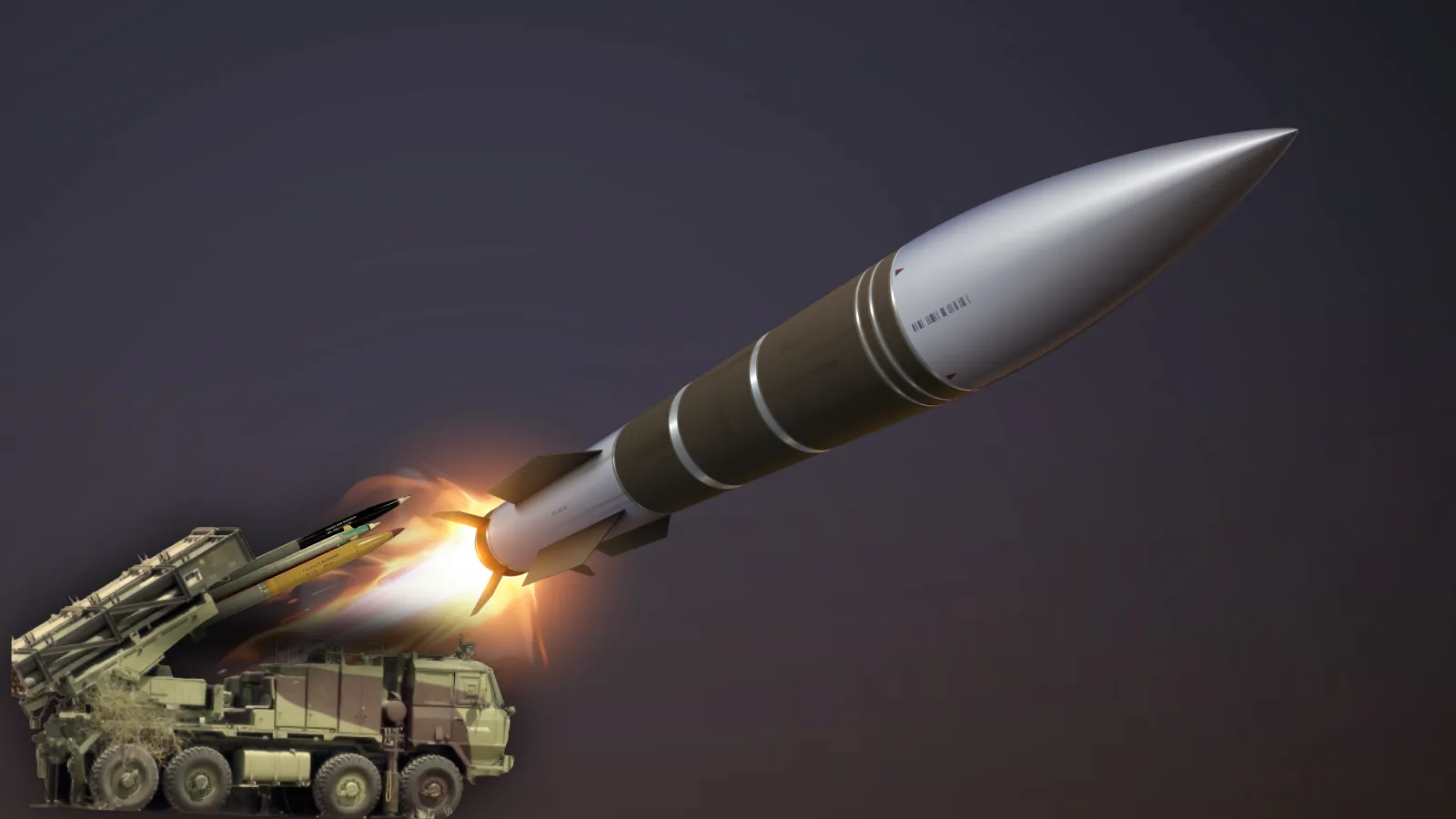
France’s interest in India’s Pinaka rocket system would have seemed unlikely not long ago.
or decades, the defense relationship between Paris and New Delhi followed a familiar pattern: France supplied advanced military platforms such as Mirage fighters, Scorpene submarines and Rafale jets, while India remained one of the world’s largest arms importers.
That equation may now be starting to shift.
French military officials are actively evaluating India’s Pinaka Multi-Barrel Rocket Launcher (MBRL) system as Paris looks for ways to rebuild and modernize its long-range artillery capability. The discussions are still at an exploratory stage, but the symbolism is already significant: a major NATO military power is seriously considering an Indian-made rocket artillery platform to help fill a growing battlefield gap.
The interest is not just about rockets.
It reflects a larger change taking place across the global defense market, where countries are increasingly looking beyond traditional suppliers as war, production bottlenecks and geopolitical tensions reshape military procurement.
France’s Artillery Problem
France is facing a difficult timeline.
Its existing LRU (Lance-Roquettes Unitaire) rocket artillery systems — modified European versions of the American M270 launcher — are aging out of service. Some systems were already transferred to Ukraine after Russia’s invasion, reducing available inventory even further. According to defense reporting referenced in the research, France could retire its remaining LRU fleet by 2027.
The replacement problem is more complicated.
Paris is developing a future long-range artillery system under its domestic FLP-T program, but the project is unlikely to enter full operational deployment before the end of the decade. That creates a temporary but serious capability gap for the French Army at a time when European militaries are reassessing battlefield readiness after the Ukraine war.
And Ukraine changed the way Europe thinks about artillery.
Western militaries spent years prioritizing smaller inventories of highly advanced weapons systems. But the war exposed a different reality: modern high-intensity conflicts consume rockets, shells and precision munitions at a pace many planners underestimated.
Volume matters again.
Production speed matters again.
Cost matters again.
That is one reason the Pinaka rocket system is attracting attention.
Why Pinaka Fits
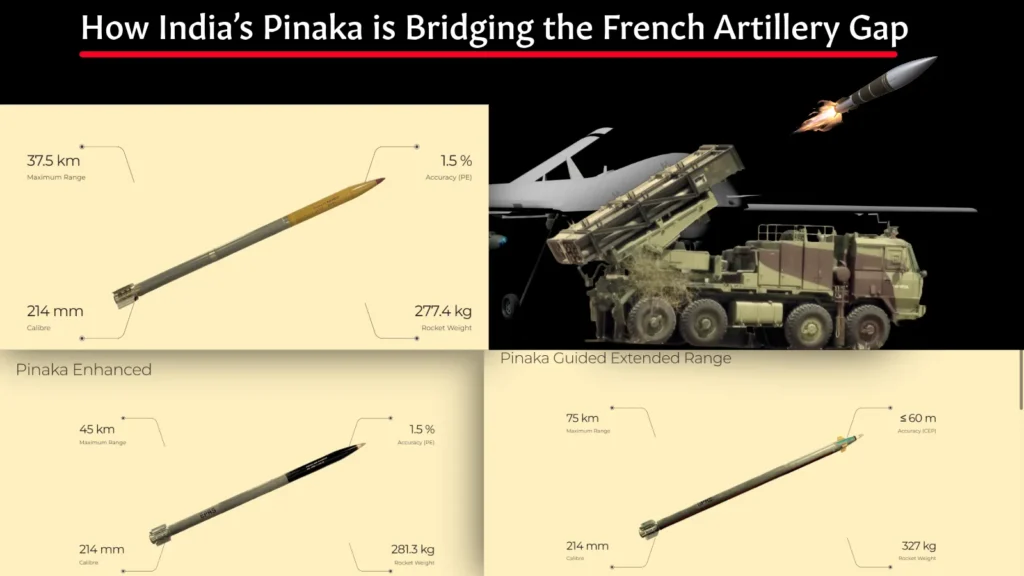
Originally developed by India’s Defence Research and Development Organisation (DRDO), Pinaka rocket system was designed to replace older Soviet-origin Grad systems used by the Indian Army. Over time, however, the Pinaka rocket system evolved from a basic area-saturation launcher into a more sophisticated long-range artillery platform with guided variants and improved strike accuracy.
The Pinaka rocket system battlefield appeal is relatively straightforward.
A Pinaka launcher can fire a full salvo of rockets in less than a minute before quickly relocating to avoid enemy counter-battery strikes — an increasingly important capability in an era shaped by drones, battlefield surveillance and precision targeting.
India has also continued extending the system’s range. Newer guided variants under development are expected to hit targets far beyond conventional artillery distances while remaining cheaper than many Western alternatives.
That cost equation matters for Europe.
American systems like HIMARS remain highly effective, but they are expensive and heavily tied into U.S. production pipelines and export structures. European militaries are now looking more carefully at whether they can diversify procurement without sacrificing capability.
India offers an unusual combination:
- lower production costs
- growing industrial scale
- and increasing willingness to export advanced systems.
That makes Pinaka rocket system strategically interesting even before any final procurement decision is made.
The Indian Companies Behind the System
DRDO developed the core system, but private Indian industry now plays a central role in manufacturing and production. Tata Advanced Systems and Larsen & Toubro manufacture launcher systems and command vehicles, while BEML supplies the high-mobility transport platforms used by the launcher batteries.
The ammunition side may be even more important.
Nagpur-based Solar Industries and its subsidiary Economic Explosives Limited have become major players in rocket and guided munition production linked to the Pinaka ecosystem. The company is increasingly involved in extended-range and guided rocket development, including export-focused variants.
That matters because modern artillery wars are not won only by launchers.
They are won by sustained ammunition production.
The Ukraine conflict demonstrated how quickly stockpiles can disappear during prolonged fighting. European countries are now paying far more attention to manufacturing depth and supply-chain resilience than they did before 2022.
India’s growing production capacity is becoming part of that conversation.
More Than an Arms Deal
The geopolitical significance of the discussions may ultimately outweigh the technical side.
A NATO military evaluating Indian rocket artillery would have been difficult to imagine twenty years ago. Western defense markets have traditionally been dominated by the United States and Europe itself, while India was viewed primarily as a customer rather than a supplier.
That perception is changing slowly.
India’s defense exports have risen sharply in recent years, with countries such as Armenia and the Philippines purchasing Indian missile, radar and artillery systems. According to figures referenced in the research, India’s annual defense production and exports both reached record levels during the 2024-25 financial year.
The France angle, however, is different.
Supplying systems to smaller or developing markets is one thing. Entering the procurement conversation inside a Tier-1 Western military is something else entirely.
For Paris, the Pinaka rocket system discussions also align with a broader strategic objective: reducing overdependence on any single defense supplier.
France has long promoted the idea of “strategic autonomy” — maintaining flexibility in military procurement and industrial policy rather than relying excessively on external powers. India fits naturally into that framework because it is viewed as a relatively stable long-term partner without the same political complications attached to some other suppliers.
The defense relationship between Paris and New Delhi already runs deep.
French Mirage aircraft played a major role during the Kargil conflict in 1999. Rafale jets are central to India’s current airpower modernization strategy. France also stood apart from several Western countries after India’s 1998 nuclear tests, helping establish a level of political trust that still shapes the relationship today.
That trust is now expanding into newer areas including submarines, jet engines, maritime cooperation and defense manufacturing.
The Pinaka discussions are part of that larger trajectory.
Why This Matters
Whether France ultimately buys the system remains uncertain. Defense procurement decisions are political, technical and often slow-moving.
But the fact that the discussions are happening at all matters.
The global defense market is entering a period of transition. Supply-chain pressure, rising military spending and the return of large-scale conventional warfare are reshaping how countries think about weapons production and procurement.
In that environment, countries like India are gaining new opportunities to compete in sectors once dominated almost entirely by the United States, Russia and Western Europe.
The Pinaka rocket system story captures that shift clearly.
For decades, India looked outward for advanced military hardware.
Now, parts of the world are beginning to look toward India instead.