
Breaking Analysis | Defence | Indian Army Modernisation
This analysis is based on official information released by India’s Ministry of Defence through the Press Information Bureau, with The Eastern Strategist’s assessment of what the platforms mean for India’s mechanised infantry modernisation.
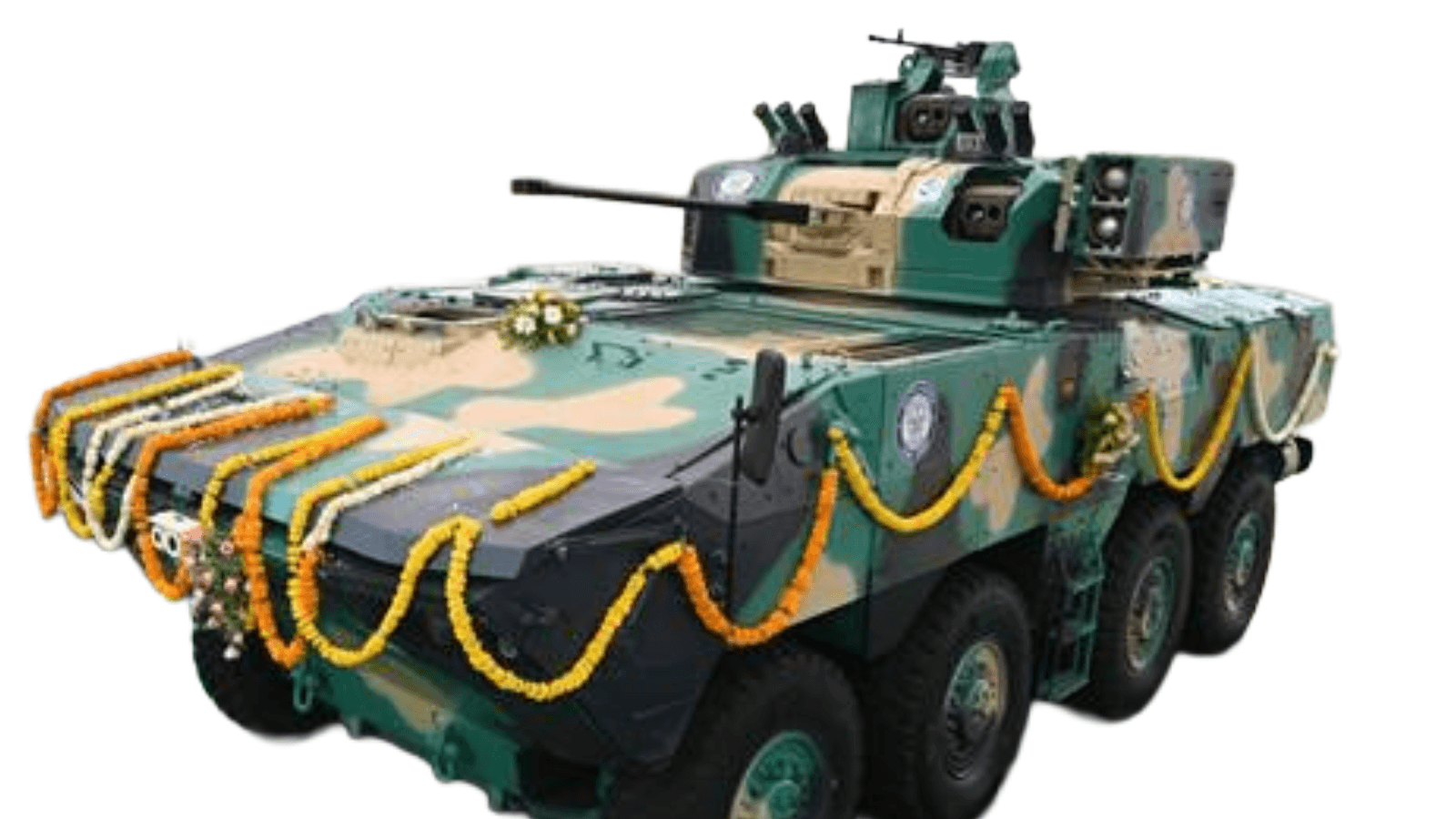
India’s Defence Research and Development Organisation has unveiled two new Advanced Armoured Platforms in tracked and wheeled configurations, giving the country a clearer view of how its future infantry combat and armoured personnel carrier ecosystem may evolve.
According to the Ministry of Defence, the platforms were designed and developed by the Vehicles Research and Development Establishment and unveiled by DRDO Chairman Dr Samir V Kamat at Ahilyanagar, Maharashtra, on April 25, 2026. The government said the platforms have been developed to meet the emerging operational requirements of India’s defence forces.
A separate PIB Mumbai update said the tracked and wheeled platforms meet the requirements of both Infantry Combat Vehicle and Armoured Personnel Carrier roles. That makes the rollout important not only as a technology demonstration, but also as a signal of India’s push toward a more indigenous armoured vehicle ecosystem.
What has DRDO unveiled?
DRDO has unveiled two Advanced Armoured Platforms: one tracked and one wheeled. The tracked version is better suited for difficult battlefield terrain, while the wheeled version can offer faster road movement and easier deployment in areas with stronger road networks.
Both platforms have been integrated with an indigenously designed and developed 30 mm crewless turret. The turret is paired with a 7.62 mm PKT gun and is configured to launch anti-tank guided missiles. This gives the platforms a mix of infantry support firepower and anti-armour capability.
Why the crewless turret matters
The crewless turret is one of the most important features of the new platforms. In older turret designs, crew members often operate from inside the turret space, which can reduce internal room and increase risk. A crewless turret can help keep personnel lower inside the protected hull while freeing space for troops, ammunition, sensors and mission equipment.
This matters because future infantry combat vehicles will not operate only as troop carriers. They will need to detect threats, fire accurately, survive anti-armour weapons and work with drones, sensors and networked command systems. The turret design is therefore part of a larger shift in how armoured vehicles are expected to fight.
Protection, mobility and water crossing
The official release says both platforms have advanced features for mobility, firepower and protection. They are integrated with a high-power engine and automatic transmission, giving them a high power-to-weight ratio, higher speed capability and improved ability to negotiate gradients and obstacles.
The platforms also offer STANAG level 4 and 5 protection with modular blast and ballistic protection around the vehicle. That is important because modern armoured platforms must deal not only with direct fire, but also mines, improvised explosive devices, anti-armour weapons and battlefield fragmentation.
DRDO has also given the platforms amphibious capability through hydro jets, improving their ability to cross water obstacles. For India, this has operational value because armoured formations may have to move across canals, rivers, marshy terrain and varied geographic conditions.
The modernisation question
The government statement does not describe these platforms as a confirmed replacement for India’s older infantry combat vehicles. That distinction is important. But the configuration of the platforms places them firmly inside India’s larger debate on mechanised infantry modernisation.
Older armoured infantry platforms were designed for an earlier battlefield. Today’s battlefield is far more dangerous. Drones, anti-tank guided missiles, loitering munitions, precision artillery and battlefield sensors have made protection, mobility and situational awareness much more important.
In that context, DRDO’s tracked and wheeled platforms should be seen as an indigenous bid to shape the next stage of Indian armoured mobility. Whether they become operational systems will depend on trials, Army feedback, production maturity, cost, maintainability and how quickly user-driven changes can be absorbed.
Private industry is now inside the armoured vehicle chain
Another important signal is industry participation. The Ministry of Defence said manufacturing of the platforms was carried out by Tata Advanced Systems Limited and Bharat Forge Limited, supported by several micro, small and medium enterprises.
This matters because India’s defence modernisation is no longer only about government laboratories designing systems and public-sector units producing them. The newer model increasingly depends on DRDO, private industry, specialised suppliers and smaller component makers working together.
A modern armoured platform is not just a hull and a gun. It needs engines, transmission systems, optics, armour materials, electronics, fire-control systems, software, hydraulics, sensors, ammunition integration and long-term maintenance support. That is why the industrial ecosystem around these platforms may be as important as the platforms themselves.
Indigenous content is the real test
The platforms currently have indigenous content of around 65%, with plans to raise it to 90%, according to the official release. This number matters because defence self-reliance is not only about assembling a platform in India. It is about controlling the critical technology, supply chain and future upgrade path.
Higher indigenous content can reduce dependence on foreign suppliers, improve wartime availability and give India more freedom to upgrade the platform over time. It also gives domestic industry a larger role in spares, repairs, future variants and possible export opportunities.
Why tracked and wheeled versions both matter
The decision to unveil both tracked and wheeled platforms is significant. A tracked vehicle offers stronger cross-country mobility in mud, sand, broken terrain and difficult battlefield conditions. A wheeled vehicle can offer faster road mobility, easier maintenance and operational flexibility in areas with stronger road infrastructure.
India’s geography demands both approaches. Desert sectors, plains, riverine terrain, semi-urban areas and high-altitude conditions all create different mobility needs. A common platform family, if developed properly, can give the Army more flexibility across theatres.
What happens next?
The next stage will be evaluation and user feedback. That is where the platforms will face their real test. The Army will examine mobility, reliability, protection, firepower, crew comfort, maintainability, amphibious performance, logistics burden and performance across different terrain conditions.
For DRDO and its industry partners, the challenge will be to move from a promising platform to a production-ready system. India has often produced strong defence prototypes but struggled with timelines, standardisation and user-driven modifications. This programme will need faster iteration if it is to become operationally relevant.
The strategic message
The larger message is clear. India wants future armoured mobility to be more indigenous, more protected and more adaptable to modern war. The Ukraine conflict, the rise of drone warfare and the spread of precision anti-armour systems have all shown that armoured vehicles cannot remain static designs from an older era.
DRDO’s new Advanced Armoured Platforms are therefore not just about new vehicles. They are about preparing India’s mechanised infantry for a battlefield where armour must move faster, see better, survive harder and fight as part of a wider sensor-and-fire network.
The platforms still have to prove themselves through trials and production discipline. But as a signal of intent, this is a serious step. It shows India trying to build the next generation of armoured mobility at home, with private industry and smaller suppliers inside the same defence manufacturing chain.