
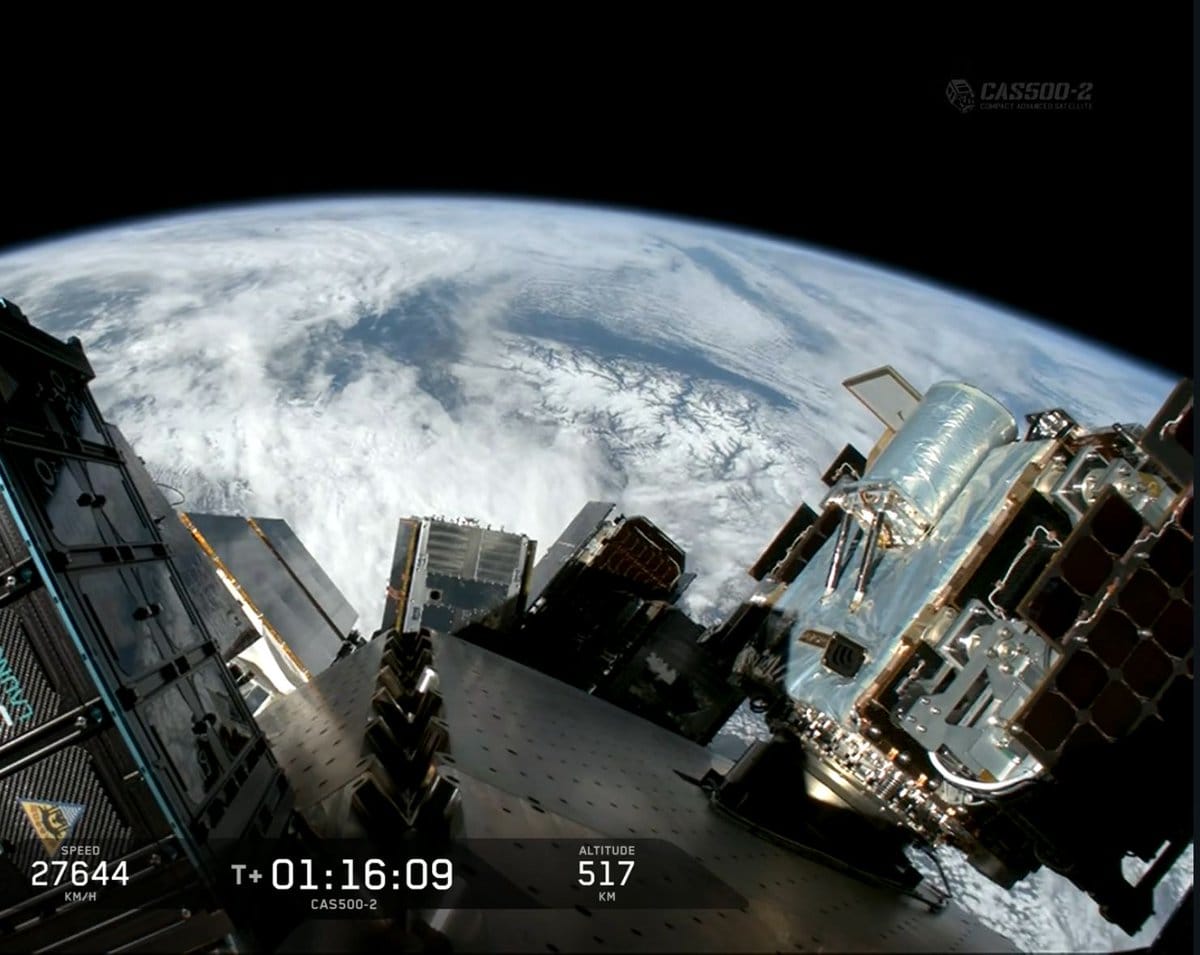
The India OptoSAR satellite marks a new step in the country’s space capability. Mission Drishti, developed by GalaxEye, combines optical imaging with synthetic aperture radar to enable all-weather, day-night observation, according to official government release .
The satellite combines optical imaging with synthetic aperture radar (SAR) on a single platform—something not previously achieved in an operational system. This allows it to capture high-resolution images in all weather conditions and at night, addressing a long-standing limitation in satellite observation.
The mission also signals a broader shift. India’s space ecosystem, once dominated by state-led missions, is increasingly incorporating private firms into core capability development.
What OptoSAR changes
Conventional Earth observation relies on two separate systems. Optical satellites provide clear, intuitive images but are limited by cloud cover and darkness. SAR systems, by contrast, can image through clouds and at night but produce data that is harder to interpret.
Mission Drishti combines both. By placing optical and radar sensors on the same satellite, it produces aligned, analysis-ready data in a single pass, reducing reliance on multi-source fusion.
In practical terms, this means fewer blind spots—particularly in regions with persistent cloud cover or variable weather patterns.
From innovation to capability
Official messaging has focused on innovation and entrepreneurship. But the underlying capability is dual-use.
Satellite imagery supports agriculture, disaster response and infrastructure planning. The same data, however, is equally relevant for surveillance, border monitoring and maritime tracking.
With OptoSAR, that capability becomes more persistent. Imaging is no longer dependent on clear skies or daylight windows.
In operational terms, that reduces uncertainty.
A changing space architecture
Mission Drishti reflects a structural shift in how India builds space capability. Over the past few years, regulatory changes and institutional support have opened the sector to private participation.
The emerging model is layered:
• Government-led missions • Commercial distribution • Private-sector innovation
This resembles more mature ecosystems, where private firms are not peripheral but central to capability development.
Where this fits in modern conflict
The relevance extends beyond space policy. In current conflicts, from Ukraine to the Middle East, persistent surveillance has become a core requirement.
Drone operations, for instance, depend on continuous situational awareness—tracking movement, identifying targets and assessing outcomes. Satellite data feeds directly into that loop.
As explored in TES analysis of Operation Epic Fury and TES coverage of the Dark Eagle deployment debate , modern conflicts increasingly depend on sustained pressure, real-time intelligence and the integration of surveillance with strike capability.
In that context, systems like Mission Drishti are not standalone assets. They are part of a wider network that includes drones, electronic warfare and data processing systems.
Limits and next steps
Mission Drishti is a single satellite. Its effectiveness will depend on scale—constellations, revisit frequency and integration with other data systems.
The company has indicated plans to expand into a larger satellite network, which would improve coverage and reduce revisit times.
There are also systemic constraints. Satellite data must be processed, distributed and integrated into decision-making frameworks. Without that ecosystem, capability remains limited.
Conclusion
Mission Drishti does not change India’s strategic position overnight. But it signals a shift in direction.
Space is moving from a government-led domain to a mixed ecosystem where private firms play a growing role in building operational capability.
In future conflicts, the advantage is likely to depend less on individual platforms and more on how effectively surveillance, strike systems and data networks are combined and sustained.
FAQs
What is the India OptoSAR satellite?
The India OptoSAR satellite, part of Mission Drishti, combines optical imaging and synthetic aperture radar (SAR) in a single platform. This allows it to capture images in all weather conditions and during both day and night.
Why is OptoSAR technology important?
OptoSAR technology enables continuous Earth observation by overcoming limitations of traditional satellites, which depend on clear skies and daylight. It provides more reliable and consistent data for multiple applications.
Who developed Mission Drishti?
Mission Drishti was developed by Bengaluru-based startup GalaxEye, marking a significant role for private companies in India’s space sector.
How is this satellite useful for defence?
The satellite can support surveillance, border monitoring and maritime tracking. Its ability to operate in all weather conditions reduces gaps in observation and improves situational awareness.
Does this change India’s space strategy?
It reflects a broader shift toward private-sector participation in space technology, alongside government-led missions. This model allows faster innovation and expands overall capability.