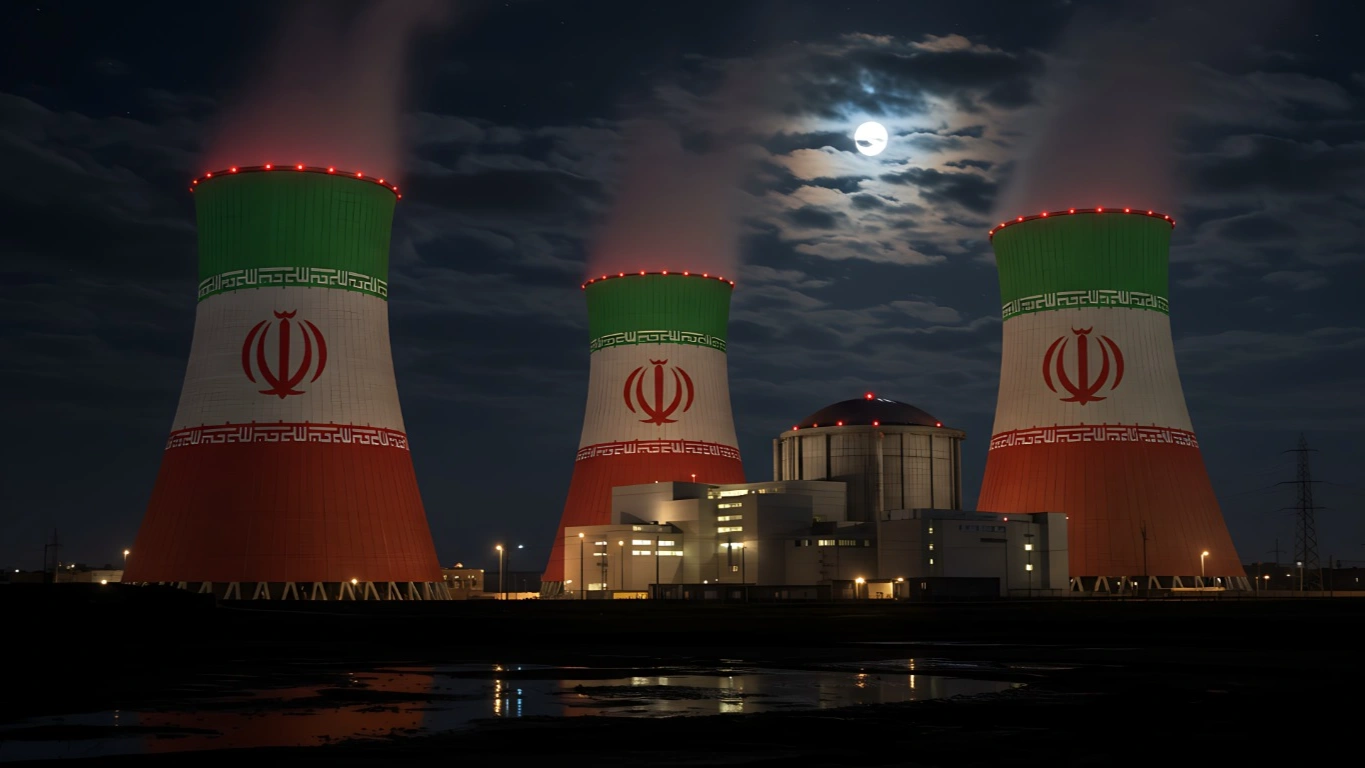
Key fact: Pakistan is tied to two documented phases of Iran’s nuclear story. First, the A.Q. Khan network helped Iran acquire uranium-enrichment technology. Now, Pakistan is mediating U.S.-Iran talks in which Washington wants Iran’s enriched uranium stockpile removed, capped or tightly controlled.
Pakistan sits at two very different points in the Pakistan Iran nuclear program story. The first is historical and covert. Reuters’ timeline says Iranian officials made contact in 1987 with the illicit A.Q. Khan network, which helped Tehran acquire uranium-enrichment technology. The second is current and diplomatic. In April 2026, Reuters reported that Pakistan was trying to bring Iran to the table for talks with the United States, even as Washington pushed for tight controls over Iran’s enriched uranium stockpile. These are not the same roles, and they should not be collapsed into one easy accusation. But together, they place Pakistan both near the early rise of Iran’s enrichment capability and at the center of today’s effort to contain it.
The first caveat matters. It would be too sweeping to say that Pakistan, as a state, openly built Iran’s bomb program. The more accurate line is narrower and stronger: the clearest documented outside boost to Iran’s early enrichment path came through the Pakistani-led A.Q. Khan proliferation network. That distinction is important because this article is about verified links, not political overreach.
Why this matters now
Iran’s uranium program is no longer just a legacy proliferation story. It is now tied to active diplomacy, post-war verification gaps, and a live U.S. push to neutralize material that is already enriched to levels dangerously close to weapons grade.
How Pakistan helped Iran’s nuclear rise
The historical link runs through A.Q. Khan, the Pakistani nuclear scientist whose clandestine network sold sensitive nuclear know-how to multiple states. According to Reuters, Iranian officials established contact with the Khan network in 1987 and used that connection to obtain uranium-enrichment technology. That is the most important verified foreign link in Iran’s enrichment story. It does not prove Pakistan ran Iran’s whole nuclear project. It does show that a Pakistani proliferation network helped supply the technical foundation of Iran’s centrifuge-based enrichment path.
This part of the story matters because enrichment is the core of the bomb-risk debate. Civilian nuclear reactors and bomb-capable enrichment are not the same thing. The most sensitive question is how a country moves from natural uranium to highly enriched uranium. In Iran’s case, that road was shaped by domestic effort, foreign procurement, sanctions evasion and years of technical accumulation. But the outside contribution that appears most clearly in the public record points back to the A.Q. Khan network.
That is why the phrase Pakistan Iran nuclear program should be handled carefully. The most defensible version is not that Pakistan openly built an Iranian bomb. The more accurate version is that a Pakistani-led illicit network gave Iran an early enrichment boost that later became strategically significant.
Related analysis: Read our history of Iran-Israel relations
Where Iran’s program stands now
That early help matters more because Iran’s program is now far more advanced than it was in the 1990s. Before the June 2025 Israeli-U.S. strikes, the IAEA estimated that Iran held 440.9 kilograms of uranium enriched up to 60%. By the agency’s standard, that would be enough, if further enriched, for about 10 nuclear weapons. This does not mean Iran had 10 bombs. It means Iran had accumulated a stockpile already very close to weapons-grade territory, which is generally around 90% enrichment.
That distinction is the heart of today’s crisis. Going from natural uranium to 60% takes most of the hard work. Going from 60% to 90% is much faster. That is why Iran’s stockpile scares Western governments, the IAEA and regional rivals. The concern is not just what Iran has built, but how quickly that stockpile could become something worse if diplomacy breaks down again.
Important fact
60% enriched uranium is not weapons-grade. But it is already very close to it. That is why every discussion about Iran’s stockpile now carries such high strategic weight.
Reuters later reported that IAEA chief Rafael Grossi believed a little over 200 kilograms of Iran’s 60% stockpile was likely located in hardened underground tunnels at Isfahan. That matters because the June 2025 strikes damaged Iran’s facilities, but did not clearly account for all of its most sensitive material. In plain terms, the strikes hit the program, but they did not erase the stockpile problem.
Read Reuters on Iran’s 60% uranium stockpile
Why the United States wants the uranium removed
This is where Pakistan re-enters the story. Reuters reported in April 2026 that one of Washington’s main demands in current diplomacy is that Iran’s enriched uranium stockpile be removed, tightly controlled or otherwise neutralized. The point is simple. The United States does not want Iran to keep a large reserve of near-weapons-grade material that could support a future breakout.
Donald Trump publicly said the United States would work to remove the “nuclear dust” buried deep underground after the strikes. Other Reuters reporting said U.S. negotiators were pressing Iran on the future of its enriched material. So this part is verified: the United States wants the uranium issue addressed in a serious and durable way.
Verified point: Uranium removal or stockpile control is a real U.S. negotiating objective. It is not just commentary or market gossip.
For the broader strategic backdrop around these negotiations, read our report on Iran ceasefire talks, Hormuz pressure and the hardening U.S. position.
Pakistan’s new role: mediator, not architect
Pakistan’s role today is very different from the A.Q. Khan chapter. Reuters reported on April 20, 2026 that Pakistan was actively trying to bring Iran into talks with the United States and was helping facilitate diplomacy in Islamabad. In other words, Pakistan is not appearing now as a covert supplier. It is appearing as a diplomatic go-between.
That role should also be described carefully. It is verified that Pakistan is mediating or facilitating U.S.-Iran talks. It is also verified that the United States wants Iran’s enriched uranium stockpile dealt with. But it is still too strong to say that Pakistan has already brokered a final uranium handover deal to the United States. The safer and more accurate line is that Pakistan is mediating talks in which uranium removal is one of Washington’s central demands.
What is verified, and what is not
- Verified: Pakistan is mediating U.S.-Iran talks.
- Verified: The U.S. wants Iran’s enriched uranium stockpile addressed.
- Not yet verified as final fact: Pakistan has brokered a completed uranium transfer deal to the United States.
Read Reuters on Pakistan’s mediator role
Why this is geopolitically striking
The irony is hard to miss. Pakistan’s first major connection to Iran’s nuclear story came through the spread of sensitive enrichment knowledge outside formal safeguards. Its second major connection comes through an effort to manage the fallout from that history. In one era, Pakistan appeared near the beginning of Iran’s enrichment rise. In another, it is trying to help prevent that rise from tipping into a bigger proliferation crisis.
This does not mean Islamabad controls the outcome. It does mean Pakistan is unusually relevant at two critical points in the same story. That is rare in nuclear politics. Few countries appear both in the early technical inheritance of a program and later in the diplomatic effort to contain it.
There is also a practical regional reason for Pakistan’s activism. Islamabad has little interest in a fresh Iran-U.S.-Israel escalation on its western flank. Mediation lets Pakistan present itself as useful to Washington without openly abandoning Tehran, and useful to Tehran without becoming part of an anti-Iran military bloc. That is classic middle-power diplomacy: not strong enough to dictate terms, but well placed to keep talks alive.
For readers who want the internal Iranian power structure behind these negotiations, read our explainer on what the IRGC is and how the 1979 revolution reshaped Iran.
The clean conclusion
The most balanced way to read the Pakistan Iran nuclear program story is this: Pakistan did help Iran’s nuclear rise, but the strongest documented link runs through the A.Q. Khan network and Iran’s early enrichment history, not through a simple state-to-state bomb partnership. And Pakistan is now mediating U.S.-Iran talks, but not in a way that yet proves a final uranium transfer deal has been sealed.
That still leaves a powerful conclusion. Pakistan appears at two decisive points in Iran’s nuclear story — first as part of its early technological inheritance, and now as part of the diplomacy meant to contain the danger that inheritance created. That is not a slogan. It is the real geopolitical arc.
Bottom line: Pakistan’s link to Iran’s nuclear file is both historical and current. The old role was tied to covert enrichment know-how. The new role is tied to public diplomacy over uranium, inspections and containment. Together, they make Pakistan impossible to ignore in any serious telling of Iran’s nuclear story.
Follow outbound sources used in this article:
Reuters timeline on Iran’s nuclear program | Reuters on Iran’s uranium stockpile | Reuters on Pakistan mediating talks