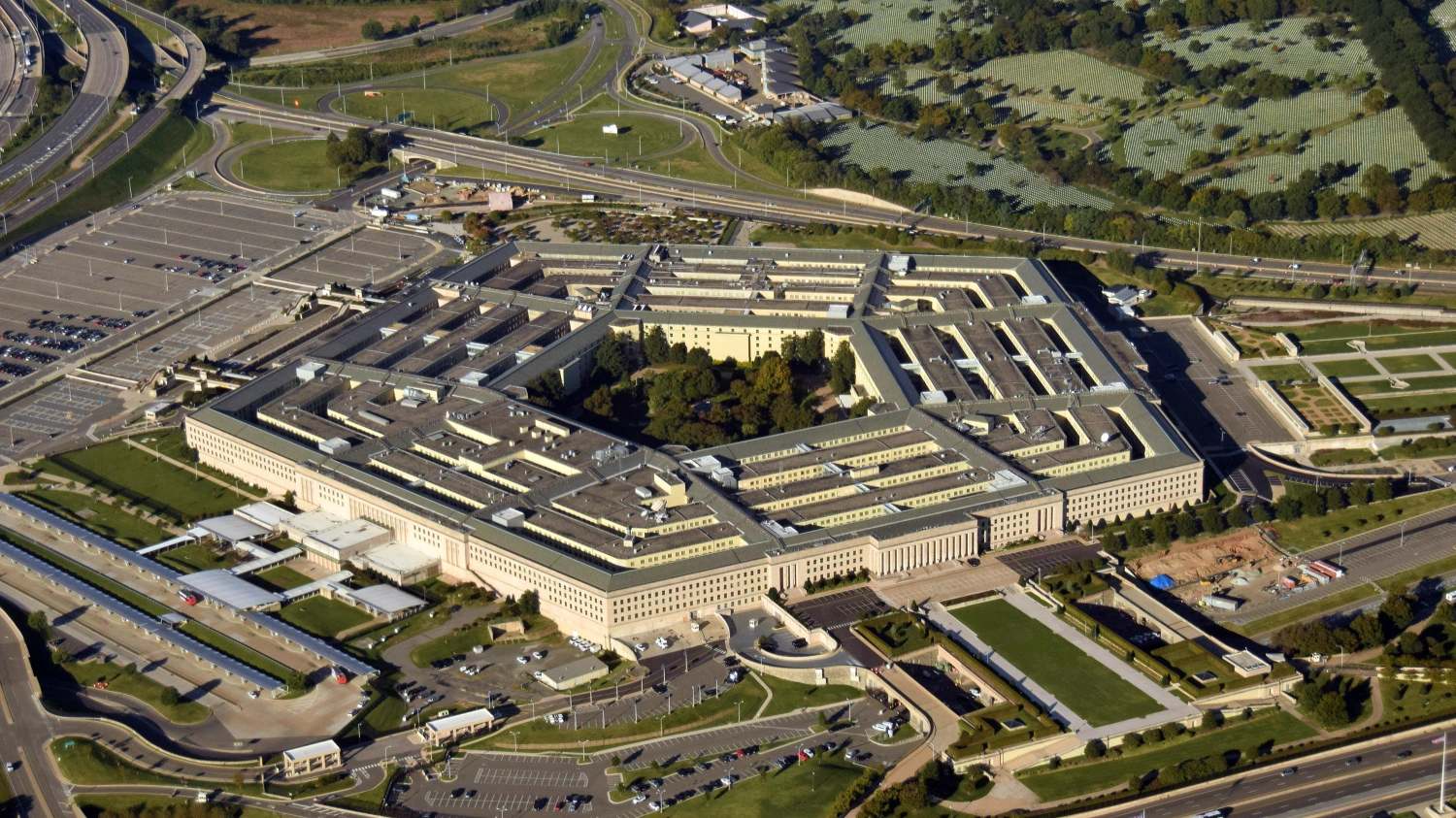
An internal Pentagon email reportedly outlined possible punitive measures against NATO allies that Washington believes failed to support U.S. military operations against Iran, including options related to Spain’s NATO role and Britain’s Falkland Islands position.
The email does not mean Spain is about to be expelled from NATO. But it exposes a deeper problem inside the Western alliance: the NATO Iran war rift is testing how far European allies are willing to support U.S. operations outside NATO’s traditional theatre.
The dispute centers on access, basing and overflight rights, known in military language as ABO. For the Pentagon, such rights are a baseline test of alliance cooperation. For several European governments, allowing territory, airspace or naval assets to support Iran-war operations risks turning logistics into participation.
The Core Of The NATO Iran War Rift: ABO, Spain And The Iran War
According to Reuters, the internal Pentagon email floated several ways to pressure NATO allies seen as insufficiently supportive of U.S. operations against Iran. The most striking option involved Spain. The email reportedly discussed suspending Spain from NATO, while also raising the idea of reassessing Washington’s position on Britain’s sovereignty claim over the Falkland Islands.
Spain has become the most visible target because it hosts key U.S. facilities, including Naval Station Rota and Morón Air Base, while resisting the use of its territory for Iran-war operations. Reuters reported that Spain’s government responded cautiously, saying it works from official documents and government positions rather than emails.
The email also reportedly discussed removing “difficult” allied countries from prestigious NATO command and committee roles. Taken together, the proposals suggest an attempt to raise the cost of hesitation inside the alliance.
Legally, however, the Spain option is far from simple. NATO’s founding treaty provides a withdrawal mechanism under Article 13, allowing a member to leave one year after giving notice to the United States as depositary. It does not set out a clear U.S.-controlled expulsion process. The North Atlantic Treaty makes this distinction important.
That makes the email more revealing politically than legally. Its power lies less in whether Spain can actually be suspended tomorrow and more in what the threat signals: Washington may be moving toward treating allied hesitation as a loyalty problem.
Hormuz Has Turned The Dispute Into A Wider Pressure Point
The timing matters. The Strait of Hormuz has become one of the main pressure points of the Iran war. The waterway normally handles roughly one-fifth of global oil and liquefied natural gas flows, making it one of the most sensitive chokepoints in the world economy.
Reuters reported that Italy was ready to deploy two minesweepers to help secure the Strait of Hormuz if requested, after recent disruption linked to the U.S.-Israel conflict with Iran. That reflects how quickly a military crisis in the Gulf can become an energy and shipping problem for Europe and Asia.
European governments therefore face an uncomfortable choice. They have an interest in keeping Hormuz open because energy prices and shipping costs hit their economies directly. But allowing bases, airspace or naval assets to be used for offensive operations against Iran may be seen at home as entering a war they did not choose.
For European leaders, the question is politically painful. They want American protection against Russia, but they do not want to explain to their voters why European bases are being used for a war with Iran.
This is where the NATO Iran war rift becomes harder to manage. Washington sees hesitation as free-riding. Europe sees automatic cooperation as escalation risk.
The Failure Of Brute Diplomatic Force
Washington’s reported threat to penalize allies points to a deeper failure in keeping the coalition aligned before the crisis peaked.
The strongest alliances do not function only because treaties exist. They function because interests are aligned before hard choices arrive. The goal of serious statecraft is to shape conditions in which cooperation becomes the natural outcome. The Pentagon email suggests the opposite: pressure after trust has already weakened.
That may produce short-term concessions. Spain, Britain or other allies may decide that direct confrontation with Washington is too costly. But the long-term cost could be higher. European capitals may conclude that the American security umbrella is becoming conditional on support for U.S. operations far beyond Europe.
This is where the rupture begins. NATO was built around collective defence. The Iran war is testing whether parts of Washington now expect automatic obedience.
The Falklands Signal Is Bigger Than It Looks
The reported Falklands option is especially sensitive. The Falkland Islands are administered by Britain and claimed by Argentina. For Washington to review its position on such a dispute as leverage over Iran-war support would mark a sharp change in alliance pressure.
The message would be clear: support us in one theatre, or old diplomatic assumptions in another theatre may become negotiable.
That is not normal alliance bargaining. It is transactional geopolitics applied to treaty allies.
For Britain, the signal would be uncomfortable. For other NATO members, it would raise a larger question: if long-standing diplomatic support can become leverage during a Middle East war, what else can be reopened in the next crisis?
Europe’s Bigger Fear: Is Article 5 Still Unconditional?
The deeper danger is not Spain’s membership status. It is trust.
Reuters separately reported that Polish Prime Minister Donald Tusk questioned whether the United States would remain a loyal NATO partner in the event of a Russian attack. That concern matters because Poland is not a symbolic member of NATO. It is a frontline state facing the Russian threat directly.
If European allies begin to believe that U.S. protection is conditional on supporting American wars elsewhere, NATO’s trust problem becomes serious. Article 5 may remain on paper, but deterrence depends on belief. Russia, China and Iran all watch not only what NATO says, but how much confidence its members have in each other.
The leak does more than embarrass Washington. It shows adversaries where allied mistrust may be growing.
That is why this email will travel far beyond Pentagon inboxes. It touches the fear every smaller ally carries quietly: whether protection comes with a political price tag.
The Global South Will Read This Carefully
The fallout from this email extends beyond Brussels and Washington. For rising powers across Asia, Africa and the Middle East, the message is direct: rigid treaty systems can become brittle when the interests of the dominant power and smaller allies diverge.
India will watch this closely.
For New Delhi, the Hormuz crisis is an economic and strategic concern. India needs secure energy flows, stable shipping lanes and military readiness in the Arabian Sea. But India has also spent years building a foreign policy based on multi-alignment, not bloc discipline. It works with the United States, Europe, Russia, Israel, Iran, the Gulf states and ASEAN in different ways, without allowing one relationship to fully consume the others.
This is where India’s approach differs from the pressure now visible inside NATO. As The Eastern Strategist’s Iran War Hub has tracked, the Middle East crisis is no longer only a regional military event. It has become an energy, shipping, alliance and deterrence crisis at the same time.
The NATO rift strengthens the logic of multi-alignment. It shows why rising powers prefer issue-based coalitions over rigid alliance commitments. In a world of overlapping crises, room to choose is becoming a strategic asset.
Why This Matters For India’s Strategic Thinking
For India, the lesson is not that alliances are useless. The lesson is that alliances carry costs when one power defines loyalty too broadly. A country that depends entirely on one bloc may gain protection, but it may also lose flexibility when the bloc enters a war outside its core security interest.
That is why India’s defence and foreign-policy debate must stay rooted in sovereign choice. New Delhi needs Western technology, Gulf energy, Russian military legacy systems, Israeli defence cooperation and Iranian geographic access. None of these relationships can fully replace the others.
The Hormuz crisis also links directly with India’s own maritime and defence priorities. India will need stronger naval surveillance, tanker security planning, air defence layers, drones, electronic warfare capability and domestic defence production. That wider challenge connects with India’s long-term push to build deeper strategic industries, including the defence ecosystem analysed in Hidden Indian Defence Companies Powering India’s Military Rise.
The message is clear: the world is becoming too unstable for borrowed security alone.
Conclusion: NATO’s Real Problem Is No Longer Russia Alone
The Pentagon email does not mean Spain will be thrown out of NATO tomorrow. That would be legally complex, politically explosive and diplomatically damaging. But the leak reveals something more serious: the Iran war is turning alliance loyalty into a transactional test.
For Washington, allies that refuse bases, airspace or naval participation may look unreliable. For Europe, the same demand may look like pressure to join a war it did not choose. That gap is now visible.
The old NATO bargain was simple: America protected Europe, and Europe stood with America. The new world is messier. Europe wants U.S. protection against Russia, but not automatic involvement in every American war. Washington wants burden-sharing, but increasingly defines burden-sharing as alignment with U.S. priorities beyond Europe.
The Pentagon email is not proof that NATO is collapsing. It is proof that the alliance is under a new kind of pressure.
Europe still wants American protection against Russia. Washington still wants European support when U.S. power is tested elsewhere. The Iran war has exposed the gap between those two expectations.
That gap may not break NATO today. But it will make every future crisis harder to manage. If alliance loyalty becomes conditional on support for wars beyond Europe, the West may win tactical compliance and lose something harder to rebuild: trust.