
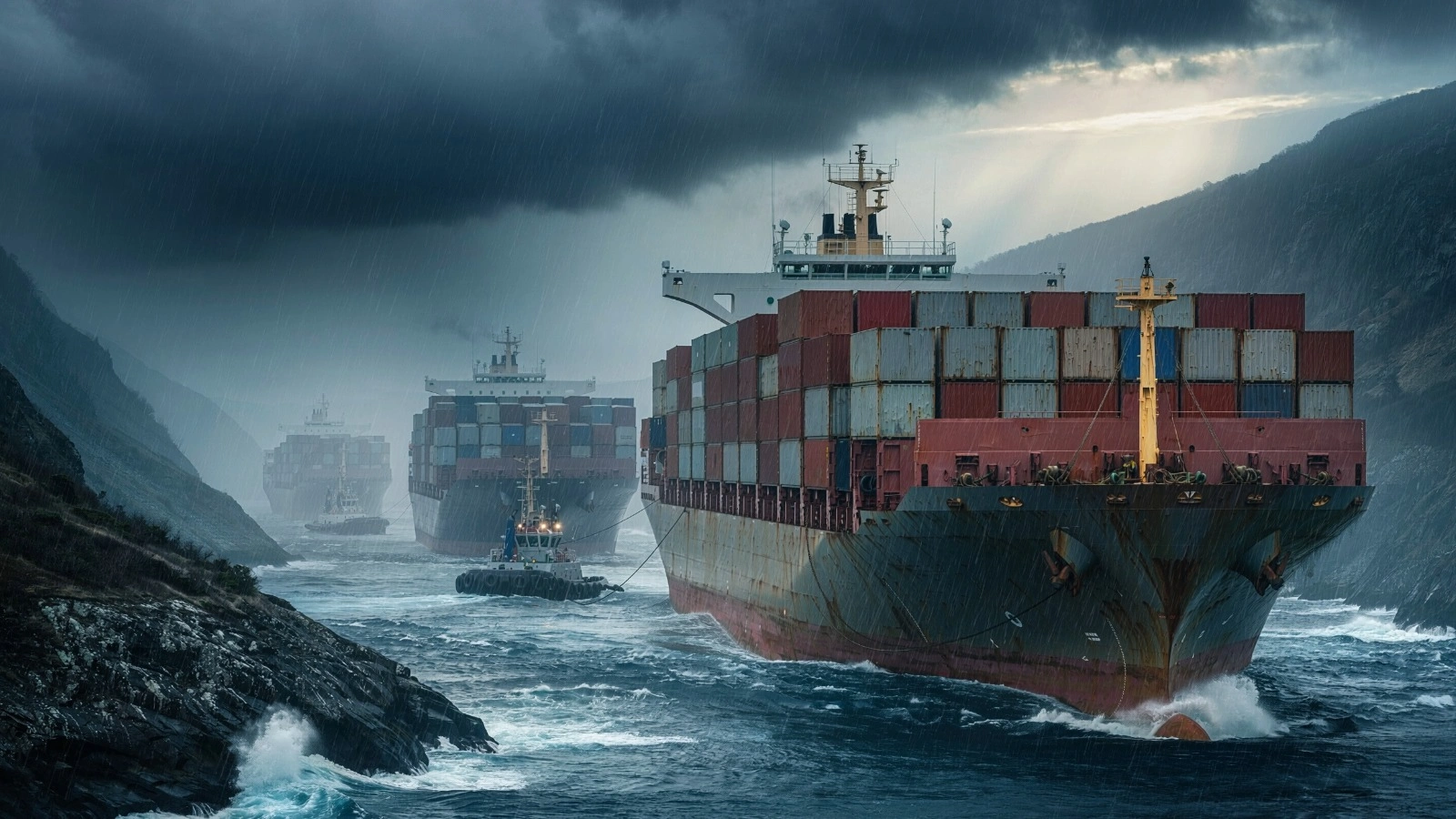
The Hormuz crisis entered a sharper phase on April 22 when Iran seized two container ships in the Strait of Hormuz, including the Liberia-flagged Epaminondas, which was headed to India. Tehran said the vessels had violated permit rules and interfered with navigation systems. That remains Iran’s version of events. What is clearer is the pattern. Commercial shipping is no longer sitting outside the U.S.-Iran confrontation. It is being pulled into it.
This was not the first warning for India. On April 18, two Indian-flagged ships came under fire in the same corridor and were forced to turn back. India reacted publicly. The Foreign Secretary conveyed “deep concern” to the Iranian ambassador and stressed the need for the safe passage of merchant shipping and mariners, according to the Ministry of External Affairs statement. That earlier episode matters because it shows the seizure of an India-bound vessel was not a one-off shock. It came after clear signs that the route had already become unstable.
The latest attacks were more severe. Reuters reported that three vessels were targeted in Hormuz and that two were later seized by Iran. Epaminondas suffered bridge damage after gunfire and rocket-propelled grenades were used near Oman. Another ship managed to continue. Iran framed the operation as rule enforcement. The timing suggests something wider. This happened as Washington expanded pressure on Iranian-linked shipping beyond the Gulf.
The broader strategic meaning sits outside the ship registry. The real issue is that neutral trade is losing its old protection. A vessel no longer needs to belong to a belligerent state to become useful in a pressure campaign. It only needs to be exposed on a route that both sides now see as leverage. That is what makes the Hormuz crisis bigger than a seizure story. It is turning sea lanes into bargaining instruments.
The American side of the picture helps explain why. A Washington Post report said U.S. forces seized the tanker Tifani in the Indian Ocean as part of a wider campaign against vessels suspected of moving Iranian oil. The same report said dozens of ships had already been turned back under blockade pressure. When that kind of maritime squeeze widens, Tehran has every incentive to show that it can impose costs of its own in Hormuz.
That is where the India angle becomes serious. Epaminondas was India-bound, not Indian-flagged. Legally that distinction matters. Economically it offers limited comfort. India does not need to own every ship in the danger zone to feel the damage. Freight rates can rise. Insurance costs can climb. Delivery schedules can slip. Energy security calculations can tighten. In a corridor as sensitive as Hormuz, risk travels faster than ownership.
The market has already started reading that risk. After the April 22 attacks and seizures, Brent crude rose to about $99.46 a barrel, according to Reuters. The same report underlined why the reaction was immediate. Roughly one-fifth of global oil and LNG trade normally passes through the Strait of Hormuz. When violence and seizure risk rise there, import-dependent economies do not wait for a formal blockade to feel the strain.
The diplomatic track has not disappeared but it is being outpaced by events at sea. That is why this broader TES analysis of the Hormuz crisis and peace talks matters here. The tension is no longer a simple choice between war and negotiation. Both are now unfolding together. Diplomacy is still alive. Maritime coercion is moving faster.
India’s official position has remained measured. After the April 18 firing incident, New Delhi raised the matter directly with Tehran and emphasized the safe passage of vessels and crews, as reflected in the official MEA readout. That cautious language reflects a hard reality. India is trying to protect trade access in a battlespace it does not control. It wants stability without being drawn into the confrontation that is making stability harder to preserve.
This is why the standard framing misses the point. The question is not only whether Iran was justified in seizing ships or whether Washington was justified in intercepting Iranian-linked vessels. The more important question is what happens when commercial navigation stops being treated as neutral ground. Once that boundary weakens, every ship in transit becomes part of a message.
The Hormuz crisis is now testing something larger than maritime law. It is testing whether global trade routes can remain dependable when sanctions pressure, naval power and retaliation collide in the same narrow waterway. The seizure of an India-bound ship is dramatic on its own. The deeper warning is that commercial shipping is no longer just passing through this conflict. It is becoming one of the ways the conflict is being fought.