The Backchannel Battlefield: Why Islamabad is the Most Sensitive Room in the Iran War
America claims talks are moving forward. Tehran insists there is no direct meeting. Pakistan is caught in the middle. The conflicting narratives aren’t a mistake—they are the negotiation itself.
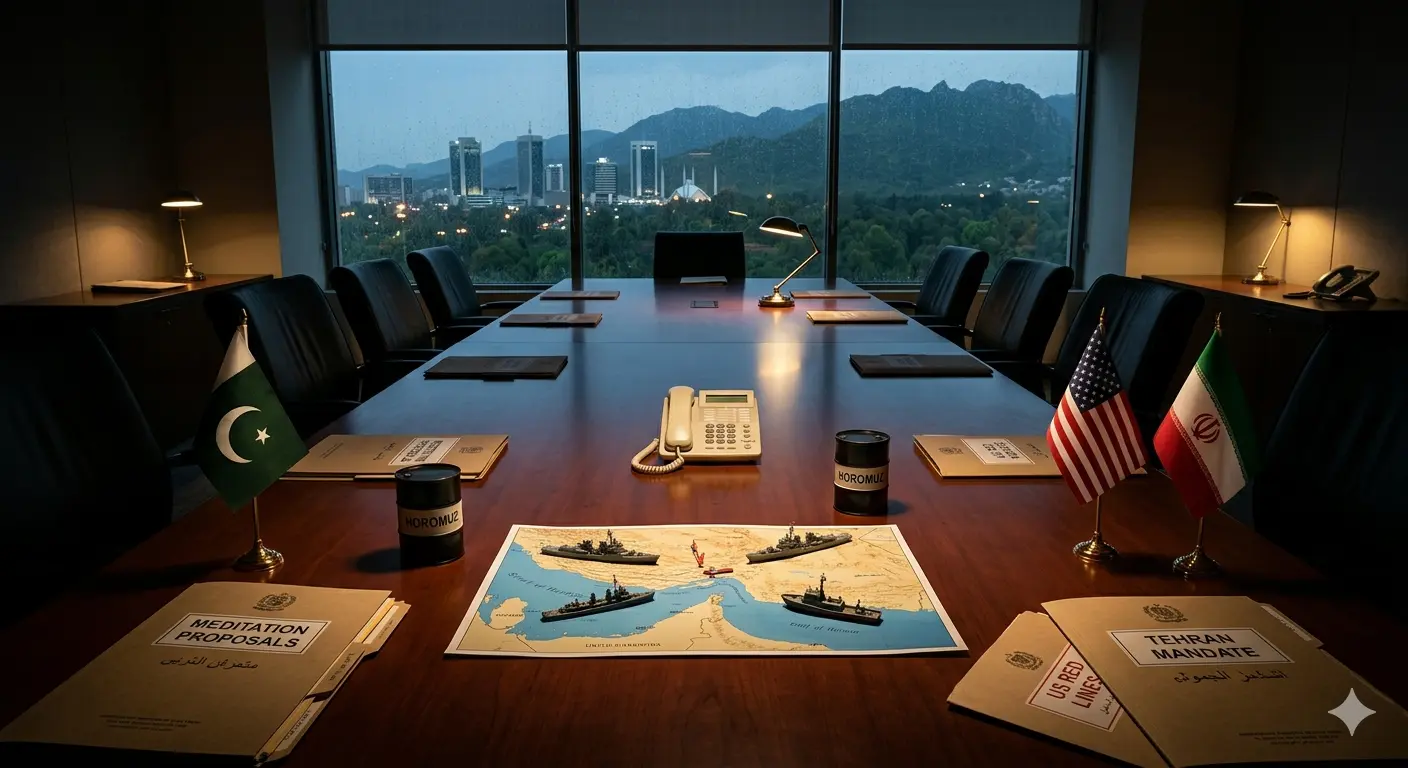
Islamabad is suddenly the most critical—and deliberately confusing—room in the Iran war.
Washington is heavily telegraphing that a diplomatic breakthrough is moving forward, confirming that U.S. envoys Steve Witkoff and Jared Kushner are heading to Pakistan for talks. Tehran, meanwhile, is aggressively shutting that narrative down.
The gap between these two stories isn’t a byproduct of the fog of war. It is the negotiation itself. Both administrations need an off-ramp from a conflict that is bleeding their economies, but neither can survive the domestic political fallout of blinking first.
President Donald Trump needs to project that his administration’s punishing military campaign has dragged a weakened Iran to the table. Tehran faces a volatile domestic tinderbox. After weeks of absorbing airstrikes and a suffocating maritime squeeze, Iranian officials cannot be photographed sitting across from Trump’s envoys. Hardliners would instantly brand it capitulation. Iran requires a deal that can be sold back home not as a surrender, but as successful resistance.
Enter Pakistan.
By utilizing Islamabad as a clearinghouse for messages, everyone gets the political cover they need. Iran can insist it is merely consulting with an allied neighbor. Washington can claim it has successfully forced Tehran into indirect negotiations.
The Rhetoric vs. The Reality
The rhetoric from both camps highlights exactly how wide the optical gulf remains.
On X, Iranian Foreign Ministry spokesperson Esmaeil Baqaei categorically denied any scheduled U.S. meetings. He framed Foreign Minister Abbas Araqchi’s presence in Islamabad strictly as coordination to end an “American imposed war of aggression.”
Meanwhile, U.S. Defense Secretary Pete Hegseth made it clear that Washington is negotiating with the gun firmly on the table. “Iran knows that they still have an open window to choose wisely at the negotiating table,” Hegseth told reporters, adding bluntly: “All they have to do is abandon a nuclear weapon in meaningful and verifiable ways.”
Hormuz: The Economic Ticking Clock
This diplomatic theater is playing out against the backdrop of a severe economic ticking clock. The Strait of Hormuz—the vital energy artery that usually sees over 130 vessels a day—is practically a ghost town.
| Traffic Metric | Pre-War Average | Current (April 2026) |
|---|---|---|
| Vessels crossing per 24 hours | ~130 | < 10 |
| Global Oil Supply Transiting | ~20% | Severely Restricted |
If the strait remains choked off, the conflict ceases to be a regional security issue and becomes a global inflation crisis. Iran knows it cannot defeat the U.S. in a direct military confrontation, but by turning geography into a weapon, it can make the war too expensive for the West to sustain.
Furthermore, the narrow scope of the Islamabad talks cannot ignore the wider battlefield. With Hezbollah rejecting the recent U.S.-brokered ceasefire extension between Israel and Lebanon, the proxy war remains highly combustible. Any understanding reached through Pakistani intermediaries will have to quietly account for unwritten variables: Tehran’s demand to lift U.S. blockades on Iranian ports, Washington’s demand for denuclearization, and the reopening of Gulf shipping lanes.
The Burden on Pakistan
For Pakistan, the stakes are equally massive. Islamabad has a rare opportunity to shed its reputation for political instability by brokering an exit to a catastrophic Middle East war. But if the channel collapses and the conflict escalates, Pakistan risks being remembered merely as the waiting room where the last chance for peace expired.
The true test in Islamabad isn’t whether Witkoff and Araqchi ultimately occupy the same physical space. It’s whether their intermediaries can draft a settlement so steeped in ambiguity that both governments can take it home and claim victory. If this war ends, it won’t be settled by a historic handshake. It will be settled by a carefully engineered fiction.