
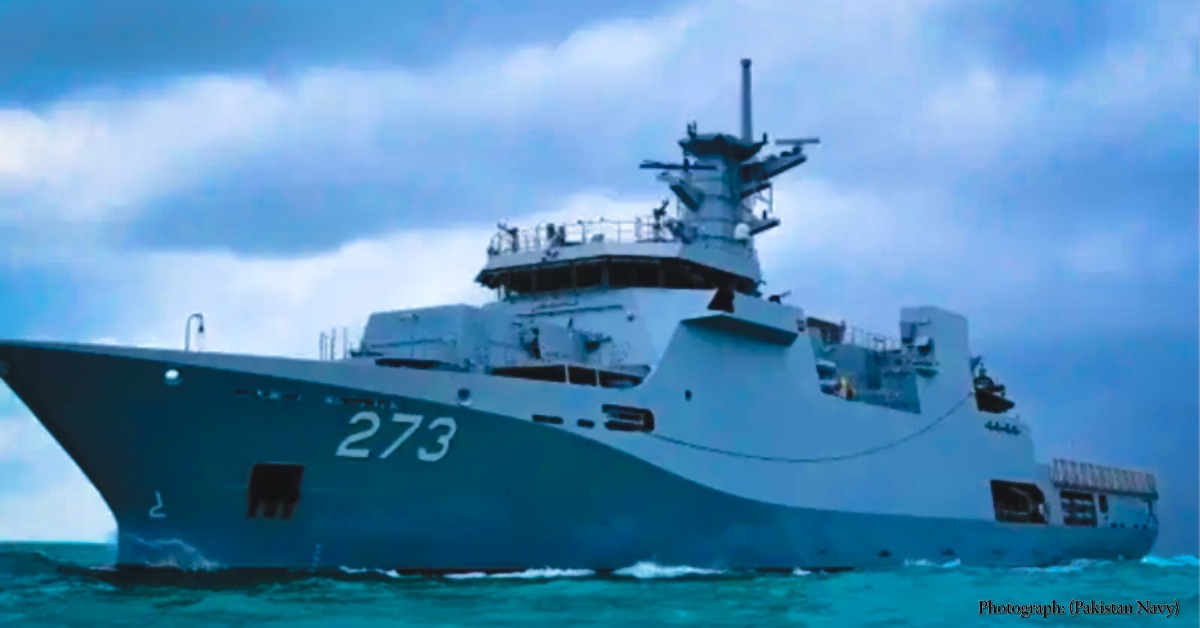
- On the evening of 15 September 2026, a Pakistan Navy vessel collided with a frontline Indian Navy warship in international waters of the North Arabian Sea.
- No major damage was reported to the Indian vessel, and no casualties occurred on either side.
- India’s Ministry of External Affairs (MEA) summoned Pakistan’s Charge d’Affaires in New Delhi on 16 September and lodged a formal protest.
- New Delhi said the incident breached Article 10 of the 1991 bilateral agreement governing military exercises and naval movements.
- Pakistan had not issued an official response at the time of writing.
This India-Pakistan naval collision in open water is not, on its own, an act of war. But it is exactly the kind of incident the two countries wrote a treaty to prevent thirty-five years ago — and the fact that it happened anyway, at a moment when bilateral ties are already strained, is why New Delhi moved to summon Pakistan’s envoy within a day.
What happened in the North Arabian Sea
This India-Pakistan naval collision began, according to sources cited by multiple Indian outlets, when a frontline Indian Navy unit carrying out routine maritime surveillance in the North Arabian Sea on the evening of 15 September was approached by a Pakistani naval vessel closing in at high speed. The manoeuvre, described by Indian officials as “unprofessional and unsafe,” ended in a collision between the two ships.
One report identified the Pakistani vessel as PNS Hunain, though this has not been officially confirmed by either navy, and the identity of the Indian ship involved has not been disclosed by either side. The Ministry of External Affairs confirmed that the incident took place in international waters and caused no major damage.
India’s diplomatic response
On 16 September, the MEA summoned the Charge d’Affaires of the Pakistan High Commission in New Delhi. In its official statement, the ministry said a strong protest was lodged “over the unacceptable and unprofessional conduct of Pakistani naval units at sea that led to a collision with a unit of the Indian Navy.”
Unlike routine shadowing between the two navies, physical contact this time produced an official protest within a day — a sign of how seriously New Delhi treated the incident. The statement went further than a simple complaint. It named the specific treaty provision India believes was broken: Article 10 of the Agreement between India and Pakistan on Advance Notice on Military Exercises, Manoeuvres and Troops Movements, signed in April 1991. That article requires naval ships and submarines of the two countries to stay at least three nautical miles — roughly 5.6 kilometres — apart while operating in international waters, precisely to avoid accidents of this kind.
India’s own Charge d’Affaires in Islamabad has been instructed to lodge a parallel protest with Pakistan’s Ministry of Foreign Affairs. As of publication, Pakistan had not issued a statement through ISPR or any other official channel.
Why this India-Pakistan naval collision matters
The 1991 agreement exists precisely because close-quarters naval encounters between nuclear-armed neighbours carry a risk that diplomacy alone cannot fully offset. A damaged radar or propulsion system, in a tense moment, forces ship commanders into split-second decisions with little room for error — which is the scenario the three-nautical-mile rule was designed to prevent. This is not a new pattern either: a similar protest followed a 2011 encounter between INS Godavari and PNS Babur during an anti-piracy escort in the Gulf of Aden, when New Delhi invoked the same Article 10.
The North Arabian Sea is also a working commercial corridor, not just a patrol zone. Gulf crude bound for Indian refineries transits these waters daily, and repeated naval friction here tends to feed, over time, into shipping risk premiums and marine insurance costs — even when individual incidents end in a diplomatic protest and nothing more.
Separately, and unrelated to this specific incident, Indian marine-automation firm Accurate Industrial Controls began converting three Indian Navy patrol boats into autonomous Unmanned Surface Vessels this week, under a six-vessel contract signed with the Navy back in 2022. That programme predates this collision and was not a response to it, but it does point to a broader Indian Navy shift toward reducing crewed exposure during exactly this kind of close-quarters patrol encounter.
What to watch next in this India-Pakistan naval collision
Will Pakistan issue an official statement on the collision?
As of publication, Pakistan’s military media wing (ISPR) had not commented. How Islamabad eventually characterises the incident — as accidental, procedural, or disputed — will shape whether this stays a one-off diplomatic protest or escalates further.
Will patrol patterns change in the western Arabian Sea?
Both navies routinely operate in overlapping stretches of the North Arabian Sea. Watch for fresh maritime notices or adjusted patrol lines from either side in the coming days.
Could this affect the 1991 agreement itself?
The treaty has survived earlier breaches, including the 2011 Godavari-Babur incident, without renegotiation. The more likely near-term outcome is a reaffirmation through existing military hotline channels rather than any change to the agreement’s terms.
Source transparency note on this India-Pakistan naval collision: Verified facts in this article — the collision, the MEA’s statement, and its citation of Article 10 — are drawn from the Ministry of External Affairs’ official press release dated 16 September 2026, corroborated by reporting from Deccan Chronicle, Siasat, IndiaPost, and Sentinel Assam. The identity of the Pakistani vessel (PNS Hunain) is sourced to reports citing unnamed sources and has not been officially confirmed by either navy. The Unmanned Surface Vessel conversion detail is independently verified via Naval Today and India Strategic. The assessment under “Why this matters” reflects The Eastern Strategist’s own analysis and is not an official characterisation by either government.