
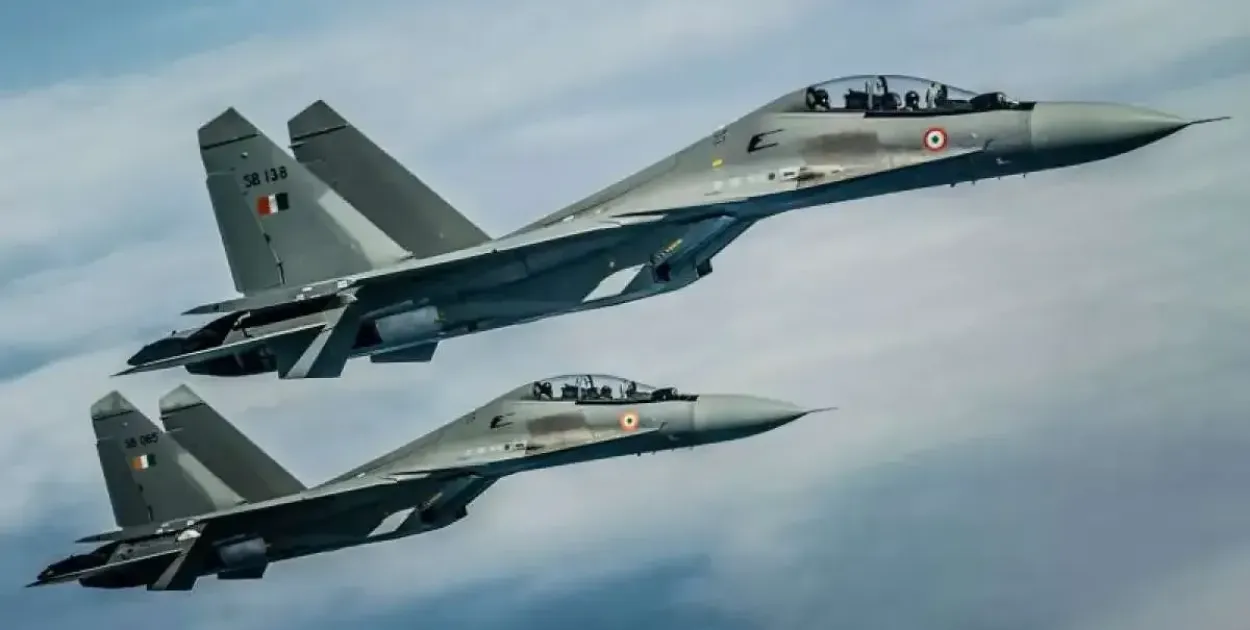
India Su-30 MRO has moved from talk to stated policy this year, though not yet to a published contract. On 10 February 2026, Malaysia’s foreign minister told parliament that India is allowing Malaysia to send Sukhoi engines and spares for maintenance, repair and overhaul (MRO) there, citing servicing and payment problems with Russia. On 14 October, Defence Minister Rajnath Singh told the first ASEAN–India Defence Think Tank Forum that India is ready to discuss MRO with ASEAN partners. No signed Su-30 arrangement has been made public.
What has India offered Malaysia and Vietnam for their Sukhoi fleets?
Malaysia says India is open to servicing its Sukhoi engines, and Vietnam has been offered MRO support for its Su-30 jets. The Malaysian statement came from Foreign Minister Mohamad Hasan in the Dewan Rakyat on 10 February 2026. The Vietnam offer was reported by The Tribune from a Ministry of External Affairs briefing in May. Neither has been published as a signed agreement.
According to The Star’s report, Mohamad Hasan said Malaysia can send engines to Russia but cannot pay through normal channels because of US sanctions on Russia. He added that India has many Sukhoi assets and can manufacture spares, and that Malaysia, India and Vietnam are forming an informal group on logistics, spares and technical support. That is the minister’s account of the India Su-30 MRO offer, not a published agreement.
India’s own record of the visit is narrower. The joint statement released by PIB on 8 February welcomed the outcomes of the Malaysia–India Defence Cooperation Committee, including the terms of reference for a Su-30 Forum. It does not mention engine MRO.
For Vietnam, The Tribune reported that Secretary (East) P. Kumaran said Prime Minister Modi offered MRO support for Sukhoi-30 aircraft and Kilo-class submarines in talks with President To Lam in New Delhi.
Can India Su-30 MRO serve Southeast Asian air forces?
India operates about 260 Su-30MKI fighters, according to Defense News, builds the type under licence at Hindustan Aeronautics Limited (HAL), and makes its AL-31FP engine at HAL’s Koraput division. In September 2024 the Ministry of Defence signed a ₹26,000-crore contract for 240 of those engines, to be delivered at 30 a year over eight years. That depth of fleet and factory is what partners such as Malaysia are looking at.
The Ministry of Defence said HAL would raise indigenous content in the engine programme to 63% by the end of deliveries, an average above 54%, and that this would also raise the indigenous share of repair and overhaul tasks. India Su-30 MRO capacity therefore rests on a domestic supply chain that is still being deepened, with MSMEs and private industry brought in.
The history shows how far the position has moved. HAL has built the Su-30MKI under licence since 2004, according to Defense News, as a customer of Russian industry. Two decades later it makes the engines for its own fleet and is being asked to help sustain other operators’ aircraft.
Malaysia’s 18 Su-30MKM jets derive from the MKI design, which helps with commonality. HAL also signed a 2020 memorandum with Rosoboronexport that covers export of engine spares and services to friendly countries for which HAL holds a licence.
What did Rajnath Singh put on the table at the ASEAN–India forum?
Speaking on 14 October at the Manohar Parrikar Institute for Defence Studies and Analyses (MP-IDSA) in New Delhi, Rajnath Singh said India is ready to explore cooperation with ASEAN partners on patrol vessels, radars, air-defence systems, helicopters and drones. He listed co-development, co-production, maintenance, repair and overhaul, training and long-term technical support as models beyond equipment sales. The published text of his speech names neither the Su-30 nor HAL.
He said self-reliance does not mean working in isolation, and that trusted partners can design, build, maintain and improve equipment together. He also asked for safeguards on sensitive information and intellectual property, and described the aim as lasting partnerships rather than one-time transactions. The year 2026 has been designated the ASEAN–India Year of Maritime Cooperation.
TES has followed the maritime side of this outreach in its report on INS Kulish at Ream Naval Base and in its analysis of Modi’s Indo-Pacific arc through Jakarta. The industrial side connects to the Ministry of Defence’s push to move defence MSMEs to Tier-1.
What limits India Su-30 MRO as a regional offer?
India Su-30 MRO faces four limits. Malaysia already has its own Su-30 maintenance company. HAL’s export route runs through licences held with Russian industry. No contract or payment mechanism has been published. And Vietnam’s Su-30MK2 jets reportedly belong to a different production line from India’s MKI, so the scope of any Indian work there is unclear.
Malaysia’s Aerospace Technology Systems Corporation (ATSC) supports the Royal Malaysian Air Force’s Su-30MKM fleet with spares and repairs. ATSC’s chief executive said in 2024, as reported by Defence Security Asia, that Malaysia already sources some Su-30MKM spares from India as well as Russia. That suggests an Indian supply link exists, and that any new MRO arrangement would extend it.
India is also addressing the same spares problem at home. The 2024 engine contract and the drive to raise indigenous repair content answer it, and HAL and the Indian Air Force had pressed Russian suppliers for component-level technology transfer to improve serviceability, Defense News reported in 2017.
What should defence watchers track next?
Three signals would show whether India Su-30 MRO becomes a business: a published MRO or spares agreement between HAL or the Ministry of Defence and Malaysia; an Indian statement on the scope of the Vietnam offer; and the forum’s follow-up recommendations, which Rajnath Singh asked to be prepared and reviewed at a future meeting.
TES assessment: demand and capability line up for India Su-30 MRO. Malaysia has a stated need, India has the fleet and the engine line, and the ASEAN forum gives the offer a public home. What is missing is a contract and the licensing cover to carry it. Until both appear, this is a credible opening, not yet a market.
Source note: Raksha Mantri’s speech text, 14 October 2026; PIB joint statement, 8 February 2026; The Star, 10 February 2026; The Tribune, 6 May 2026; Ministry of Defence contract release, 9 September 2024; HAL statements and open-source fleet data as cited.