
Executive Briefing
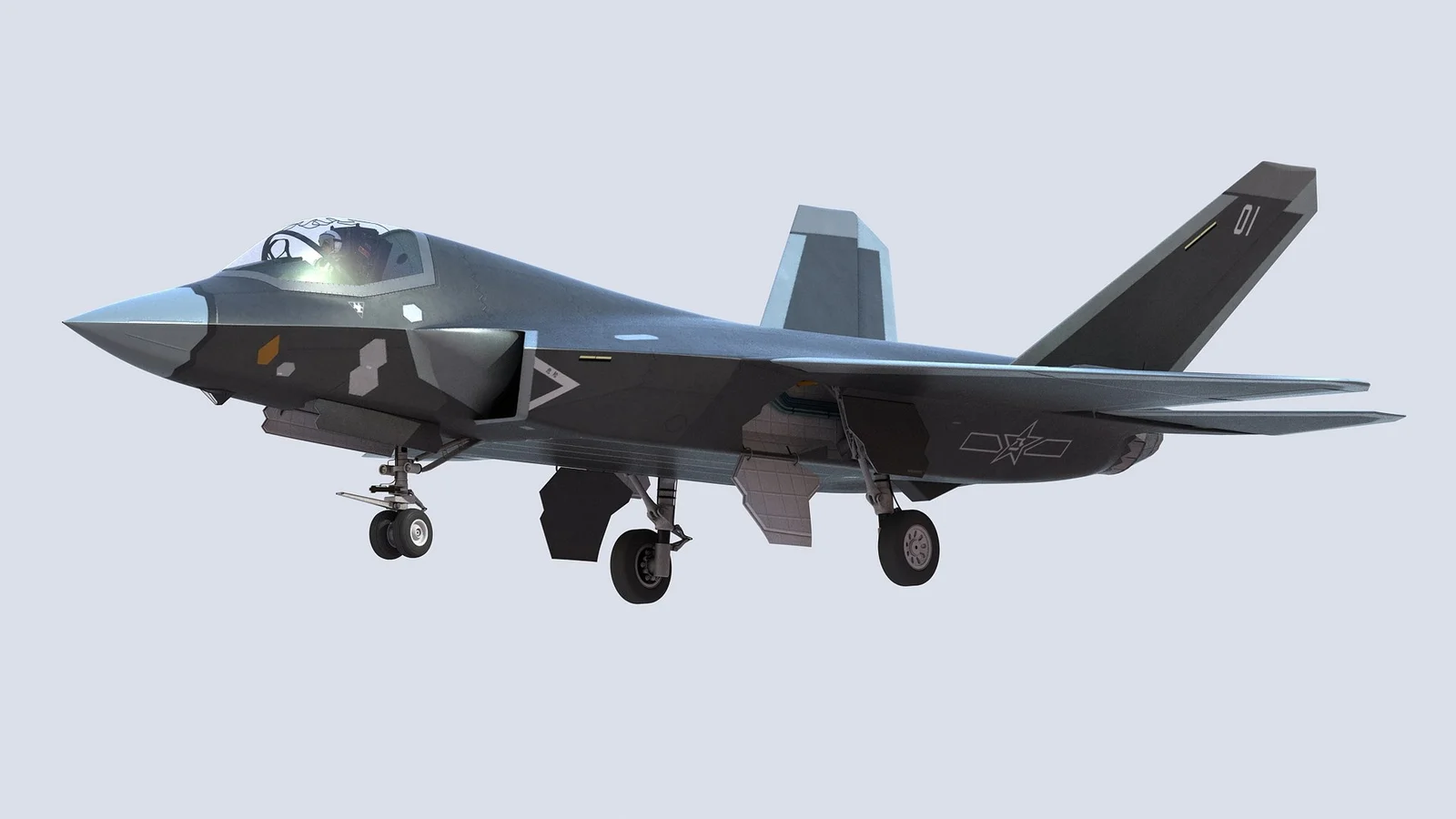
- The Strategic Shift: The accelerated timeline of the Pakistan stealth fighter threat alters the South Asian air-power balance by compressing detection windows, forcing defenders to react later.
- The Tactical Response: The core of the India J-35 counter strategy skips a reactive jet-for-jet procurement race. Instead, it relies on a multi-domain kill chain combining early detection, sensor fusion, and long-range munitions.
- The Hardware Advantage: The Super Sukhoi upgrade, built around the indigenous Virupaksha AESA radar, transforms India’s heaviest fighters into dedicated counter-stealth shooters capable of engaging from outside the J-35’s preferred firing envelope.
The Detection Layer: Stripping the Stealth Advantage
Low-observable aircraft like the J-35 are not invisible; they rely on specialized airframe shaping to delay target acquisition. The foundation of the India J-35 counter strategy is to strip away this element of surprise before the aircraft reaches its weapon release line.
India’s first line of defense is an expanding VHF anti-stealth network. Indigenous VHF-band systems developed by the Defence Research and Development Organisation (DRDO) operate at wavelengths that physically degrade the radar cross-section (RCS) shaping of fifth-generation airframes. While VHF radars do not produce the high-resolution tracks required to launch a missile, they excel at early warning—alerting the integrated air-defense grid that a low-observable asset is airborne.
Once the VHF network cues the general sector, a second tier of passive sensing takes over. By integrating airborne early warning and control (AEW&C) platforms and secure tactical data links, the Indian Air Force (IAF) can triangulate stealth targets without emitting interceptable radar waves that would alert the J-35 pilot.
The Shooters: Super Sukhoi and Rafale
The primary offensive node in the India J-35 counter strategy is the Su-30MKI, particularly under the $7.2 billion Super Sukhoi upgrade program. The defining element of this modernization is the indigenous Virupaksha AESA radar, based on cutting-edge Gallium Nitride (GaN) technology.
The Su-30MKI’s large nose cone accommodates a massive radar aperture, affording the Virupaksha system incredibly high power output (packing roughly 2,400 transmitter-receiver modules) and an extended search range for low-RCS targets. By concentrating massive amounts of electromagnetic energy into a narrow beam, the Virupaksha AESA radar can effectively “burn through” stealth shaping. Armed with ramjet-powered Astra Mk3 beyond-visual-range (BVR) missiles, the modernized Sukhoi acts as an airborne sniper.
| Kill Chain Phase | Primary Asset / Tactic |
|---|---|
| 1. Early Cueing | VHF anti-stealth network establishes a broad track, defeating RCS shaping. |
| 2. Track Refinement | AEW&C and passive Infrared Search and Track (IRST) sensors pinpoint exact coordinates. |
| 3. Data Fusion | Integrated Air Command and Control System (IACCS) shares data securely to the optimal shooter. |
| 4. Kinetic Engagement | Su-30MKI or Rafale executes a BVR missile launch outside the J-35’s detection envelope. |
Ground Systems: The S-400 Outer Ring
While airborne assets are critical, the S-400 Triumf remains the outer ring of the ground-based defense. The system’s large surveillance radars operate in frequency bands highly capable against low-observable aircraft. When cross-cued with the airborne sensor picture, the S-400 severely complicates the J-35’s routing, forcing the stealth fighters to operate at lower altitudes. This increases fuel burn, limits their operational range, and forces them into the engagement envelopes of shorter-range surface-to-air missiles.
Strategic Forecast
- Accelerated Radar Timelines: To counter the Pakistan stealth fighter threat, expect New Delhi to fast-track the operational integration of the Virupaksha AESA radar, pushing the initial batch of upgraded Su-30MKIs to the western front faster than originally forecasted.
- Sensor Dominance over Platform Parity: The overarching India J-35 counter strategy proves that modern air combat is less about matching airframes and more about dominating the electromagnetic spectrum. Success will hinge entirely on the seamless networking of diverse legacy and modern sensors.
Disclaimer: The information provided in this intelligence brief is for educational, research, and geopolitical analysis purposes only. The Eastern Strategist is not a SEBI-registered investment advisor. Mentions of defense industry segments, operational doctrines, or specific modernization programs are for macroeconomic analysis only and should not be construed as a financial recommendation. Readers must conduct their own due diligence before making investment decisions.